
How to Stop a Gate or Fence from Sagging
How to fix a sagging gate
- Sagging/leaning is usually caused by weather cycles, clay soil movement, hinge wear, rot, rust, or poor original installation.
- A 10-minute inspection (hinges, posts, fixings, standing back to view the line) identifies the real cause before repair.
- Gate fixes: tighten/replace hinges, fit a turnbuckle diagonal brace, add a timber diagonal brace, upgrade to heavier hinges, reset the hinge post.
- Fence fixes: straighten and re-secure leaning posts, fit a metal post spur, replace rotten posts, re-tension panels with galvanised fixings.
"*" indicates required fields
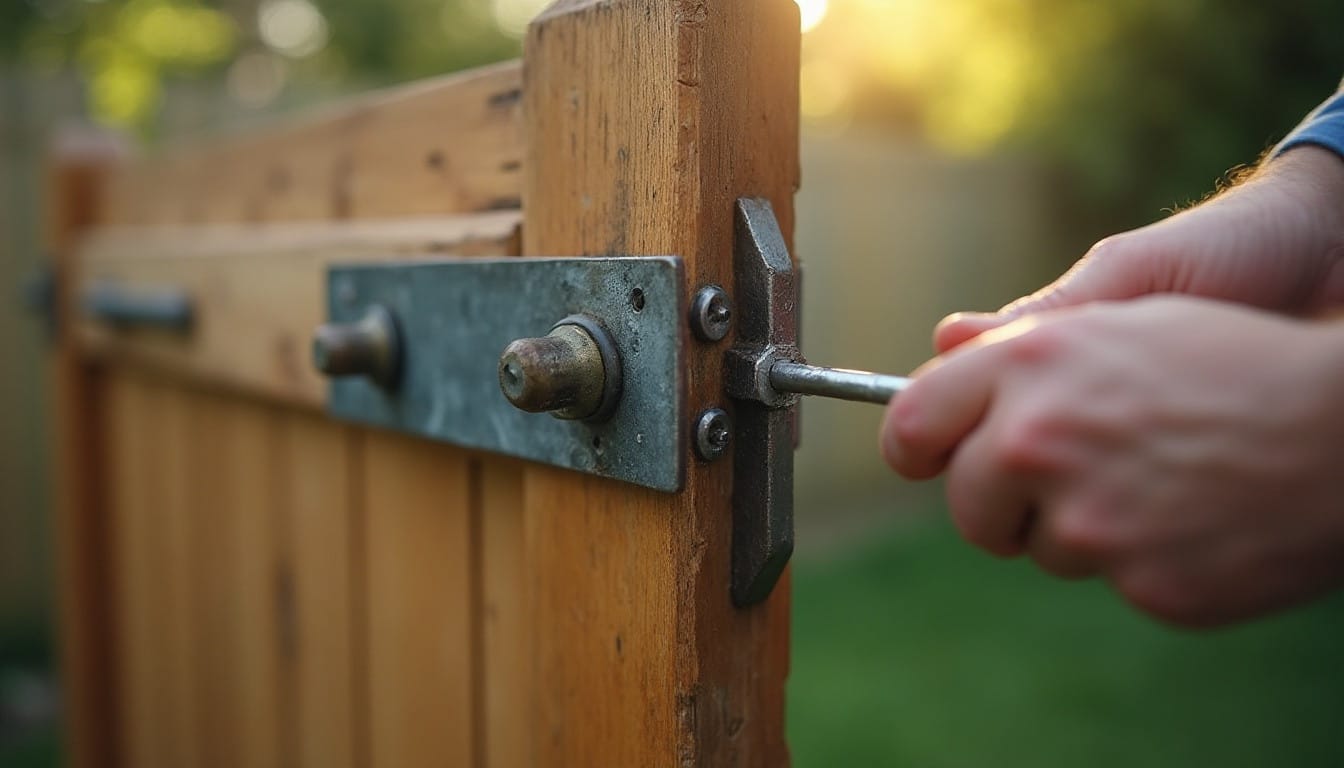
There’s nothing quite like the scrape of a gate dragging along the path, or a fence panel leaning drunkenly into next door’s garden. If you’ve ever wrestled with a sagging gate on a wet Sunday morning, you’ll know it’s one of those jobs that always seems to happen at the worst possible time – usually right before you’re heading out.
The good news is that most sagging gates and leaning fences are fixable, often without calling in a professional. This guide walks you through why it happens, how to check what’s actually wrong, and the practical fixes you can try yourself before deciding whether it’s time to bring in help. Whether you’re dealing with a wooden garden gate, a wrought iron side gate, or a full run of fence panels, the same principles apply.
Why Gates and Fences Sag Over Time
Gates and fences live outdoors, which means they’re constantly battling the British weather – and that takes its toll. Understanding the root cause helps you fix the problem properly rather than just patching over it.
Weather and moisture are the biggest culprits. Timber swells when it’s wet and shrinks as it dries out, and repeated cycles of this weaken joints, warp panels, and loosen fixings. London’s mix of damp winters and dry spells is particularly hard on wooden structures.
Ground movement is another common cause, especially with London’s clay-heavy soil. Clay expands when wet and contracts when dry, which can shift fence posts out of true over a season or two. If your fence has started leaning gradually rather than suddenly, shifting ground is often to blame.
Gravity and hinge wear affect gates specifically. Every time a gate swings open and shut, its full weight pulls on the hinges and the post they’re fixed to. Over months and years, screws work loose, hinge plates wear thin, and the whole gate begins to drop at the latch side – the classic sagging gate problem.
Rot and rust creep in wherever moisture sits. Fence posts rot fastest at ground level where they meet the soil, and metal fixings rust where water collects, both of which weaken the structure from the inside out.
Poor original installation can also be the underlying issue. Posts set too shallow, insufficient concrete, or undersized hinges for a heavy gate will all lead to sagging much sooner than they should.
Checking Hinges, Posts and Fixings
Before reaching for tools, spend ten minutes doing a proper inspection. This tells you whether you’re dealing with a simple tightening job or something more structural.
Start with the hinges. Open and close the gate slowly and watch how it moves. Listen for grinding or squeaking, and check whether the hinges are bent, rusted, or pulling away from the post. Give each screw a wiggle test with a screwdriver – if a screw spins freely without biting, the hole has likely worn out.
Check the posts next. Push firmly on the gate post and any nearby fence posts to see if they rock in the ground. A wobbly post usually means the concrete footing has cracked or the post itself has begun to rot below ground level. Look closely at the base of timber posts for soft, spongy wood or discolouration – both are signs of rot.
Inspect all fixings. Run your hand along fence rails and panels, checking for loose nails, missing screws, or brackets that have pulled away from the timber. On gates, check the latch and any diagonal bracing, since a missing brace is a very common reason for sagging.
Look at the whole structure from a distance. Step back and view the gate or fence line from several metres away. This makes it much easier to spot whether the lean is coming from one post, a whole run of panels, or the gate itself.
DIY Fixes for a Sagging Gate
Once you know what’s causing the sag, most gate repairs are straightforward weekend jobs.
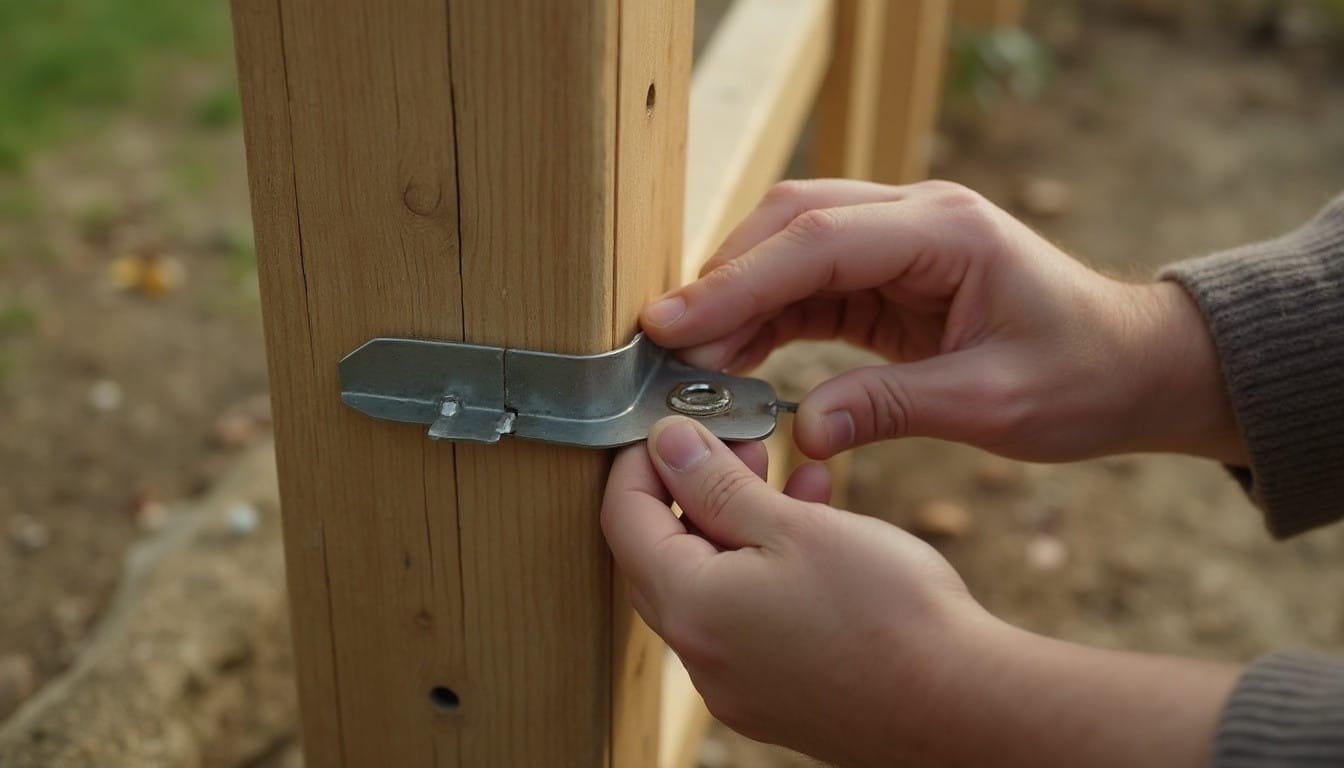
Tighten or replace the hinges. If screws have worked loose, remove them, fill the holes with wood filler or wooden matchsticks and wood glue, let it dry, then re-drill and refit. For badly worn holes, move the hinge slightly and screw into fresh timber instead.
Fit a turnbuckle diagonal brace. This is the classic fix for how to fix a sagging gate and works brilliantly on timber gates. A turnbuckle kit runs a cable diagonally from the top hinge corner to the bottom latch corner, and tightening the turnbuckle pulls the frame back square. It’s inexpensive, widely available at DIY shops, and takes under an hour to fit.
Add or replace a wooden diagonal brace. If you’d rather not use a cable kit, a timber brace fitted diagonally across the gate frame – always running from the bottom hinge corner up to the top latch corner – does the same job and blends in more naturally with a traditional gate.
Upgrade to heavier-duty hinges. If your gate is solid oak or a wide double gate, standard hinges may simply be undersized. Fitting longer, heavier hinges with more fixing points spreads the load and reduces future sag.
Pack out or reset the hinge post. If the post itself has moved, you may need to firm it up in the ground before any hinge repair will hold. See the fence-post advice below, as the same principles apply.
DIY Fixes for a Leaning Fence
A leaning fence is usually a post problem, a panel problem, or both.
Straighten and re-secure a leaning post. For a post that’s shifted but is still structurally sound, you can often straighten it using a temporary support strut, then pack the base with fresh gravel or postcrete poured around it. Let it cure fully before removing the support.
Fit a metal post support (spur). If the base of a timber post has rotted but the top section is fine, a concrete-in metal spur bolted to the sound timber is a quick, effective leaning fence fix that avoids digging out and replacing the whole post.
Replace rotten posts entirely. Where rot has taken hold throughout, it’s usually better to dig out the old post, set a new one in fresh concrete to the correct depth (generally around two feet, deeper for taller fences), and allow it to cure before reattaching panels.
Re-tension or replace panel fixings. Loose panels can often be pulled back square and reattached with galvanised brackets or coach screws rather than the thinner nails originally used. Galvanised fixings resist rust far better over time.
Add extra support for exposed runs. Fence lines that catch strong wind – common on corner plots or exposed gardens across London – benefit from additional postcrete depth or concrete gravel boards at the base to reduce future movement.
When It’s Time to Call a Professional
Some jobs are well within DIY reach, but others are worth handing over. Consider calling in a professional if:
- Multiple posts are rotten or the whole fence line is out of true, not just one section
- You’re dealing with a heavy gate, an automated gate, or ironwork requiring welding
- Ground conditions make digging and concreting difficult, such as clay soil or nearby drainage and utility runs
- You’ve tried a repair and the sag has returned within a few months
- You simply don’t have the time or the right tools for the job
A local specialist in fence repair London homeowners trust will also know how to work around shared boundaries, party wall considerations, and council or conservation area rules that sometimes apply to garden structures.
Get It Sorted Properly
A sagging gate or leaning fence rarely fixes itself, and the longer it’s left, the more strain it puts on the rest of the structure. If you’ve worked through the checks above and you’re still not confident tackling the repair yourself, Bob’s Handyman Services is on hand across London to get your gate swinging smoothly and your fence standing straight again.
