
Assess the piece before choosing a repair
Solid timber, veneered boards, laminated panels and upholstered frames behave differently and cannot all be repaired in the same way.
PRACTICAL REPAIRS FOR EVERYDAY PIECES
Extend the useful life of suitable furniture with careful repairs focused on stability, function and a finish appropriate to the existing piece.
WHAT WE CAN HELP WITH
The scope is reviewed around the property, existing condition and the result you need.
Solid timber, veneered boards, laminated panels and upholstered frames behave differently and cannot all be repaired in the same way.
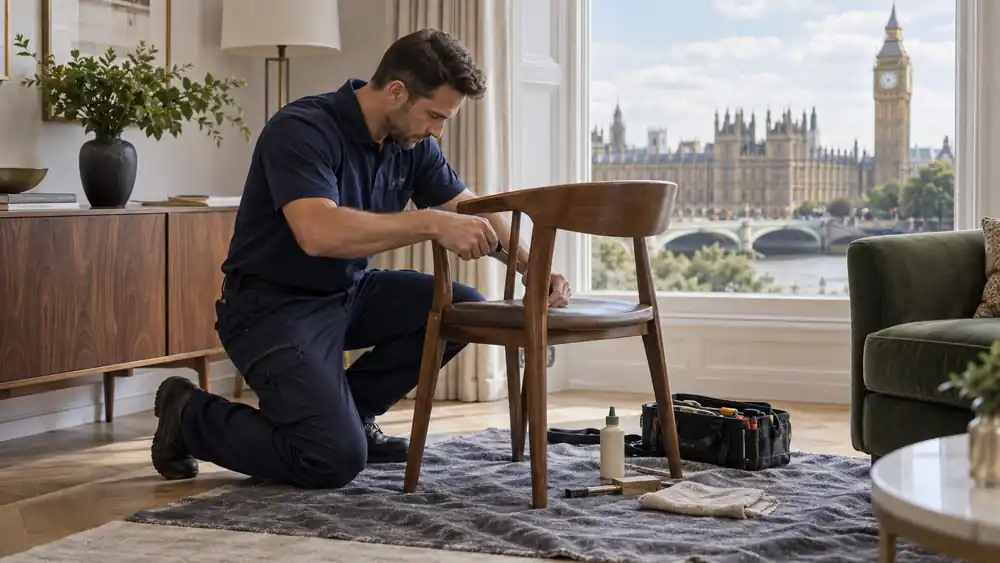
Chairs and tables often loosen at joints; cabinets may develop dropped doors, worn hinges or drawers that bind.
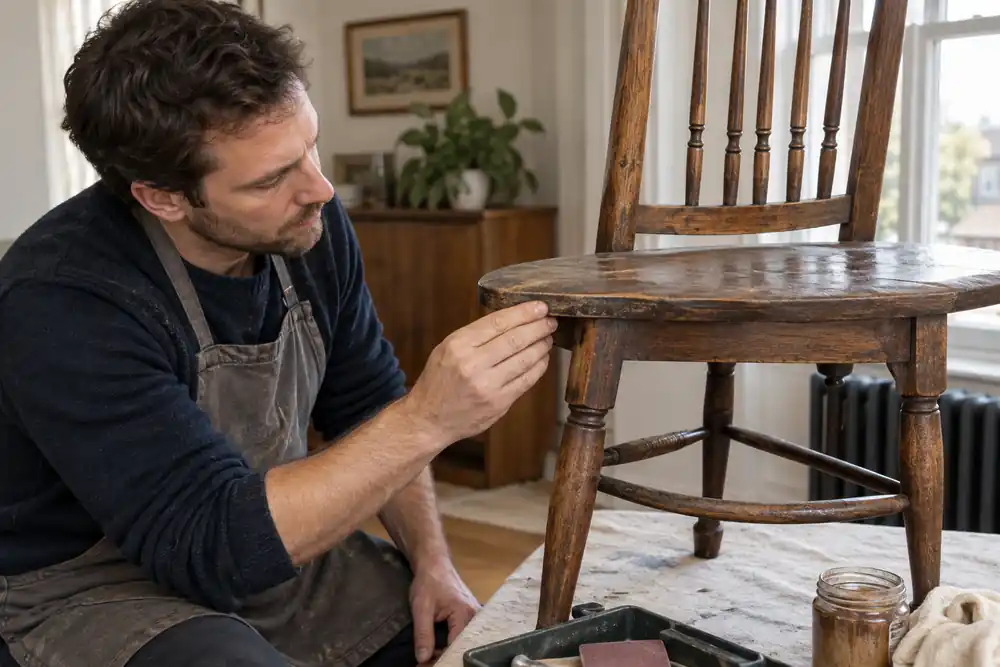
Minor chips, scratches and local dents can sometimes be improved, but matching an aged colour, sheen or grain exactly is rarely possible.
FURNITURE REPAIR LONDON
Solid timber, veneered boards, laminated panels and upholstered frames behave differently and cannot all be repaired in the same way. We examine how the item was constructed, where movement occurs and whether old glue, split material or failed fittings are involved. Photographs help with initial triage, particularly for hinges, runners and broken connections. Antique, high-value or conservation pieces may need a specialist restorer rather than a general functional repair.
Chairs and tables often loosen at joints; cabinets may develop dropped doors, worn hinges or drawers that bind. A sound repair addresses the cause—such as a distorted frame, enlarged fixing hole or failed connector—instead of merely tightening until the material strips. Components may need to be dismantled, cleaned, re-fixed or replaced. Adjustments are made with the cabinet square and supported so alignment is not temporary.
Minor chips, scratches and local dents can sometimes be improved, but matching an aged colour, sheen or grain exactly is rarely possible. Veneer damage requires particular care because aggressive sanding can expose the substrate. We agree whether the aim is a discreet cosmetic improvement or a robust functional repair. For widespread water damage, swelling or delamination, replacement panels—or replacement of the item—may be more proportionate.
CAREFUL PROPERTY WORK
A completed repair needs adequate curing time before loading, moving or everyday use. Heavily stressed furniture such as chairs, beds and wall-mounted units deserves conservative assessment; hidden cracking or weak surrounding material can limit what a repair can safely achieve. We explain those limits and will not present a cosmetic patch as structural restoration. Simple aftercare, sensible loads and prompt attention to renewed movement help protect the result.
Send views of the whole item as well as close-ups of the defect and any maker’s label. Explain how movement occurs and whether an earlier repair or water exposure may be relevant. We review that information before confirming the likely scope, while recognising that concealed conditions may only become clear on site. Please flag access limits, lease or landlord permissions and any deadline that genuinely affects the work. A clear brief helps separate the requested service from decorating, waste removal or specialist work that should be quoted independently.
A CLEAR PROCESS
Send the London postcode, photographs, measurements and the result you want.
The requirements, access, materials and appropriate trade are reviewed before work begins.
The planned work is carried out carefully, with any material change explained clearly.
FURNITURE REPAIR FAQ
Useful answers for planning the work.
Some failed fittings, hinges and local panel issues can be repaired, but badly split or swollen chipboard may not hold a reliable fixing. We assess before recommending work.
Not always. Local colour and sheen can be improved, but aged finishes and natural grain make an invisible match difficult. Expectations are agreed first.
General functional repairs are different from conservation. Valuable, historic or finely finished pieces should be assessed by an appropriate furniture restorer.
Often, depending on joint condition and surrounding timber. Chairs are safety-critical in use, so we check for splits or previous failed repairs before proceeding.
It depends on the adhesive, finish and repair. We provide specific curing guidance and recommend avoiding movement or loading until that period has passed.
ONE CLEAR NEXT STEP
Send photographs, the property location and a concise description of the furniture repair work. We will review the practical scope and explain what information is needed before an appointment can be confirmed.