
Make the situation safe and stop the source
Active water, damaged electrical fittings or a weakened ceiling can create immediate risks.
SOURCE CONTROL · DRYING · CAREFUL REPAIR
Repairing the visible mark is the final stage, not the first. The water source must be controlled and affected materials assessed before ceilings, walls, joinery or finishes are reinstated.
WHAT WE CAN HELP WITH
The scope is reviewed around the property, existing condition and the result you need.
Active water, damaged electrical fittings or a weakened ceiling can create immediate risks.
Water can spread within cavities, insulation, flooring and built-in joinery.
Materials need suitable ventilation, temperature and sometimes professional drying equipment.
WATER DAMAGE REPAIR LONDON
Active water, damaged electrical fittings or a weakened ceiling can create immediate risks. If safe, isolate the relevant water supply and electricity, keep people away from sagging materials and contact the appropriate emergency or specialist service. The source may be plumbing, an appliance, roof penetration, drainage or another property. Reinstatement should not begin until responsibility for the source is clear and it has been controlled. Photographs taken safely can help document the incident and affected areas.
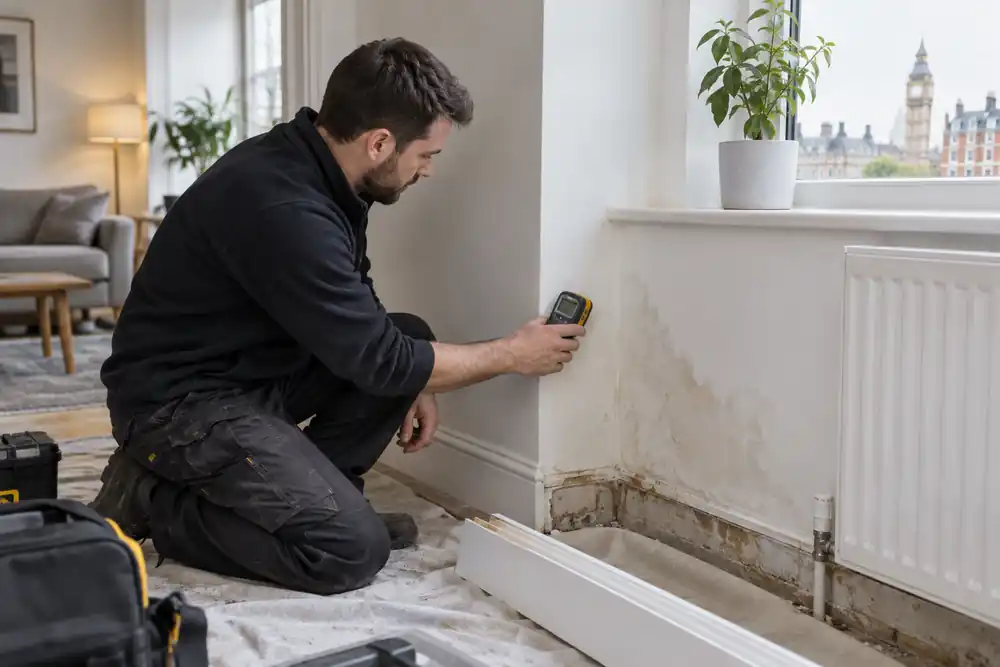
Water can spread within cavities, insulation, flooring and built-in joinery. The extent depends on volume, duration, material and whether the water was clean or contaminated. Sewage or other contaminated water requires specialist handling; mould or extensive saturation may also need environmental expertise. An initial assessment identifies which finishes can dry in place, which materials may need opening or removal and where further investigation is warranted. Cosmetic covering is not a substitute for that decision.
Materials need suitable ventilation, temperature and sometimes professional drying equipment. Surface dryness alone does not prove a substrate is ready for repair. Closing damp material behind filler, flooring or paint can trap moisture and lead to failure. Drying progress and moisture condition should guide the next stage, not an arbitrary decorating date. Occupants should also follow any insurer, freeholder or building-manager requirements before removal or reinstatement work begins.
CAREFUL PROPERTY WORK
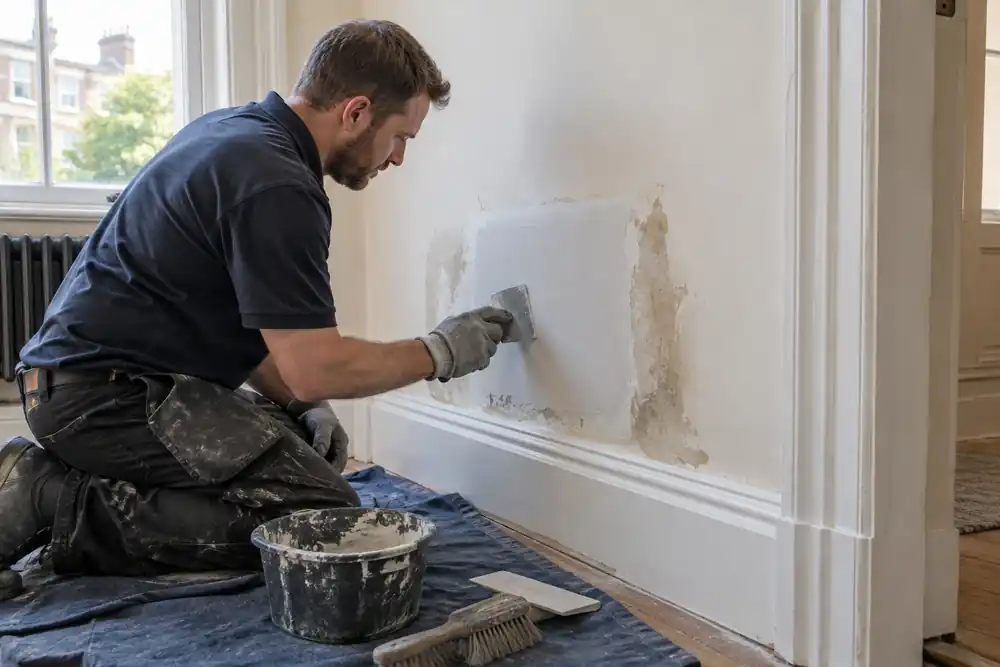
Once stable and sufficiently dry, damaged plasterboard, plaster, timber details, sealants or floor components can be repaired as agreed. Stains may need suitable preparation before decoration. The finish should blend as practically as the retained material allows, but exact colour matching against aged coatings cannot always be guaranteed. Plumbing, appliance, roofing or electrical repairs remain separate specialist scopes. Keep records of the cause, completed remedial work and relevant approvals, particularly in rented or managed properties.
Plasterboard can lose strength, timber can swell, laminate can delaminate and insulation can retain moisture out of sight. The repair plan should reflect the affected assembly rather than apply one drying rule to every surface. Historic plaster, decorative mouldings and built-in joinery may justify specialist conservation or carefully limited opening-up.
Keep dated photographs, the reported cause, isolation actions, moisture or drying information where available, approvals and invoices for related specialist work. This record helps landlords, freeholders, insurers and neighbours understand what was addressed. It also gives the decorator or reinstatement team evidence that the source was resolved before finishes were renewed.
A CLEAR PROCESS
Send the London postcode, photographs, measurements and the result you want.
The requirements, access, materials and appropriate trade are reviewed before work begins.
The planned work is carried out carefully, with any material change explained clearly.
WATER DAMAGE REPAIR FAQ
Useful answers for planning the work.
Only after the source is fixed and affected materials are sufficiently dry and stable. The appropriate timing depends on the material, saturation and drying conditions.
Keep away from it and isolate relevant services where safe. A sagging water-affected ceiling may be unstable and needs prompt professional assessment before anyone works beneath it.
Sewage or contaminated water requires specialist cleaning, protective measures and disposal. Explain the source immediately rather than treating it as ordinary decoration.
It may form part of final preparation, but only after the leak is repaired and the substrate is dry. It cannot resolve trapped moisture or damaged material.
Check policy and property requirements promptly. Insurers, landlords, freeholders or managers may need evidence or approval before materials are removed or reinstated.
YOUR NEXT STEP
Tell us the water source, when it was stopped and which materials or rooms are affected.