
Start with the symptom, not an assumed part
Useful repair work begins with a clear description: what the appliance does, when the fault started and whether an error code appears.
Practical fault-finding for everyday appliances
When an appliance stops working, a sensible diagnosis matters more than guesswork. We assess selected household appliance faults, explain what is repairable and flag cases that need a manufacturer or specialist engineer.
WHAT WE CAN HELP WITH
The scope is reviewed around the property, existing condition and the result you need.
Useful repair work begins with a clear description: what the appliance does, when the fault started and whether an error code appears.
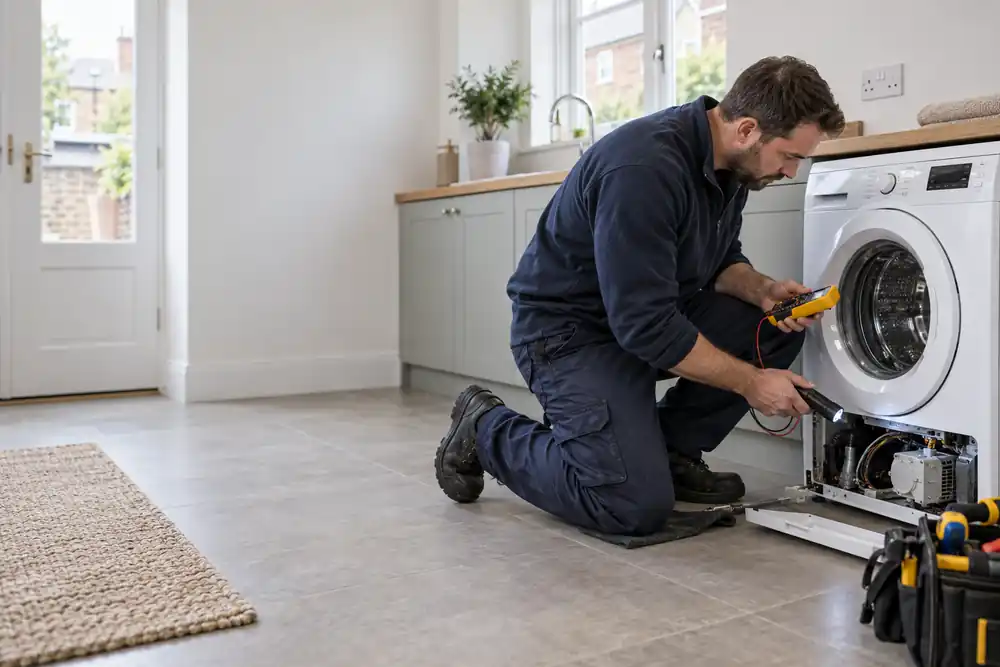
Depending on the appliance and fault, help may include accessible filters, door catches, seals, hoses, waste connections, levelling, simple mechanical fittings and visible installation problems.
The appointment starts with basic safety and installation checks, followed by observation of the reported symptom where it is safe to reproduce.
APPLIANCE REPAIR LONDON
Useful repair work begins with a clear description: what the appliance does, when the fault started and whether an error code appears. A machine that will not drain needs a different investigation from one that trips the supply or leaks only during a cycle. Send the make, full model number, approximate age and photographs of the rating plate. This allows common consumable parts and access constraints to be considered without claiming that a diagnosis can be guaranteed remotely.
Depending on the appliance and fault, help may include accessible filters, door catches, seals, hoses, waste connections, levelling, simple mechanical fittings and visible installation problems. Some symptoms come from the surrounding services rather than the machine itself, such as a closed valve, kinked hose or blocked waste. Internal electronic boards, sealed refrigeration circuits, gas components and manufacturer-only systems generally require a dedicated appliance specialist. We explain that boundary before intrusive work or unnecessary parts are proposed.
The appointment starts with basic safety and installation checks, followed by observation of the reported symptom where it is safe to reproduce. Accessible components may be inspected without dismantling beyond the agreed scope. If a specific replaceable part is identified, availability, cost and a return visit can be discussed. No responsible repairer can promise that one visible fault is the only problem in an older machine, so the findings and options are set out plainly, including when replacement may be more proportionate than continued repair.
CAREFUL PROPERTY WORK
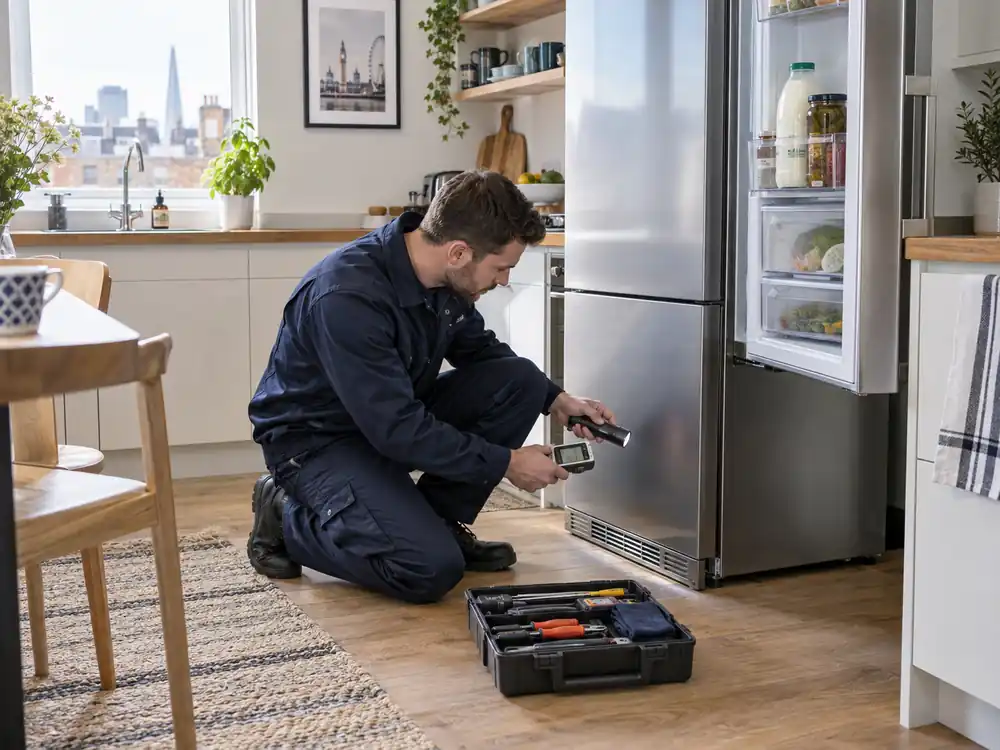
Stop using an appliance that smells of burning, produces smoke, gives an electric shock, repeatedly trips protection or has a significant uncontrolled leak. Isolate it only if you can do so safely and keep people away from the area. Electrical testing or fixed-wiring faults require an appropriately qualified electrician; gas appliances require a suitably registered engineer. Water-damaged flooring, cabinets or ceilings may also need separate repair after the source has been made safe. The aim is a controlled response, not a risky temporary workaround.
Do not pull a heavy integrated appliance out unless you can do so safely. Clear nearby cupboards and provide access to the controls, plug, water valve and waste where possible. Retain any error-code photograph and note the cycle or setting in use when the issue occurs. In flats, tell us about parking, lifts, concierge access and quiet-hour rules. Landlords and managing agents should confirm who can authorise parts or follow-on work so decisions are not delayed during the visit.
A good outcome is not always a completed repair on the first visit. It may be a verified installation issue, a named part to source, a recommendation for manufacturer support or a clear reason that replacement is more sensible. Factors include appliance age, access, parts availability, repeated failures and the cost of specialist labour. We avoid inventing certainty and provide practical information so you can choose the next step with a realistic understanding of the condition.
A CLEAR PROCESS
Send the London postcode, photographs, measurements and the result you want.
The requirements, access, materials and appropriate trade are reviewed before work begins.
The planned work is carried out carefully, with any material change explained clearly.
APPLIANCE REPAIR FAQ
Useful answers for planning the work.
Selected washing machines, dishwashers, dryers and other household appliances can be assessed, subject to model, fault and safe access.
No. Photos and error codes help prepare, but many faults need on-site testing and some need a specialist engineer.
No. Model-specific parts normally need identification and ordering after diagnosis.
Stop the cycle and isolate water or power only if safe. For an uncontrolled leak or electrical risk, use the appropriate emergency service.
Gas components must be handled by a suitably registered gas engineer.
YOUR NEXT STEP
Send the model, error code, symptoms and photographs for an initial suitability check.