
How to Hang a Mirror Safely on Any Wall Type
Hang a Mirror
- Evaluate Mirror Weight: Treat any mirror over 15kg as a “heavy mirror,” which requires robust anchoring rather than standard hooks to support the glass securely.
- Identify Wall Construction: Your wall type—whether solid brick, masonry, plasterboard, or lath and plaster—is the most critical factor in choosing the right hardware.
- Select Proper Fixings: Use specific anchors designed for your wall material; for heavier mirrors, a French cleat system is highly recommended to distribute weight evenly.
- Ensure Precision Alignment: Use a spirit level to draw a horizontal guideline before drilling, as even minor tilts are highly visible on reflective surfaces.
- Use Safe Handling Techniques: Always enlist a second person when lifting large or heavy mirrors to prevent accidental drops and physical strain.
- Monitor Installation Stability: Periodically check your fixings, especially on plasterboard walls, to ensure that minor settling has not loosened your anchors over time.
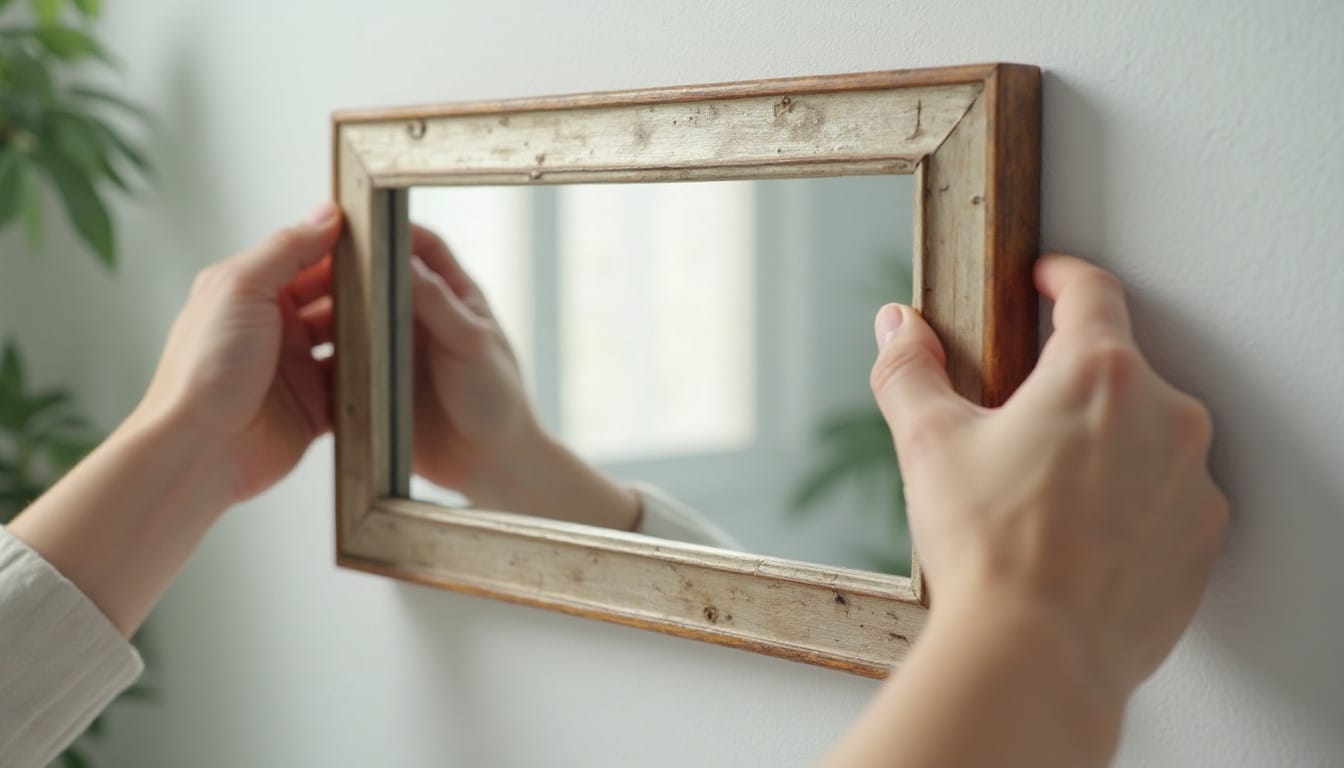
A mirror can transform a room, adding light, depth and a finished feel to a space in a way few other pieces can. But mirrors are also heavier and more fragile than most wall-mounted items, which means getting the fixing right matters more than it does for a picture frame or a shelf. Knowing how to hang a mirror safely starts with understanding your wall, choosing the correct fixings, and taking a methodical approach rather than guessing and hoping for the best.
Why Mirrors Need Extra Care When Mounting
Unlike a lightweight print or a small ornament, mirrors combine significant weight with a fragile surface, which means the consequences of a poor fixing are more serious on both counts. Glass doesn’t bend or give when a fixing fails; it drops, and often shatters, which makes the margin for error much smaller than with other wall décor.
Weight distribution is also less forgiving with mirrors. A single central fixing might hold a lightweight picture frame perfectly well, but the same approach on a mirror can put too much strain on one point, especially as the glass shifts slightly with temperature changes or minor vibrations in the wall. This is why mirror wall fixing London homeowners rely on typically spreads the load across two or more secure points rather than one.
Step 1 – Check the Weight and Wall Type
Before buying any fixings, you need two pieces of information: how heavy the mirror is, and what your wall is made of. Most mirrors list an approximate weight on the packaging or product page, and if not, a rough estimate can be calculated from the dimensions and glass thickness. As a general guide, anything over 15kg should be treated as a heavy mirror and fixed accordingly, with proper anchoring rather than lightweight hooks.
Wall type matters just as much as weight. Solid brick or masonry walls offer the most secure fixing options and can typically support heavier mirrors with the right anchors. Plasterboard stud walls, common in newer builds and internal partition walls, need a different approach, since the plasterboard itself won’t hold significant weight and fixings need to reach the timber studs behind it or use specialist plasterboard anchors rated for the load. Older properties may also have lath and plaster walls, which behave differently again and often benefit from locating a stud or joist rather than relying on the plaster surface alone.
Step 2 – Choose the Right Fixings
The right fixing depends entirely on the wall type identified in Step 1. For solid brick or masonry, a drilled hole with a wall plug and screw rated for the mirror’s weight is usually sufficient, with heavier mirrors benefiting from a French cleat system that hooks two interlocking bars together, one on the wall and one on the mirror frame, for a secure and evenly distributed hold.
For plasterboard walls, locating a stud with a stud finder and screwing directly into the timber is the most reliable option. Where a stud isn’t available in the right position, heavy-duty plasterboard anchors designed for higher weight limits are the safer alternative to standard picture hooks. For particularly heavy or oversized mirrors, it’s often worth combining fixing types, such as a French cleat anchored into studs, to spread the load as widely as possible.
Step-by-Step: Hanging Your Mirror
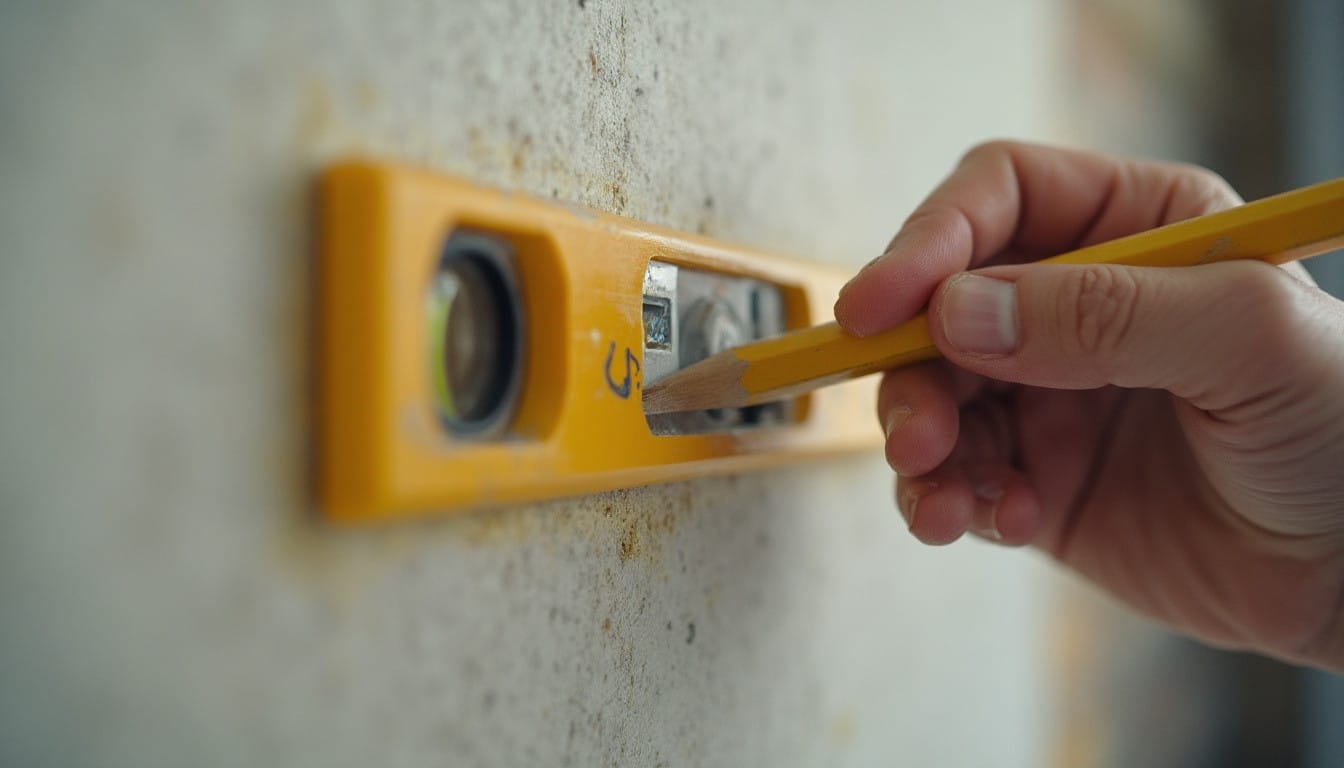
Start by deciding on the exact position and marking it lightly with a pencil, checking the height feels right relative to furniture and eye level in the room. Use a spirit level to draw a horizontal guideline, since even a small tilt becomes very noticeable on a reflective surface.
Next, identify your fixing points based on the wall type and mirror design, whether that’s a single wire and hook, two-point hanging brackets, or a French cleat. Drill carefully at the marked points, using the correct drill bit for the wall material, and insert the appropriate wall plugs or anchors before fitting the screws. Leave a small gap between the wall and the screw head if the mirror hangs from a wire or bracket loop, so it can hook on properly.
Finally, lift the mirror into place with help if it’s large or heavy, and check it sits level using the spirit level once more. Gently test that it’s secure before letting go fully, and step back to check the position from a distance before considering the job finished.
Safety Tips for Heavy or Large Mirrors
Always lift with a second person for anything above a modest size, since mirrors are awkward to grip and a shared lift reduces the risk of dropping or straining. Avoid lifting a large mirror by its frame edges alone; supporting the base and one side distributes the weight more evenly. Never rely on adhesive strips or hooks alone for anything beyond a small, lightweight mirror, as these are not designed to bear serious weight over time.
It’s also worth double-checking your fixings a few weeks after installation, particularly on plasterboard walls, since minor settling can sometimes loosen an anchor that seemed secure initially. If a mirror ever feels like it’s shifted or the wall shows any sign of stress around the fixing points, it’s best to take it down and reassess rather than waiting for a problem to develop further.
When to Call a Professional
Some mirror installations are straightforward enough for a confident DIYer, but others benefit from professional help. Very heavy or oversized mirrors, uncertain wall types such as older lath and plaster, or mirrors being fitted above beds, sofas, or anywhere they could cause injury if they fell are all situations where bringing in a professional makes sense. A handyman can also assess the wall properly beforehand, identifying stud locations or masonry conditions that aren’t always obvious to the untrained eye, and select fixings rated correctly for the specific mirror and wall combination.
