
Plan height and position around the room
The best position depends on seating distance, typical eye level, screen size, glare and the furniture or fireplace below.
WALL ASSESSMENT · BRACKET FITTING · CABLE PLANNING
A television mount must suit the screen, bracket, wall and way the room is used. We plan the position and fixings before drilling, rather than treating every installation as the same.
WHAT WE CAN HELP WITH
The scope is reviewed around the property, existing condition and the result you need.
The best position depends on seating distance, typical eye level, screen size, glare and the furniture or fireplace below.
Provide the TV model, dimensions and weight plus the bracket make and model.
Identify power, aerial, data and device connections before fixing the bracket.
TV MOUNTING LONDON
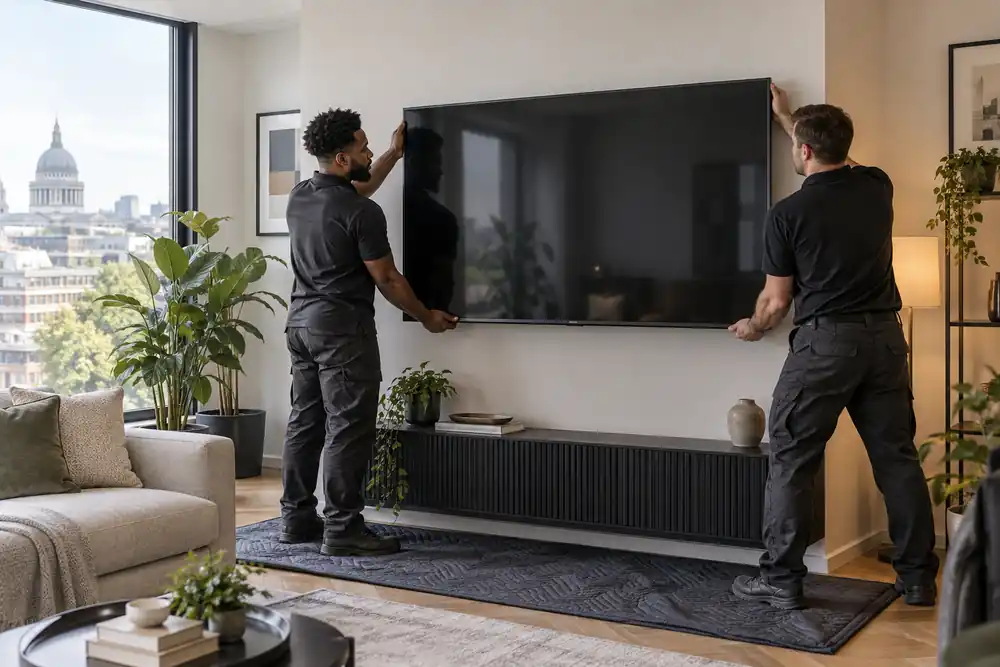
The best position depends on seating distance, typical eye level, screen size, glare and the furniture or fireplace below. Very high mounting can be uncomfortable even when it fills an empty wall attractively. Mark the proposed screen outline before drilling and check it from the main seats. Also consider doors, radiators, curtains and future furniture changes. If a fireplace or chimney breast is involved, construction, heat and concealed services need particular attention.
Provide the TV model, dimensions and weight plus the bracket make and model. VESA spacing alone does not prove that every bracket arrangement will clear ports or carry the screen correctly. The wall may be masonry, plasterboard, timber stud, dot-and-dab construction or another build-up, each requiring a suitable approach. A hollow-wall fixing chosen without understanding the substrate is not an acceptable default. Some walls or unusually heavy screens may need additional support or specialist advice.
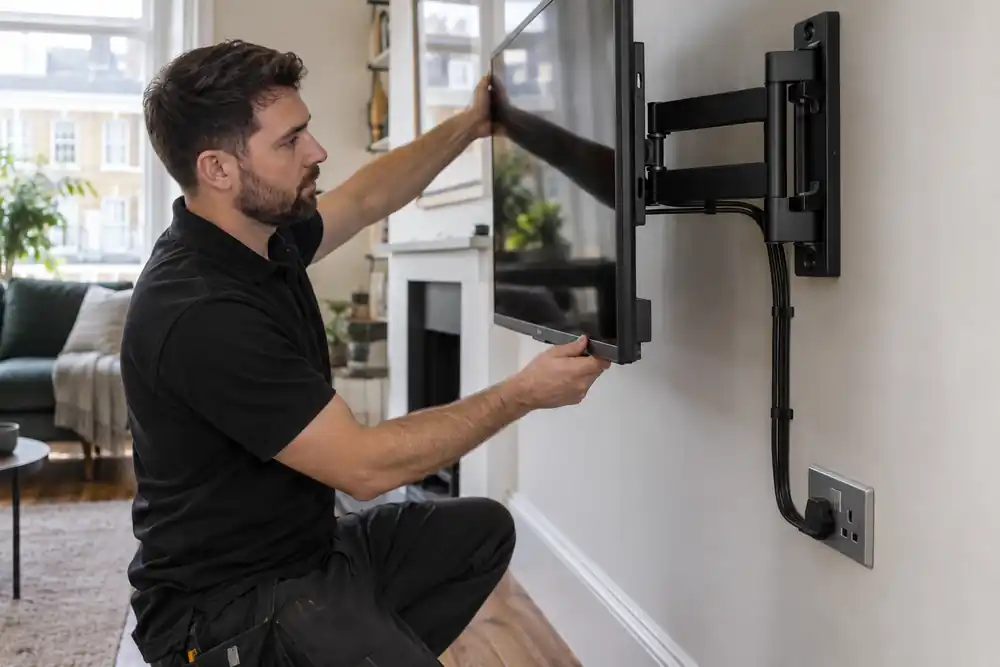
Identify power, aerial, data and device connections before fixing the bracket. Standard mains leads should not simply be hidden inside a wall. New or relocated electrical outlets need an appropriately qualified electrician and should be planned as a separate scope. Surface trunking, furniture routes or purpose-designed systems can keep low-voltage leads orderly, but bend radius, ventilation and access to ports still matter. Decide where consoles, soundbars and media boxes will sit and whether the supplied leads are long enough.
CAREFUL PROPERTY WORK
The bracket is assembled to its instructions, positioned, fixed and checked before the television is lifted into place. Large screens may require two people. The finished screen is checked for level, stability, clearance and safe cable movement when an articulated mount is used. Devices can be reconnected as agreed, but account setup, broadband faults and specialist audiovisual calibration are distinct services. Keep the bracket instructions and any unused adaptors for future screen changes.
A chimney breast may contain masonry, voids, flues or previous fixings, and heat from an active appliance can affect the screen. Alcoves can restrict bracket movement and ventilation. Panelled or slatted feature walls may conceal the load-bearing substrate. These locations need photographs, dimensions and honest assessment rather than an assumption that a longer screw solves the problem.
Leave sensible access to HDMI and power connections and consider how a replacement screen would come off the bracket. Record spare bracket adaptors and keep mounting bolts labelled. If equipment sits in a cabinet, allow ventilation and a serviceable cable route. A tidy installation should remain usable, not merely hide every connection permanently.
A CLEAR PROCESS
Send the London postcode, photographs, measurements and the result you want.
The requirements, access, materials and appropriate trade are reviewed before work begins.
The planned work is carried out carefully, with any material change explained clearly.
TV MOUNTING FAQ
Useful answers for planning the work.
There is no universal height. It should be considered from your normal seating position, screen size, room layout and any furniture or fireplace below.
Potentially, after the wall construction, stud positions, screen weight and bracket are assessed. The correct method cannot be chosen from the surface appearance alone.
A standard flexible mains lead should not simply be buried. Any new electrical outlet or fixed wiring needs assessment by an appropriately qualified electrician.
Send TV and bracket model numbers, screen size and weight, photographs of the wall and room, desired position, devices to connect and available power points.
Often, if compatible mounting hardware, dimensions and cable arrangements are confirmed. Include it in the original enquiry so its position can be planned with the screen.
YOUR NEXT STEP
Share the TV, bracket and wall details to plan a secure, comfortable installation.