Hidden Water Leak
- Monitor your water bills for unexpected increases.
- Check your water meter when no water is being used.
- Investigate damp patches on walls, ceilings, or floors immediately.
- Never ignore musty odours, especially in enclosed spaces.
- Listen for running water when all taps and appliances are turned off.
- Inspect under sinks and behind appliances regularly.
Hidden water leaks are one of the most expensive household problems because they often remain unnoticed until significant damage has already been done. Learning the early warning signs can help you act quickly, protect your property, and avoid costly repairs. Below, you’ll find practical advice on identifying hidden leaks, simple checks you can perform yourself, and answers to common questions homeowners ask.
"*" indicates required fields
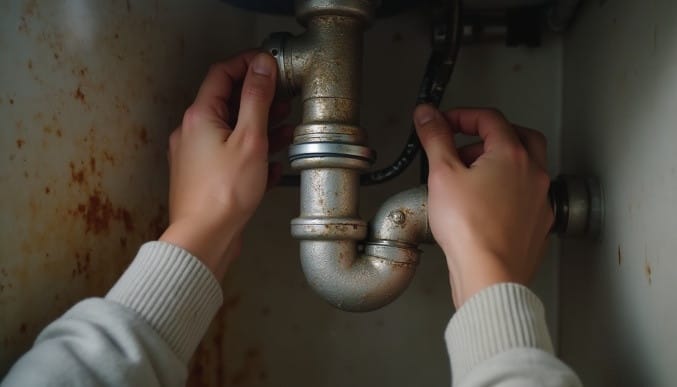
A dripping tap is easy to spot. A leak behind your bathroom wall or under your kitchen floor is a different story altogether — it can carry on for weeks, sometimes months, before anyone notices anything’s wrong. By the time it shows itself, you’re often looking at soaked insulation, damaged plasterboard, or a floor that needs ripping up.
The good news is that your home usually gives you clues long before things get that bad. You just need to know what you’re looking and listening for. This guide walks through the common signs of a hidden leak, how to find a leak at home using a few simple checks, and when it’s time to bring in a professional to trace and fix the problem properly.
What Counts as a “Hidden” Leak?
A hidden leak is simply one you can’t see with the naked eye — the water’s escaping somewhere out of view rather than dripping onto the floor in front of you. In most London homes, that tends to mean one of a few places:
- Behind walls — often from pipework feeding a bathroom, kitchen, or airing cupboard
- Under floors — particularly where pipes run beneath floorboards or a concrete screed
- In the loft — from a header tank, cold water storage, or pipework running through the roof space
- Underground supply pipes — the pipe running from the street or your stopcock into the property, which can crack or corrode over time
Because none of these are on show day to day, a leak in any of these spots can sit there quietly getting worse until the damage forces its way into view.
Signs of a Hidden Leak to Watch For
Most hidden leaks announce themselves eventually — you just need to know what to look, listen and sniff out.
An Unexplained Rise in Your Water Bill
If your usage habits haven’t changed but your bill has crept up, that’s often the first real clue. A constant, low-level leak can use a surprising amount of water over a billing period without ever being visible.
Damp Patches, Discolouration or Bubbling Paint
Yellow or brown staining on a ceiling, a damp patch that won’t dry out, or paint and wallpaper starting to bubble and peel are classic signs of a hidden leak working away behind the surface. Even a small, faint patch is worth investigating rather than painting over.
Musty or Damp Smells
A persistent musty smell in a room — especially one that doesn’t have an obvious source like a damp towel or wet coat — often points to moisture building up somewhere it shouldn’t be, even if you can’t see any staining yet.
The Sound of Running Water When Everything’s Off
If you can hear water moving through the pipes when every tap, appliance and toilet in the house is switched off, take that seriously. It’s one of the more reliable signs something’s leaking somewhere in the system.
Mould Growth
Mould needs moisture to grow, so patches appearing on walls, ceilings, skirting boards or even inside cupboards — particularly if they keep coming back after cleaning — usually mean there’s a damp source feeding them from behind the scenes.
Warped Flooring or Skirting Boards
Laminate that’s started to lift or bow, floorboards that feel spongy underfoot, or skirting boards that have swollen or come away from the wall are strong indicators of water sitting beneath or behind them. Once the source is fixed, check whether water-damaged skirting can be repaired or needs replacing.
Reduced Water Pressure
A sudden or gradual drop in pressure from your taps or shower can mean water is escaping somewhere along the pipe run before it reaches the fixture, rather than a problem with the fixture itself.
If you’re noticing two or three of these together, it’s a good sign that something’s going on and worth acting on rather than waiting to see if it settles down.
How to Find a Leak at Home
Once you suspect a problem, a few simple checks can help narrow things down before you call anyone out.
- Check your water meter. Turn off every tap and appliance in the house, then note the meter reading. Leave it for an hour or two without using any water, and check again. If the reading has moved, water is escaping somewhere in the system.
- Isolate fixtures one at a time. If you’ve got a leak but aren’t sure where, turn off the isolation valves under sinks, toilets and appliances one by one, checking the meter or listening for running water after each. This can help you work out which part of the system is affected.
- Inspect under sinks and behind appliances. Pull out washing machines and dishwashers where you can, and check the flexible hoses, connections and cupboard bases under sinks for dampness, staining or a musty smell.
- Check your loft. Look at the header tank, ballcock and any visible pipework for drips, staining on the tank stand, or damp insulation nearby.
- Look outside. Walk the perimeter of the house and check for unusually damp or lush patches of lawn, damp patches on external walls, or water pooling near the stopcock or drainage — signs of a leak in the underground supply pipe.
- Check your boiler and radiators. A boiler that keeps losing pressure, or a radiator with a damp patch beneath it, can point to a leak in the central heating pipework rather than the mains supply.
These steps will often tell you roughly where the problem lies, even if they won’t show you the exact spot — and that’s usually as far as it’s sensible to go without specialist equipment.
Why Hidden Leaks Cause So Much Damage If Left
A leak that goes unnoticed doesn’t stay small. Water tracks along joists, soaks into plasterboard, and pools in places that were never designed to handle moisture. Left long enough, it can weaken timber flooring and joists, cause plaster to crumble, and even affect the structural integrity of a ceiling or wall.
Damp conditions are also exactly what mould needs to take hold, and prolonged exposure to mould and damp air isn’t good for anyone living in the property, particularly those with asthma or other respiratory conditions.
There’s a cost angle too. A leak that’s caught early might mean replacing a section of pipe. A leak that’s been running for months can mean new flooring, replastering, redecorating, and sometimes drying out the whole affected area before any repair work can even begin. The earlier it’s found, the smaller and cheaper the fix tends to be.
When to Call a Professional
The checks above are genuinely useful for narrowing down whether you’ve got a leak and roughly where it might be. But tracing the exact source — especially when it’s behind a wall, under a solid floor, or in an underground supply pipe — usually needs proper leak detection equipment and the experience to know where to look.
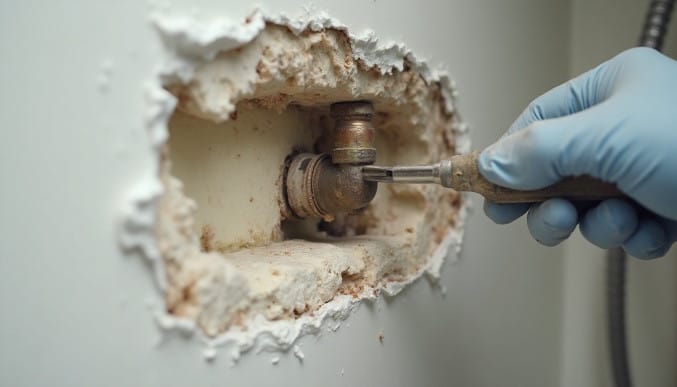
Going in blind with a hammer and chisel to “have a look behind the wall” can turn a contained leak into a much bigger repair job. A trained handyman or plumber can pinpoint the source with minimal disruption, carry out the repair, and make good the area afterwards, rather than leaving you with a hole in the wall and the same leak.