
Turn an accumulated list into a workable visit
Odd jobs often sit unfinished because each one feels too small to arrange separately.
HANDYMAN LONDON · SMALL JOBS, PROPERLY ORGANISED
Small maintenance tasks are easier to complete when the whole list is understood. Send Bob's Handyman the jobs, photographs and access details so the visit can be prepared around your property.
WHAT WE CAN HELP WITH
The scope is reviewed around the property, existing condition and the result you need.
Odd jobs often sit unfinished because each one feels too small to arrange separately.
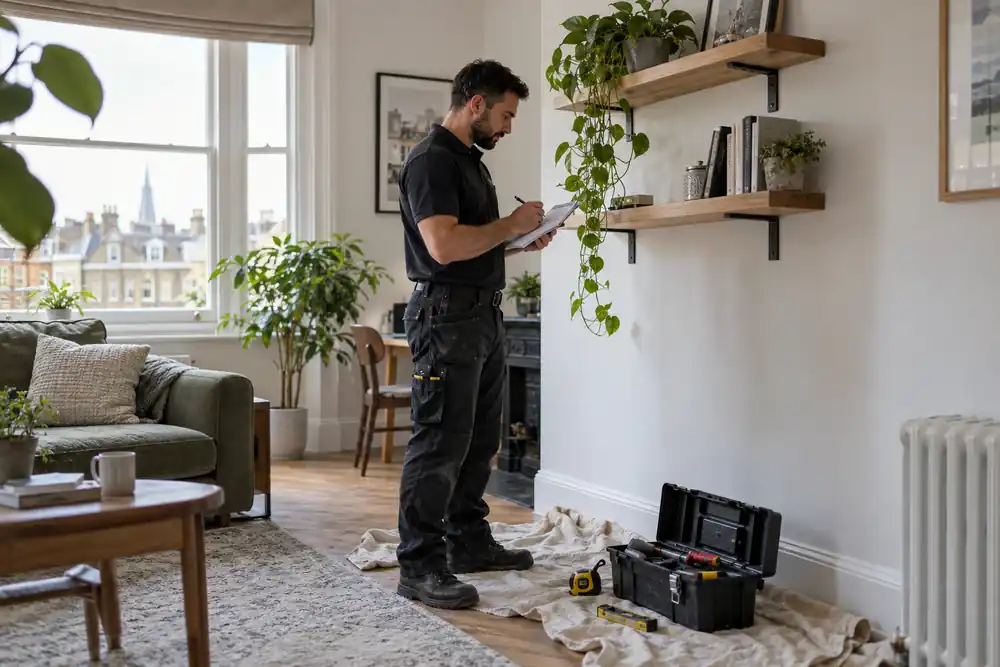
Suitable requests can include putting up shelves, fitting hooks and rails, hanging pictures, replacing simple door furniture, adjusting cupboard doors, renewing small areas of sealant, assembling furniture and completing minor finishing work.
The surface behind a fitting matters.
ODD JOBS LONDON
Odd jobs often sit unfinished because each one feels too small to arrange separately. A shelf needs fixing, a handle is loose, a curtain rail has moved and flat-pack furniture still needs assembling. Combining compatible tasks can make the visit more productive, but only when the list is clear. Describe every item rather than writing “general jobs”, add photographs and note approximate sizes, wall types and any parts already purchased. That information helps identify tools, fixings and whether a task belongs with a specialist trade instead.
Suitable requests can include putting up shelves, fitting hooks and rails, hanging pictures, replacing simple door furniture, adjusting cupboard doors, renewing small areas of sealant, assembling furniture and completing minor finishing work. The exact scope depends on condition, access and materials. Work involving gas, major electrics, structural alteration or specialist certification is not treated as a casual odd job. It should be routed to the appropriate qualified professional. Clear boundaries protect the property and make the quotation more useful.
The surface behind a fitting matters. Plasterboard, masonry, tile and timber call for different drilling methods and fixings, while concealed pipes and cables must be considered. State if an item is unusually heavy, valuable or supplied without its manufacturer's mounting hardware. Also mention high ceilings, restricted parking, concierge rules, permits or fixed appointment windows. In tenanted or managed properties, confirm who can approve variations before work begins. Good preparation reduces interruptions and avoids assuming that one fixing suits every wall.
CAREFUL PROPERTY WORK
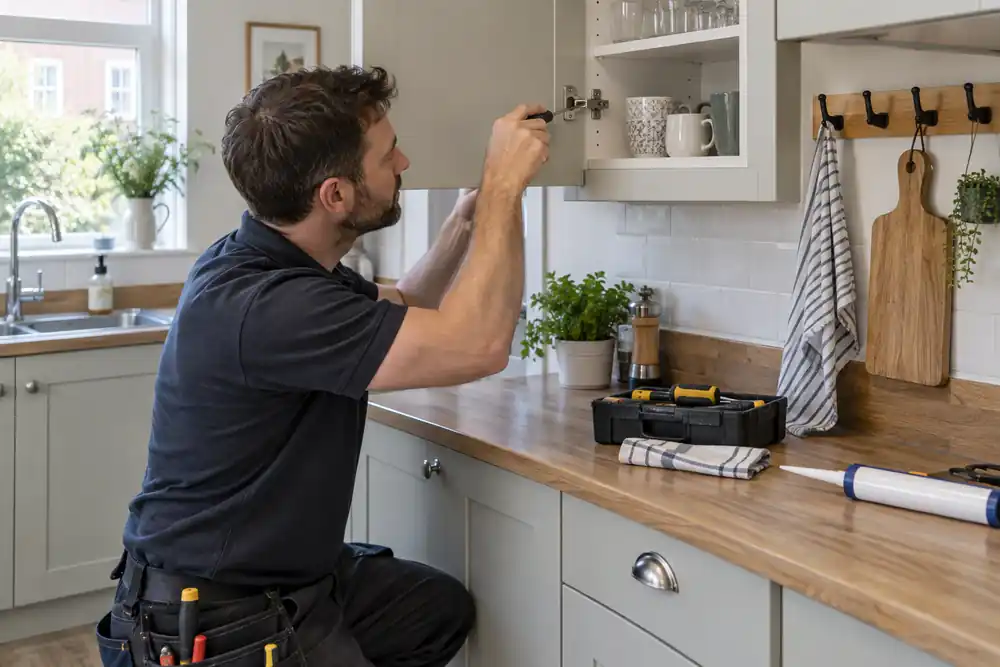
At the start of the appointment, the list can be reviewed in priority order. The operative can flag tasks that need extra materials or a separate trade before proceeding. Completed items should be checked for operation, alignment and stability, with packaging and work areas kept under control. If a hidden defect changes the scope, it is better to pause and explain than to conceal it. For painting, plumbing, electrical work or larger improvements, the relevant dedicated service page explains the more detailed process and considerations.
Put safety, access and tasks that unblock other work at the top of the list. A loose handrail matters more than a decorative hook; moving furniture may need to happen before wall fittings are installed. If materials are missing, the remaining tasks can still be ordered sensibly. A realistic priority list is more useful than expecting an unlimited number of unrelated jobs in one visit.
A tidy result depends on understanding why something loosened or failed. A pulled-out fixing may need a different anchor or position, while a cabinet door may need hinge adjustment rather than a larger screw. The operative should check the surrounding material and explain any limitation. That approach protects the property and avoids turning a five-minute cosmetic patch into a repeated fault.
A CLEAR PROCESS
Send the London postcode, photographs, measurements and the result you want.
The requirements, access, materials and appropriate trade are reviewed before work begins.
The planned work is carried out carefully, with any material change explained clearly.
ODD JOBS FAQ
Useful answers for planning the work.
Yes. List each task separately, include photographs and mark the priorities. The team can then assess which jobs are compatible and what preparation is needed.
Gas work, substantial electrical work, structural alteration and tasks requiring specialist certification need the appropriate qualified trade. Describe anything uncertain before booking.
Not necessarily, but any supplied item should be identified with dimensions and product information. Fixings must suit both the item and the surface.
Yes, subject to access and permission. Confirm landlord, agent or building-management approvals and any site rules before the visit.
Use one line per task, add clear photographs, approximate dimensions, wall or door material where known, access constraints and the result you want.
YOUR NEXT STEP
Send the complete job list and photographs to plan a practical handyman visit.