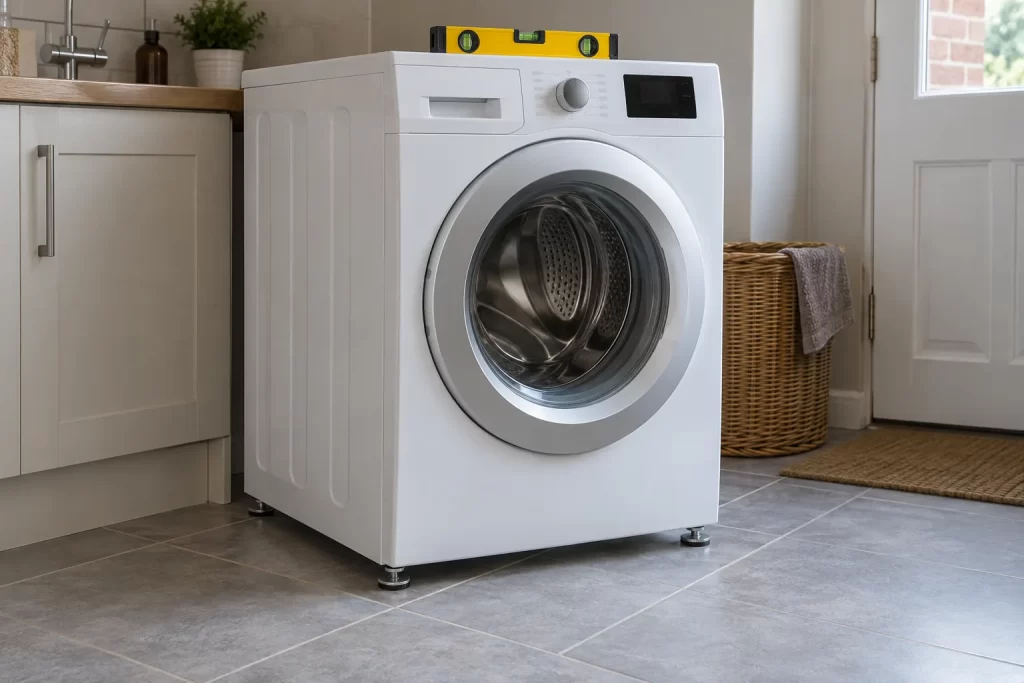
A washing machine that creeps across the floor during spin is not always simply “out of level”. Transit bolts left in a new appliance, a rocking floor, an unbalanced load, trapped hoses or worn internal suspension can produce similar symptoms. Check those possibilities in order before repeatedly turning the feet.
Stop if the movement is violent
Pause the cycle, switch the machine off and let the drum stop. Do not try to hold a moving appliance. If there is burning smell, grinding, a leaking hose, exposed wiring or a drum that strikes the cabinet, unplug it only if the socket is dry and safely accessible, then arrange appliance repair.
Rule out the load first
One heavy absorbent item can settle on one side of the drum. Redistribute towels or bedding and remove part of an overloaded wash. Very small loads can also fail to balance. Run the manufacturer’s recommended test cycle only after the machine stands firmly.
If vibration happens on every programme and with an empty-drum test, look at installation. If it began suddenly after years of quiet operation, inspect the floor and consider worn suspension, bearings or counterweight fixings rather than assuming the feet moved.
Check transit bolts on a recent installation
New front-loading machines are transported with bolts that lock the drum. They must be removed exactly as the manual describes and the supplied blanking caps fitted. Operating the machine with them installed can cause severe vibration and damage. Do not guess from appearance; compare the rear panel with the installation diagram and keep the bolts for a future move.
Tools and preparation
- Short spirit level
- Correct open-ended spanner for the feet and locknuts
- Torch and dry cloth
- Thin non-slip protective sheet if the manual permits one
- Another adult to steady the appliance
Unplug the machine and close its water valves before moving it. Do not strain the cable, inlet hose or waste hose. A washing machine is heavy; never tip it alone or place hands beneath an unsupported cabinet.
Inspect the floor and clearances
Press each top corner in turn. A click or rocking motion confirms that one or more feet are not carrying weight. Check for cracked tiles, loose boards, deep grout lines and a soft or sloping floor. All four feet need firm contact; cardboard, folded fabric and random timber wedges compress or creep.
Pull the machine forward only far enough to inspect hoses. They should curve freely and must not be crushed against the wall. The cabinet must not touch a worktop, side unit or skirting during spin. If surrounding joinery needs adjustment, use an appropriate handyman service rather than forcing the machine into a tight opening.
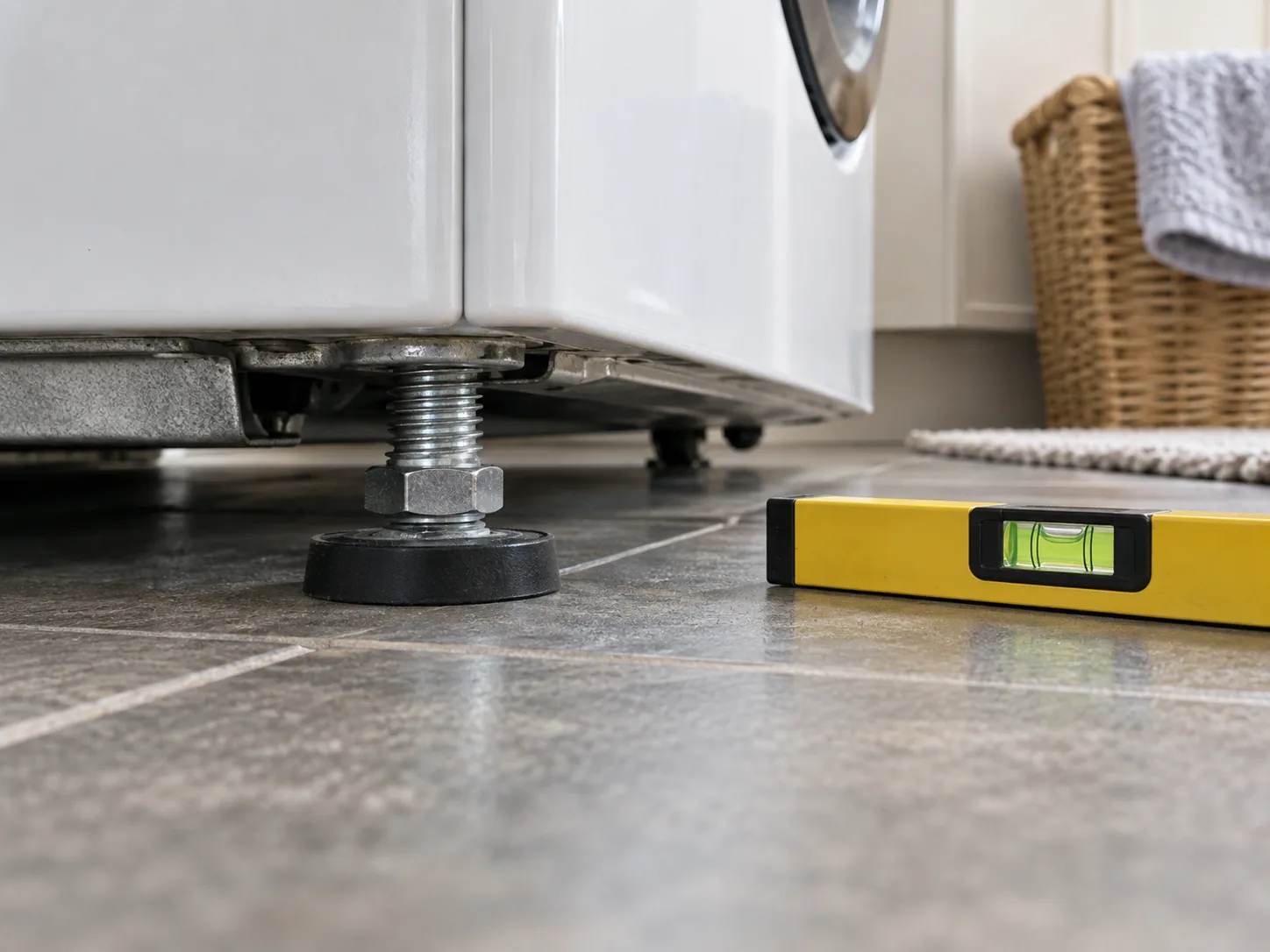
Step 1: return the feet to a sensible starting position
Follow the manual because some machines have two adjustable front feet and others have four. Loosen each locknut while supporting the appliance. Keep threaded feet engaged by several full turns; extending them excessively reduces stability. Start with the cabinet as low as the uneven floor allows.
Step 2: level from side to side
Place the spirit level on a clean, flat part of the top, not across a raised control panel. Adjust the relevant foot in small increments, lower the machine and recheck. Read the level from directly above. The objective is a centred bubble and firm contact, not matching the visible gap below adjacent worktops.
Step 3: level from front to back
Turn the level through 90 degrees and repeat. After every adjustment, press opposite corners to find residual rocking. A machine can be visually level while one foot hangs fractionally above a hollow tile, so the corner test is as important as the bubble.
Step 4: lock the adjustment
When all four feet bear weight, hold each foot so it cannot rotate and tighten its locknut firmly against the cabinet base as the manual specifies. An unlocked foot gradually turns during spin. Recheck both directions after tightening because the setting can shift.
Step 5: reconnect and test progressively
Check that inlet and waste hoses remain correctly routed, reopen the water valves and inspect for leaks. Run a short rinse or manufacturer test with the machine empty, then try a balanced medium load. Stay nearby during the first high-speed spin. Some normal vibration is expected, but the feet should remain planted and the cabinet should not travel.
Common mistakes
- Levelling before removing transit bolts.
- Adjusting only the two feet that are easiest to reach.
- Leaving locknuts loose.
- Using soft packing that compresses when wet.
- Pushing the appliance back onto a hose or cable.
- Testing first with one bath mat or another unbalanced item.
- Assuming a level cabinet proves the internal suspension is sound.
When the floor is the problem
Loose floorboards or a flexible suspended timber floor can amplify a normal spin. Do not screw through boards without checking for pipes and cables. The guide to preparing floorboards explains safe inspection principles, while structural movement requires a competent flooring or building professional. Appliance mats cannot correct a weak base.
Signs the machine needs repair
Call a technician if the drum has excessive up-and-down play, makes a rumbling bearing noise, sits visibly off-centre, strikes the door seal, or the cabinet still jumps when empty and correctly installed. Also stop if a concrete counterweight appears loose. These are internal faults, not levelling tasks.
Recheck after the machine has settled
Mark the foot positions lightly with removable tape and check them after five normal washes. A locknut that was not fully tightened may leave a visible change. Look for fresh scuffs, dampness below the inlet connection and contact marks on nearby units. If the machine has moved, repeat the corner test before adjusting anything; the evidence will show whether a foot rotated, the floor shifted or the vibration has another cause.
Also check the appliance after it is pulled out for filter cleaning or plumbing work. A small change in position can place one foot on a grout line or trap the waste hose, undoing an otherwise correct installation.
If the appliance is level but the finished surface flexes or has broken joints, arrange a flooring inspection before repeated spin cycles enlarge the damage.
A stable result has three tests
The bubble should centre in both directions, diagonal corners should not rock, and a balanced test load should spin without the appliance walking. Meeting all three is more reliable than judging the machine by eye or hiding movement with thicker padding.