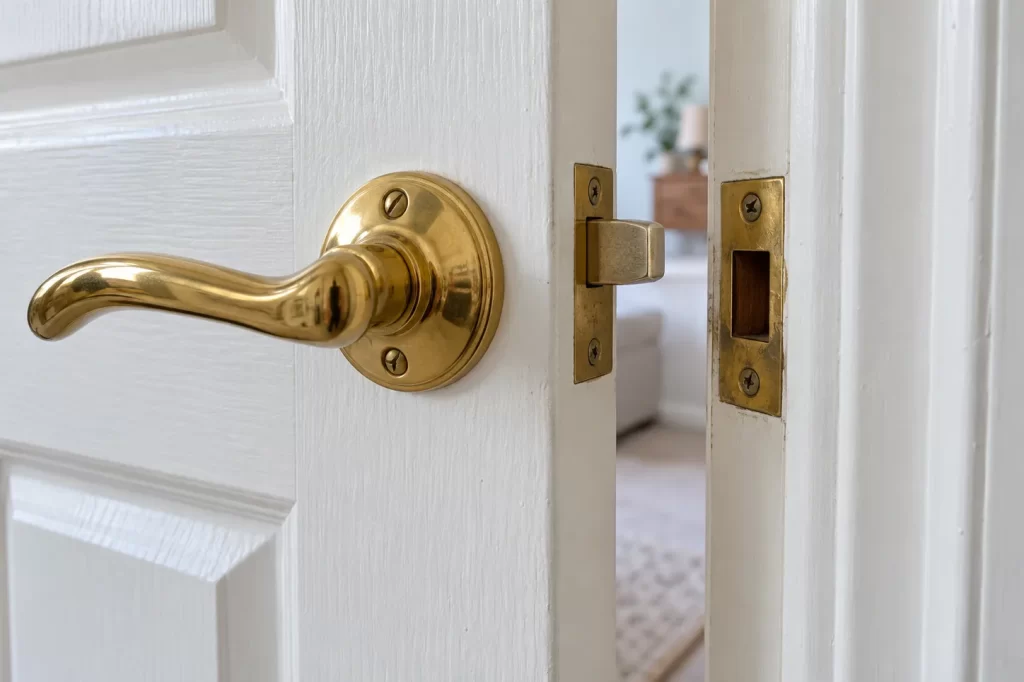
If an internal door closes against its frame but springs open again, start with the latch and the metal plate it enters. The latch tongue may miss the opening in the strike plate, fail to extend fully, or reach an opening that is too shallow. A few observations can usually tell you which fault you have before you move any hardware or cut into the frame.
This guide concerns an ordinary internal door with a spring latch operated by a lever handle. A fire door, an entrance door, a door in a managed escape route or one fitted with a specialist lock calls for a different approach. Do not alter its latch or closer without advice appropriate to that door.
First, identify what “will not catch” means
Close the door slowly while watching the edge from the handle side. Do not put fingers between the leaf and frame. Does the latch tongue touch the strike plate above or below its opening? Does it hit the near edge of the plate? Does it enter the opening, then bounce back? Or does the tongue remain inside the door even when the handle is released?
These symptoms point to different repairs. A visible height mismatch suggests the door has moved relative to the frame or the keep was fitted in the wrong position. A horizontal mismatch may come from loose hinges, an uneven reveal or a keep set too far from the door. A latch that barely protrudes may have a stiff or failing spring mechanism. A tongue that enters but will not hold may be meeting timber behind a shallow recess, or the door may be rebounding from a tight seal or stop strip.
Try the same close while gently lifting the door by the handle, without forcing it. If it catches only when lifted, inspect the hinges and the top-to-bottom gap before touching the strike plate. The related guide to a door rubbing on the floor covers a dropped door in more detail. Here, the key question is whether the latch mechanism itself works and whether its position matches the keep.
Check the latch with the door open
With the door safely open, press the latch tongue back with a thumb and release it. It should travel smoothly and spring out fully. Turn the lever several times. The handle should retract the tongue and return without being forced. Compare its behaviour with another similar door if one is available, but remember that different latch designs feel different.
Look for paint build-up, dirt or a loose faceplate around the latch. A newly painted door can have a thick edge that catches the tongue. Wipe visible dirt away and check that faceplate screws are snug. Do not overtighten them into soft timber. Avoid spraying an unknown oil into the mechanism; it may attract dirt or conflict with the maker’s care instructions. If the tongue sticks even with the door open, alignment at the frame is not the primary fault.
If a lever droops, turns without reliably retracting the latch, or the spindle feels loose, inspect the handle fixing and latch as a separate hardware problem. The existing guide to a broken door handle or lock is the closer reference for that situation. Repositioning the strike plate will not repair a failed return spring.
Compare the tongue with the strike-plate opening
The strike plate, often called the keep, is the metal plate on the frame with an opening for the latch. Close the door until the tongue just meets it. A torch can help in a dim hallway. Look at the tongue from a slight angle, keeping your hand clear, and note whether it is high, low, too far towards the room or too far towards the stop.
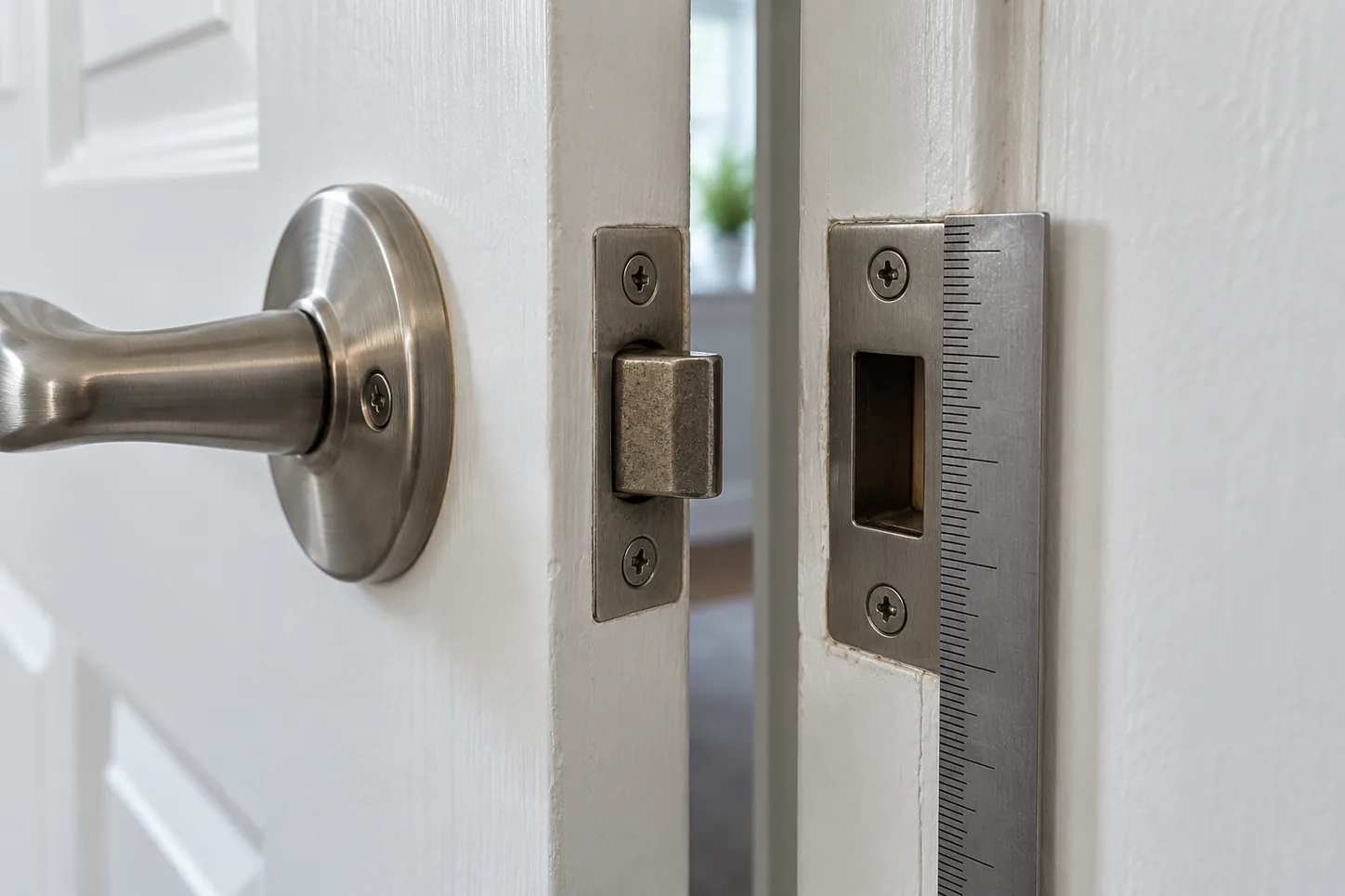
For a less awkward check, place a small strip of low-tack masking tape beside the plate and make a light pencil mark at the tongue’s centre line while the door is almost shut. Open the door and compare the mark with the centre of the opening. Remove the tape afterwards. This simple check is more reliable than guessing from wear marks alone, particularly where old paint conceals the plate edges.
The door should have a reasonably even gap around it when almost closed. Look at the top corners and the handle side. A tapering gap or a door that needs to be pushed sideways suggests movement in the hinges or frame. If the hinges are loose, address that cause first. Moving the keep to compensate for a door that is continuing to drop merely postpones the problem and can leave an enlarged, untidy recess.
Inspect hinges before adjusting the keep
Open the door part way and look at each hinge leaf. Screws should sit firmly and the metal leaf should lie flat. A screw that turns without tightening may have lost its grip in the timber. Do not insert a much longer screw blindly: services, glass or other hidden details may be close to the frame, and the right repair depends on the construction. The published article on stripped screw holes in a wooden door frame explains the timber-fixing problem.
Also check for a hinge pin that has worked upwards or a bent hinge leaf. Do not remove a hinge while the door is unsupported. If the door is heavy, glazed, unusually wide or difficult to control, have it assessed rather than trying to lift and adjust it alone. A sound hinge repair can bring the latch back into line without altering the strike plate.
Seasonal movement is another possibility. Timber doors and frames can swell in damp conditions and shrink when the air is dry. This can change the reveal slightly, especially where an edge is unsealed or a bathroom is often humid. If the door previously latched and now meets the frame tightly, note where it rubs and look for moisture damage before shaving any timber. Removing material on the basis of one damp week may create an excessive gap later.
When a small keep adjustment is reasonable
If the hinges are firm, the door hangs squarely, the latch springs out fully and the misalignment is only slight, a careful strike-plate adjustment may solve it. Remove one screw at a time and see whether the plate has useful movement within its existing recess. Some keeps have a bendable lip or an adjustable opening, but designs vary. Follow the hardware maker’s instructions where available rather than treating every plate alike.
Mark the original position before moving anything. Make one small change, refit securely and test the door several times from both sides. A latch should engage with an ordinary closing motion, without a hard shove. If a plate must be moved enough to expose the old screw holes or leave it unsupported, the frame needs a proper carpentry repair. Cutting a large opening with a chisel to make the latch “find” it can weaken the fixing and spoil the door’s appearance.
Sometimes the tongue lines up but strikes solid timber behind the plate. Remove the plate only if you can do so without damaging the painted frame and inspect the pocket. A small amount of paint or debris may be enough to block full engagement. More substantial recess work calls for controlled cutting and a sound plate fixing; it is easy to remove too much timber. If the frame is split, soft or moving, repair that first.
Check the stop and any seals
The stop is the narrow strip that the closed door rests against. If it has shifted towards the door, the leaf may meet it before the latch reaches the keep. A thick draught seal or a recently fitted bumper can cause the same spring-back. Close the door gently while watching where contact occurs. The answer is to restore the correct relationship between the door, stop and latch, not to slam the door harder.
Where an internal door has a required smoke or fire seal, do not remove or trim it as a quick fix. The door assembly may need a competent inspection. Likewise, a door that closes a protected stairwell should not be held open or modified casually. For an ordinary room door, a loose stop or an ill-placed bumper may be a straightforward timber or fitting repair, but identify the component before altering it.
Common mistakes that make latching worse
The most common mistake is moving the keep before checking whether the door has dropped. That can leave two faults: a loose hinge and a plate in the wrong place once the hinge is repaired. Another is enlarging the metal opening with an unsuitable tool while the plate remains on the frame; the plate may distort and hold less securely.
Repeatedly forcing the door is also unhelpful. It can bend the latch, loosen handle screws and split timber around the keep. A spray of lubricant is no substitute for a spring that no longer returns properly. Finally, avoid filling old screw holes with ordinary wall filler and immediately driving screws back into them. Wall filler is not a reliable structural fixing in a timber jamb.
If the fault recurs after an adjustment, ask why the relative positions keep changing. Loose hinge fixings, movement in the frame, swelling from moisture or an unsuitable door stop are more plausible explanations than an opening that mysteriously needs to be widened again.
When to arrange a repair
A small, stable mismatch on a sound internal door can be assessed with patience. Arrange door repair if the hinges pull away, the jamb is split, the door is heavy or glazed, the latch needs replacing, or the keep requires a new timber fixing position. A carpentry repair may be appropriate where the frame, stop or surrounding timber is damaged. For an ordinary collection of minor fitting issues, the site’s handyman repairs page provides another relevant route.
Explain the symptom when seeking help: whether the latch fails with the door open, where it strikes the plate, whether lifting the door changes the result, and whether the problem began after painting or during damp weather. A clear photo of the latch and keep from the side can be useful. Those observations make it easier to distinguish a simple adjustment from a mechanism or frame repair.
A door that catches cleanly needs three things at once: a latch that extends and retracts properly, a door that hangs consistently, and a keep positioned to receive the tongue. Check them in that order. It is usually faster than filing the plate on instinct, and it leaves the door working as intended.