
Types of Wall Fixings Explained: Which One Do You Need?
Types of Wall Fixings
Ever stared at a heavy mirror or a new shelf and wondered if it’s actually going to stay on the wall? Choosing the right wall fixing is the difference between a professional finish and a DIY disaster. Whether you’re dealing with crumbly masonry or hollow plasterboard, this guide breaks down everything you need to know to secure your items with confidence.
- Match the wall type: Always identify if your wall is solid masonry, hollow plasterboard, or a stud frame before selecting a fixing.
- Weight matters: Heavy items like TVs and large mirrors require specialist heavy-duty toggles or anchors, not standard plugs.
- Plasterboard needs spread: Use spring toggles or threaded plugs to distribute weight across a wider area of the soft board.
- Masonry requires expansion: Traditional rawl plugs work by expanding against the solid sides of a drilled hole in brick or block.
- Aim for the studs: When working with stud walls, fixing directly into the timber frame offers the maximum possible strength.
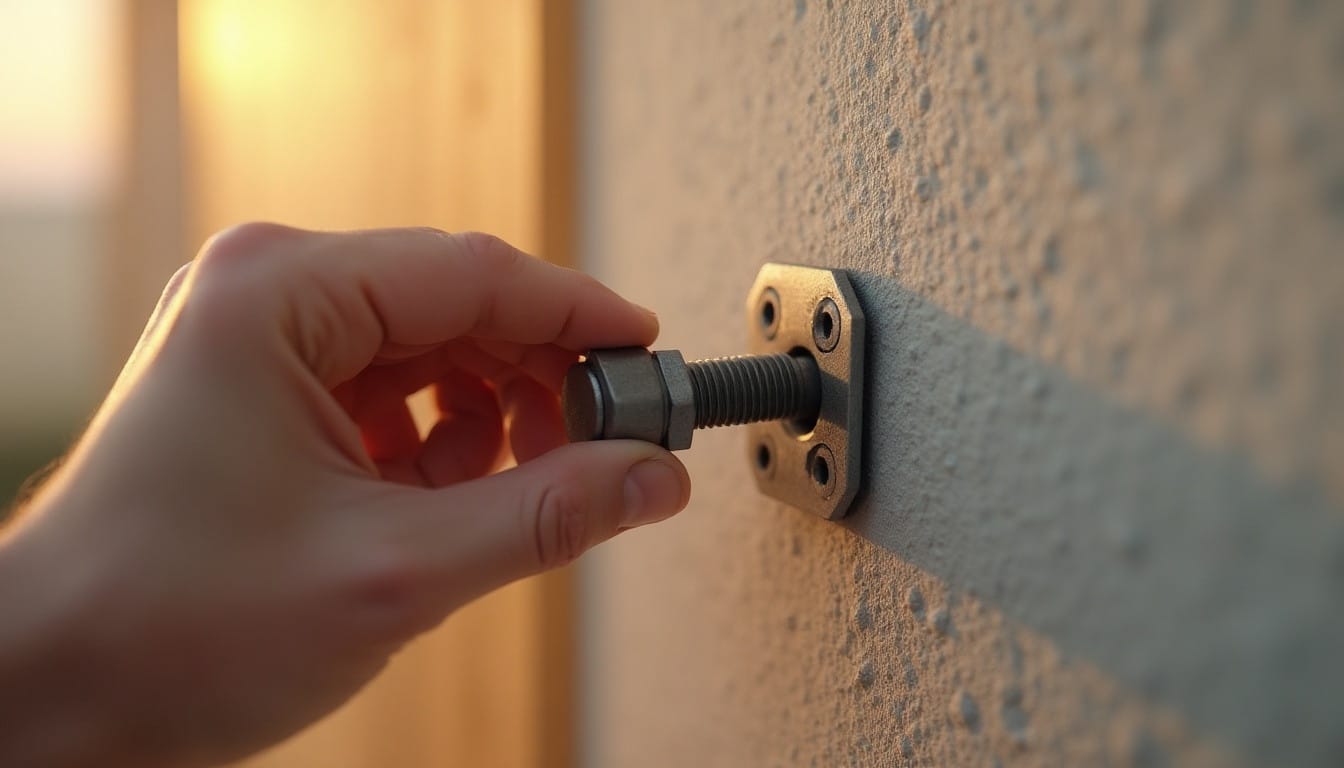
Why Choosing the Right Fixing Matters
Picking the wrong wall fixing is one of the most common reasons a shelf ends up on the floor rather than the wall. Every wall type behaves differently under load, and a fixing that works perfectly in solid brick can fail completely in hollow plasterboard. Understanding the difference between wall types, and matching them to the correct type of wall fixing, is the single most important step before you drill a single hole.
The weight of the item you’re hanging matters just as much as the wall itself. A picture frame and a wall-mounted television place very different demands on a fixing, even if they’re going into the same wall. Getting this wrong doesn’t just risk damage to whatever you’re hanging; it can also mean cracked plasterboard, crumbling masonry, or a hole that needs patching and starting again. Taking a few minutes to identify your wall type and the load involved will save considerably more time in the long run.
Fixings for Plasterboard Walls
Plasterboard is one of the trickiest surfaces to fix into because it’s hollow and relatively soft, meaning a standard screw will simply pull straight through under any real weight. This is why plasterboard fixings UK homeowners rely on are specifically designed to spread the load across a wider area behind the board rather than relying on the screw alone.
For lighter items such as picture frames or small shelves, self-drilling plasterboard plugs are usually sufficient. These have a threaded design that grips the back of the board as they’re screwed in, without needing a pilot hole in most cases. For anything heavier, spring toggles or gravity toggles open out behind the plasterboard once inserted, distributing weight over a much larger surface and making them far more secure than a simple plug.
Where possible, it’s always worth checking whether a stud or joist lies behind the point you want to use, since fixing directly into timber will always outperform a plasterboard-only fixing for anything of significant weight.
Fixings for Brick and Masonry Walls
Solid brick, block, and masonry walls offer far more strength than plasterboard, but they still require the right approach. Drilling into masonry without the correct fixing can cause the surrounding material to crack or crumble, particularly with older brickwork or softer blockwork.
The traditional choice here is the humble rawl plug, a plastic sleeve inserted into a drilled hole that expands and grips as a screw is driven in. For most everyday tasks, from hanging mirrors to fitting curtain rails, a correctly sized rawl plug paired with a matching screw provides a dependable hold.
For heavier loads, masonry anchors or resin fixings offer considerably more strength. Resin fixings work by injecting a chemical compound into the drilled hole along with a threaded rod or bolt, creating an extremely strong bond once cured. These are typically reserved for structural or heavy-duty applications rather than everyday household jobs, but they’re worth knowing about if you’re tackling something substantial.
Always match the drill bit size precisely to the fixing being used. A hole that’s too large will leave the fixing loose and unable to grip properly, while one that’s too small can crack the masonry as you try to insert it.
Fixings for Stud Walls
Stud walls are built from a timber or metal frame covered with plasterboard, meaning there are two very different materials to consider. Fixing directly into the timber studs themselves is by far the strongest option, and a stud finder makes locating them straightforward before drilling.
Once you’ve found a stud, a standard wood screw will usually hold securely without needing a separate plug, particularly for lighter to medium loads. For metal stud frames, self-tapping screws designed specifically for metal are needed, as ordinary wood screws won’t grip the material properly.
If a stud isn’t available in the exact spot you need, the same plasterboard fixings mentioned earlier come into play. In these cases, it’s worth considering whether the item can be repositioned slightly to land on a stud, especially for anything with real weight behind it.
Heavy-Duty Fixings for TVs, Shelves and Mirrors
Wall-mounted televisions, floating shelves, and large mirrors all fall into a category where getting the fixing wrong carries real consequences, both in terms of safety and cost. For these items, it’s worth thinking beyond the standard fixing types already covered.
On plasterboard, heavy-duty toggle bolts remain the most reliable option when a stud isn’t available, though wherever possible, distributing the load across multiple studs with a mounting bracket is preferable for something as heavy as a television. On masonry walls, larger rawl plugs rated for higher weights, or resin anchors for particularly heavy pieces, offer the strength needed.
It’s also worth checking the manufacturer’s weight rating for any fixing before use, since this figure accounts for the specific material and design of that fixing. Combining multiple fixing points, rather than relying on a single central point, is generally the safer approach for anything substantial, spreading the load and reducing strain on any one point.
Common Mistakes People Make With Wall Fixings
One of the most frequent errors is using a single fixing type across an entire home regardless of wall material, when plasterboard, masonry, and stud walls all require different approaches entirely. Another common mistake is underestimating weight, particularly with televisions and mirrors, where the true weight is often heavier than it appears.
Skipping the pilot hole stage, or using a drill bit that doesn’t match the fixing size, is another frequent issue that weakens the overall hold. Finally, many people forget to check for cables or pipework before drilling, particularly in kitchens and bathrooms, which can lead to far more serious problems than a loose shelf.
Things people often ask
What Our Customer Say’s
These are some of the responses from our customers who are very satisfied

Great service, punctual and as expected.
Great efficient service, came on time, really conscious of keeping our flat clean and tidy by taping plastic bag to catch the dust from the drilling, didn’t even need to tell him to take his shoes off (we have no shoes policy). Really impressed with the service, definitely use Bob’s Handyman Service again.
Very good service! They came on time, very happy I used your services!
Good job done. Dishwater installed perfectly. Arrived on time, easy booking and reliable staff.
It was quick, professional executed in every way and done by a very friendly and peasant guy. Thank you. I will definitely use you again and recommend you to others.
Bob’s Handyman team did a great job the first time I called them. I would certainly be happy to use their services again.
Great job! I highly recommend them!
Great value for money. Reliable workmen, competitive prices and very efficient. Will use your company again.
I was very impressed with your service – it was the first time I used it, but it surely will not the last!
Thank you Bob’s Handyman for the amazing job done on my bathroom. Very professional company.
I would definitely book them again, if I need help!
It was a pleasure to deal with your staff.
Excellent service! I needed a whole room repainted and the people you sent did a wonderful job. I would recommend you to my friends.
I’ve been using these guys for over an year now and they are brilliant every single time. No matter of its something small or a job that needs a lot of skills they do it professionally. I’ve been recommending them to everyone.
I was really pleased with the work that was completed on time. The handyman who came did the jobs quickly and efficiently and left everything tidy.
I’m very pleased with the carried out work. The handyman was very knowledgeable, worked tidy and quickly and did e great job. Will be recommending your services.
The job was for my parents who were very happy with the person who did the job and would definitely use your services again.
Your handy man put in extra effort to do the job, which I appreciate very much.
