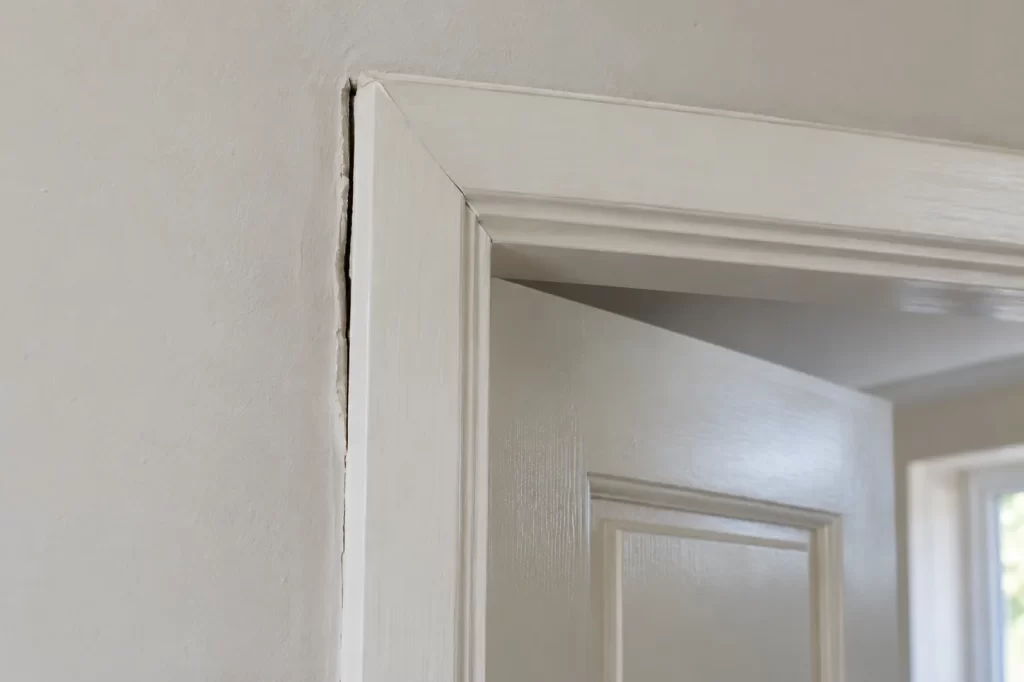
Architrave is the decorative trim around a doorway. It covers the joint where the door frame meets the wall. If it comes loose, the gap looks untidy and may catch clothing, but the remedy depends on what is moving beneath it. Sound trim pulling away from a sound frame can often be refixed neatly. A frame that flexes, a damp wall or cracked timber around a hinge needs a different repair before the architrave is put back.
The distinction matters because architrave is not the main structural jamb and is not the narrow stop strip that the door closes against. Nailing decorative trim down harder will not restore a failing latch fixing. Begin by identifying the loose component and the condition of the surface behind it.
Check the trim and the door independently
Open the door and inspect the loose length from top to bottom. Is the gap between trim and plaster, between trim and frame, or at a mitred corner where two pieces meet? Press lightly at several points. If the trim moves but the door frame stays firm, the problem may be local. If the jamb shifts when the door closes, stop and assess the frame. The article on stripped screw holes in a wooden door frame deals with a different but related structural weakness.
Look for the first point of movement. A single finishing nail may have missed its backing, or a long run may be bowing because the wall is uneven. Check for a split along the grain, old nail holes that no longer grip and a mitre opened by seasonal movement. Photograph the original position before moving the piece; a paint shadow may help when it is refitted, although it is not always the correct final line.
Close the door gently while watching the trim. If the leaf touches it, the door may be misaligned or the architrave may have shifted into the opening. Do not shave the door to avoid a loose decorative piece. The latch and reveal need separate checks. A small plaster crack near the corner may be merely decorative, but if it continues beyond the trim, the guide to hairline cracks in plaster is relevant.
Look behind the gap before sealing it
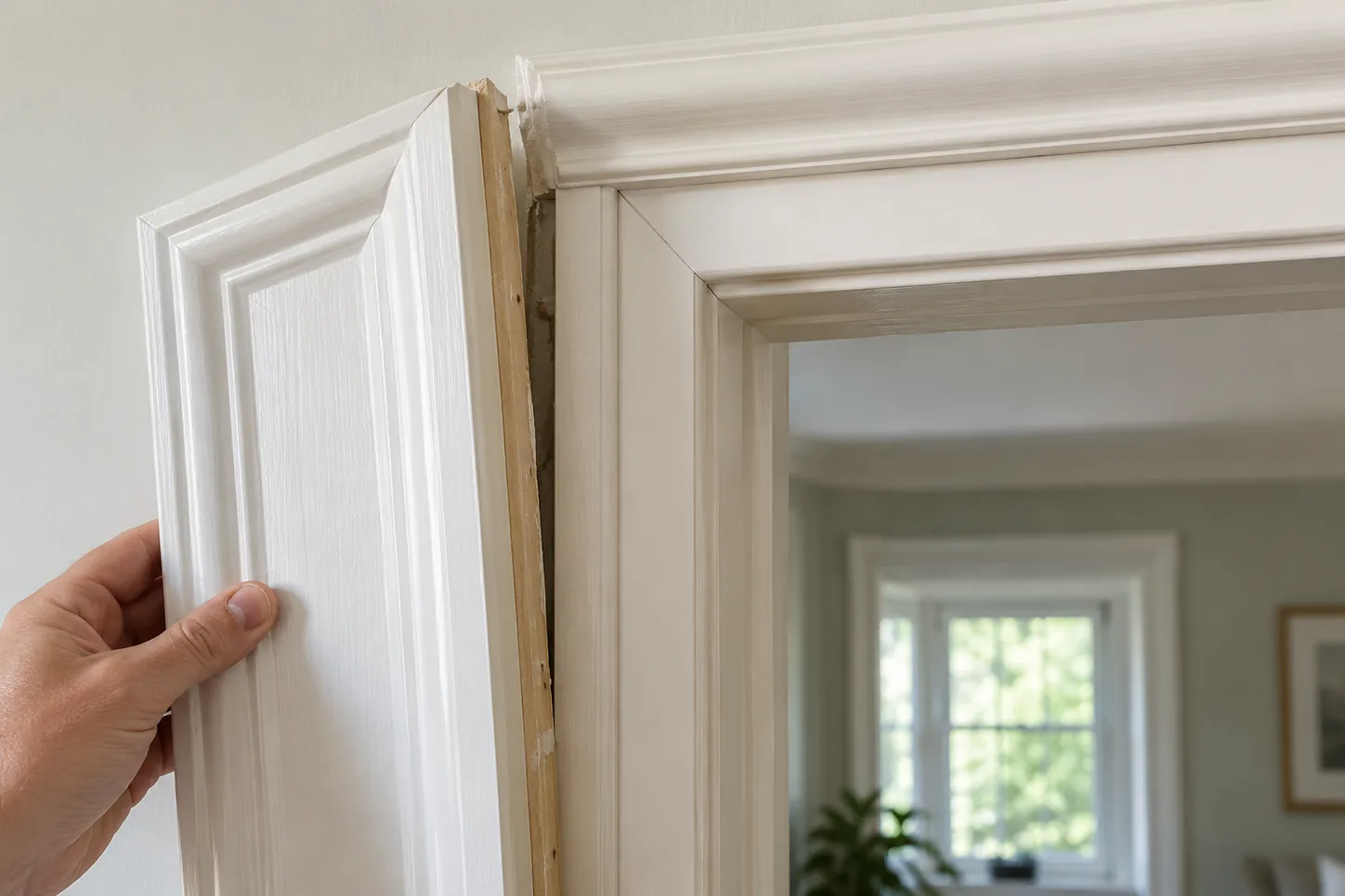
Use a torch to look into the gap without forcing the trim farther from the wall. Dry dust and an old paint line are common. Damp staining, soft plaster or a musty smell should make you pause. Moisture may come from a nearby bathroom, external wall or plumbing route. Refitting and caulking over it can hide a developing problem and weaken the new fixing. Establish and correct the source, then let the material dry before decorating.
If the wall surface crumbles when touched, a fresh nail may not hold even when the trim is sound. The underlying plaster or backing may need local repair. On a stud partition, the trim should be fixed where the frame or timber backing provides grip, not into the thin face of plasterboard alone. In a masonry opening, old architrave may have been fixed to timber grounds; a repairer should find sound material rather than drive longer fasteners blindly.
Be alert to hidden wiring. Cables may run near switches and sockets beside doorways, and some frames conceal other services. Do not use a long fastener simply to reach something solid when the construction is unknown. A detector is useful but not infallible. Choose a fixing path only once the substrate is understood.
Release only what needs to be moved
If the architrave is loose over a short length and sits back neatly, you may not need to remove it. Clean visible debris, check old fixings and choose new sound fixing points. If it is badly bowed or old adhesive prevents it seating, part of the length may need to be released. Cut through any paint or caulk line with a sharp knife carefully so the wall finish is not torn away when the trim moves.
Support the trim and ease it gently with a broad tool against a protective piece of scrap wood. Avoid levering directly against fragile plaster. Locate old nails and pull them from the back of the architrave where possible, rather than dragging their heads through the painted face. Keep a mitred corner together if it is sound; pulling one leg abruptly can break the head piece.
Lay any removed length flat and check for twist or cracks. Scrape only loose adhesive or paint lumps that stop it seating. Do not aggressively sand old coating of uncertain age; older paint may require lead-safe handling. Preserve the profile and orientation, especially in an older home where a matching replacement may be hard to source.
Refix into sound material
Offer the trim back to the opening and check that its reveal around the frame looks consistent. It should not cover a hinge, latch keep or seal. A helper can hold a long length while you trial the position. Mark a few discreet fixing points where the frame or backing is sound and hidden services have been considered. Pilot holes near thin edges reduce the chance of splitting.
Fine finishing nails or suitable trim screws can hold sound timber to a sound backing. Use fasteners long enough for secure purchase but not so long that they create unnecessary risk inside the wall. Do not overdrive them and crush the profile. Adhesive can supplement mechanical fixings if both surfaces are clean, dry and compatible, but it will not rescue crumbling plaster or a warped strip held under strong tension. Follow its cure instructions and keep the trim supported while it sets.
Refix gradually, starting from a section that already sits correctly. Check the mitres as you work and avoid pulling one part so tight that an adjacent joint opens. When secure, open and close the door several times. It should clear the architrave naturally. Press lightly along the trim; it should not click or spring away from the wall.
Finish the joint, then monitor it
Fill small nail holes with a product suited to painted wood and allow it to dry. A fine bead of paintable decorator’s caulk can close a narrow stable line against plaster. Do not use a thick bead to bridge a moving gap. Prime exposed timber where needed, then touch up the finish. If a mitre has opened, a suitable timber repair and careful finishing may give a neater result than packing the gap with soft caulk.
Check the doorway again after normal use. A recurring gap suggests the trim is under tension, the substrate lacks grip or the frame itself is moving. Adding more nails to the same weak area can split the architrave. A carpentry repair can address warped trim or restore backing. If the door hangs badly or the jamb moves, the site’s door repair service is the relevant route.
If the room is being redecorated, plan the trim repair before painting the wall. That lets you prepare the joint and fill fixing holes without leaving a bright patch on a finished surface. Keep a small record of the paint product and colour used for future touch-ups. Where wallpaper meets the architrave, protect its edge while cleaning the gap; an aggressive scraper can lift an entire strip of paper. If the corner moulding has a complex profile, photograph its mitre before taking it apart so it can be reassembled in the same orientation. A repair is easier to hide when the original detail is preserved.
Architrave can be a modest repair when both the wood and the wall are sound. The durable sequence is to inspect the frame, remove what prevents the trim seating, fix into reliable backing and use caulk only as a final finish. That leaves the doorway neat without concealing a larger defect.