THE HALE · MEASURE THE ITEM AND THE SPACE IT WILL USE

Handyman Fitting and Repairs in The Hale

A shelf, cabinet or ordinary household fitting can be the right width and still be wrong for its position. Bob’s can review work in The Hale with depth, opening movement and the existing room in view. Include repairs to retained items as well as the new installation you have in mind.

  • Depth and projection considered alongside width
  • Product dimensions distinguished from the finished arrangement
  • Retained fittings included in the installation plan
  • Uncertain measurements flagged before purchasing
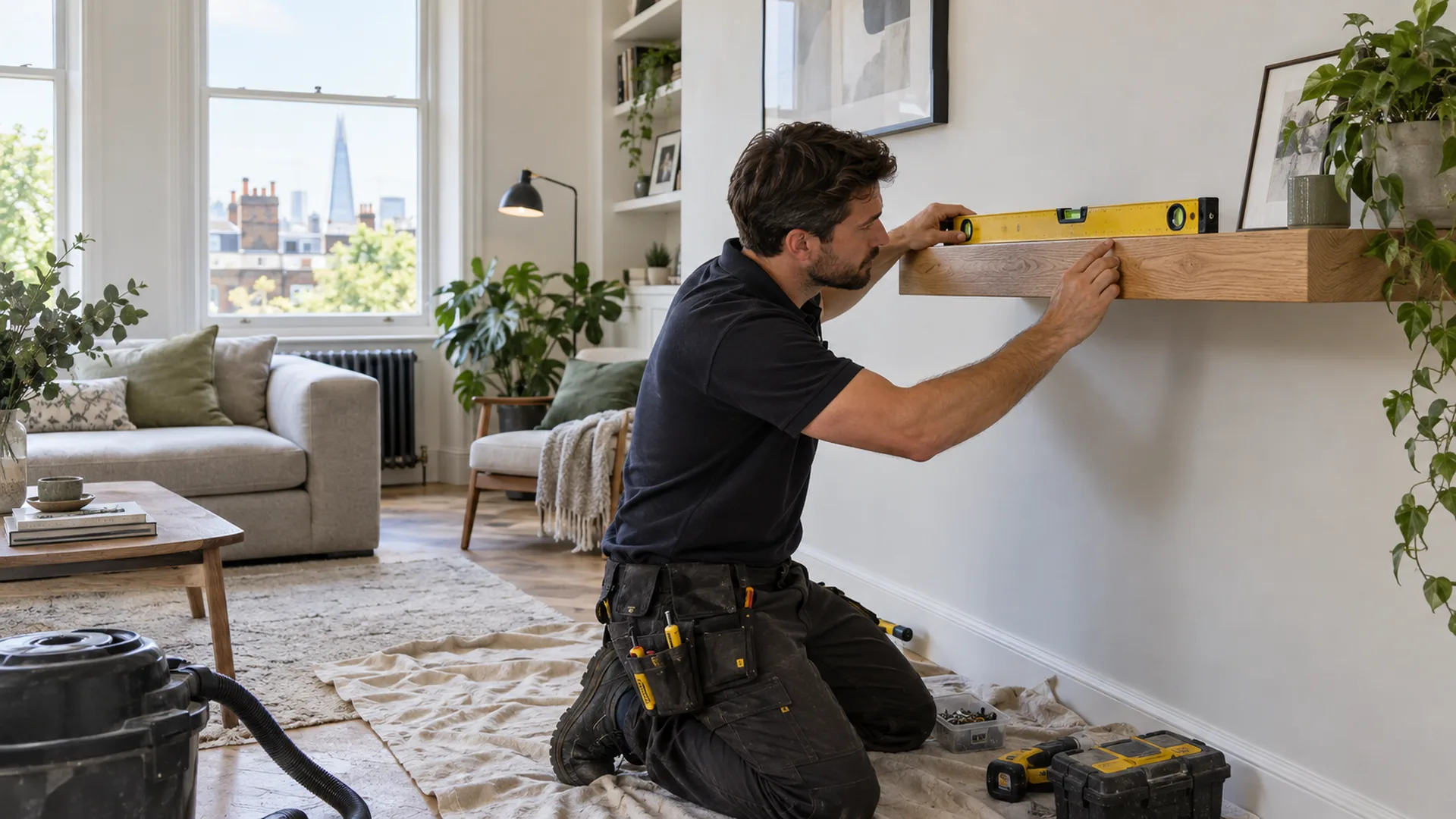
Handyman installing an interior shelf

Suburban rooms still need their own measurements

Barnet’s local history describes The Hale developing into suburban streets by the mid-1930s. Rooms in those homes may have been altered since, with later fitted storage, changed doorways or different floor finishes. An assumed standard room size is not a sound basis for a new household fitting.

For a shelf or cabinet, distinguish the item’s dimensions from the space it needs in use. A cupboard door has an opening arc; a drawer needs room to pull out; a shelf projects beyond the wall. Existing handles, sockets and furniture may affect the arrangement even when the main dimensions appear to fit. Explain those relationships before selecting a product solely by its width.

Bob’s can review ordinary mounting, assembly and fitting repairs with the same practical aim: the room should remain usable afterwards. If an existing door or piece of furniture is already causing a problem, list that separately. A new installation should not simply disguise a fault or make it harder to reach.

Discuss your property requirementsCall 020 3137 9380
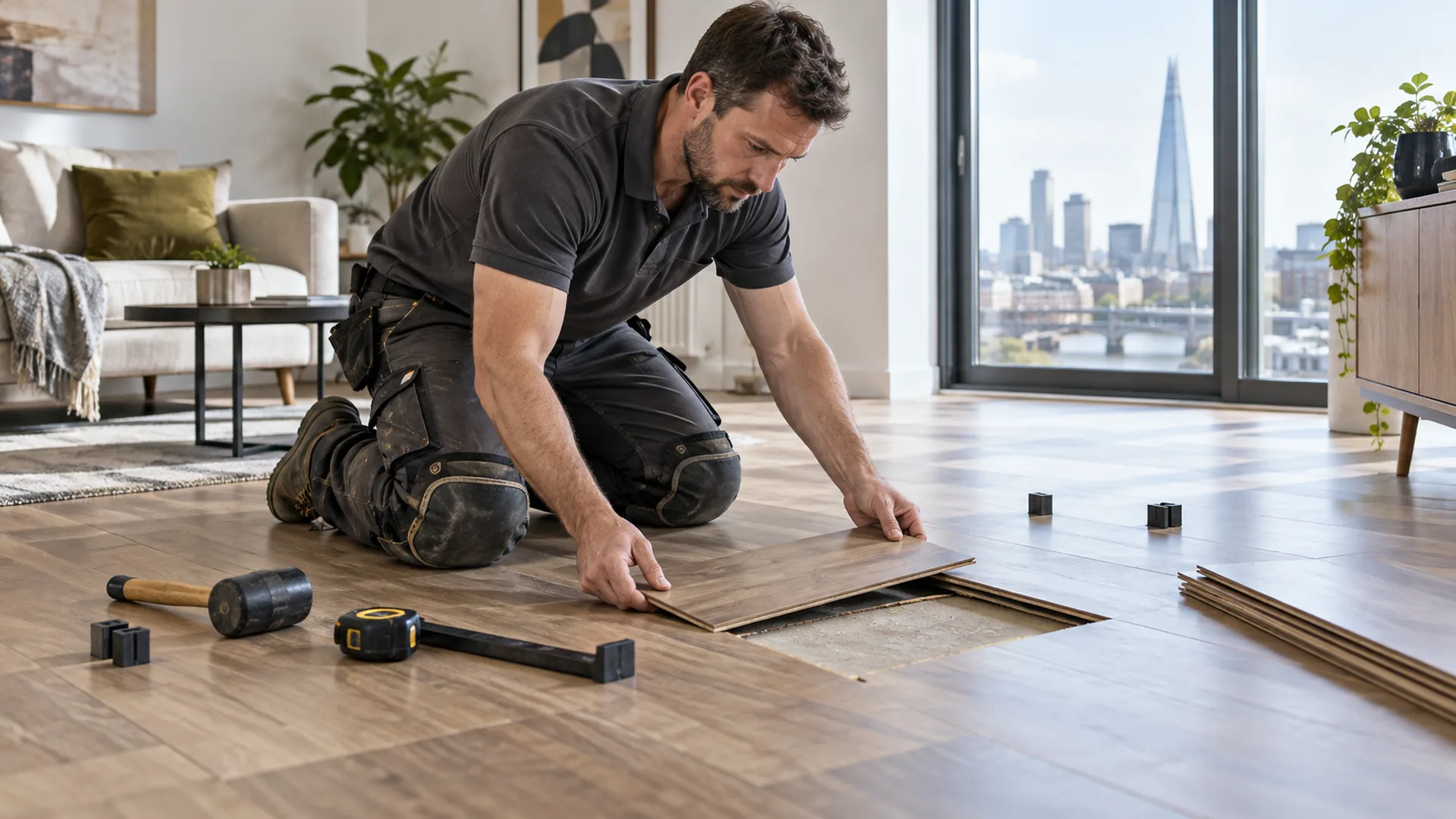
Professional working on a floor detail beside room fittings

A measured gap is not the same as a working installation

Measure the narrowest relevant point rather than only the most convenient one. A recess can vary along its height or depth, and decorative trim can reduce the space near the floor. Explain where each measurement was taken and label anything approximate. Do not present a rough estimate as a confirmed product clearance.

Think about the action after installation. A deep shelf above a seated position has different practical implications from a shallow display shelf. A cabinet door may clear the wall but meet a nearby handle. Bob’s can review the proposed fitting with these relationships understood; the point is to resolve them before an installation creates another household inconvenience.

Avoid making risky measurements to complete a form. Do not climb on furniture or dismantle a fitting to obtain a hidden dimension. Tell Bob’s what cannot be safely confirmed. A review may need further assessment before the product or method is settled, and that is preferable to ordering around an invented number. The planner helps organise tasks, not certify a measurement or a fixing design.

Turn the dimensions into a useful fitting enquiry

Select the rooms and actual concerns below, then use the generated checklist with your product and room information. The tool does not calculate structural loads, verify measurements or store personal data. Those details remain part of the separate review of the work.

1Property type
2Area of property
3What needs attention
4Urgency

Four dimensions of a fitting decision

01

Size

Identify width, height and depth where relevant. Keep the product size separate from the space available, so a comparison does not accidentally use the same number for both.

02

Movement

Consider drawers, doors and nearby fittings during ordinary use. A room can look clear with everything closed and still fail when two items are used together.

03

Support

Explain what the item will carry and the surface receiving it. A good dimensional fit does not establish a suitable fixing method or safe capacity.

04

Uncertainty

Mark estimated or inaccessible dimensions clearly. Further assessment may be needed before purchase or installation, rather than treating an uncertain number as an instruction.

The Hale questions about measuring for household work

Is the advertised cabinet width enough to decide if it fits?

No. Check its full dimensions, opening movement and any installation clearances. Nearby handles, trim and retained furniture can affect use. The final arrangement should follow the product requirements rather than just fit a width on paper.

Should I measure a recess at only one height?

That may miss a narrower point or projecting trim. Record the relevant variation where safely accessible and explain where measurements were taken. Avoid assuming walls are parallel simply because the recess looks regular.

Can Bob’s cut a new furniture item down if it is too large?

Do not assume modification is appropriate. It may affect construction, fittings or the product’s intended operation. Review suitability before buying rather than relying on an unplanned alteration during assembly.

What if I cannot safely reach the proposed shelf position?

Do not climb on household furniture to measure it. Explain the intended position and what remains unknown. The work may need an appropriate assessment before dimensions and fitting arrangements are confirmed.

Does a shelf's depth matter if it is well fixed?

Yes. Projection affects the room’s use and the loads acting on the fitting. Consider the contents and people moving or sitting nearby. Secure attachment and a sensible position are both needed.

Can an existing handle clash be fixed by moving the new cabinet?

Possibly, if a suitable alternative arrangement is available. Distinguish a layout conflict from a defect in the handle or door. Changing the room arrangement may be preferable to altering an otherwise sound fitting.

Handyman areas near The Hale

For a separate address nearby, these local guides may help.

Give Bob’s the space as well as the product

For work in The Hale, share the intended item, its everyday use and the room features that remain around it. Mark uncertain dimensions openly so the fitting can be reviewed before purchases or permanent positions are agreed.

Call 020 3137 9380Get a quote