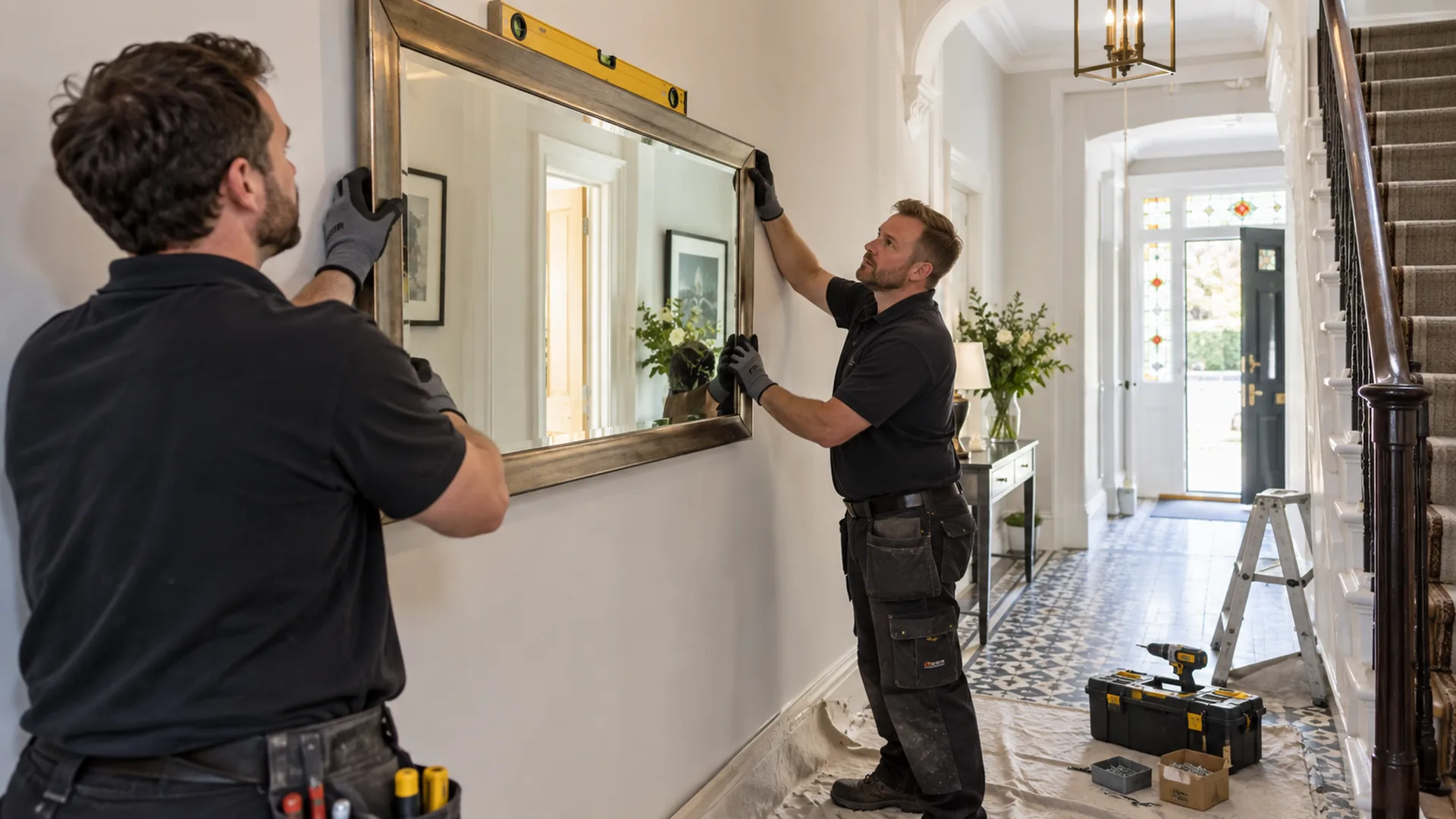
Barnet identifies Edgware as a town centre with independent shops, food businesses and local services around its High Street and transport hub. For a repair inside an occupied business, the useful question is not simply when the front door opens. A stock area may be unavailable during deliveries while a reception space must remain presentable throughout the day. Explain the actual working pattern when enquiring.
Residential enquiries need a different plan from a trading premises. A flat above a shop may have separate access and no relationship to the business below; a nearby house can have a straightforward room-by-room list. Bob’s can review furniture assembly, wall fittings and local finish repairs in those settings too. State the property type and the work requested at the outset, rather than letting the High Street setting imply a commercial brief for every address.
Separate the maintenance item from the business process around it. A cupboard hinge might be a straightforward mechanical problem, but reaching it could involve moving stock or equipment that only staff should handle. A display bracket may carry objects of varying weight as promotions change. State the intended use so the proposed repair does not suit only an empty fitting on inspection day.
The person requesting attendance should identify who can approve work and additional findings. A staff member may provide entry without authority to alter a leased fitting. Keep the owner or manager’s instructions available and state any contractor induction or insurance information required in advance. Do not discover those requirements after the business has arranged to close a room.
If a task touches a fire door, alarm, fixed electrical installation, security system or structural support, use the appropriate competent service. A commercial property’s ordinary-looking fixture can have a regulated function. The handyman list should name those exclusions clearly rather than allowing them to become urgent extras when tools are already on site.