
Receive
Count cartons inside the authorised boundary and photograph damaged packaging.
ESTATE HOMES AND TOWN-CENTRE ROUTINES · BURNT OAK
Burnt Oak grew with the Northern line extension and the Watling Estate. A modern repair day can involve station-area deliveries, timed refuse rules and an occupied home, so the plan must control what enters, where it is opened and what leaves.
A RESIDENTIAL ESTATE BESIDE AN ACTIVE CENTRE
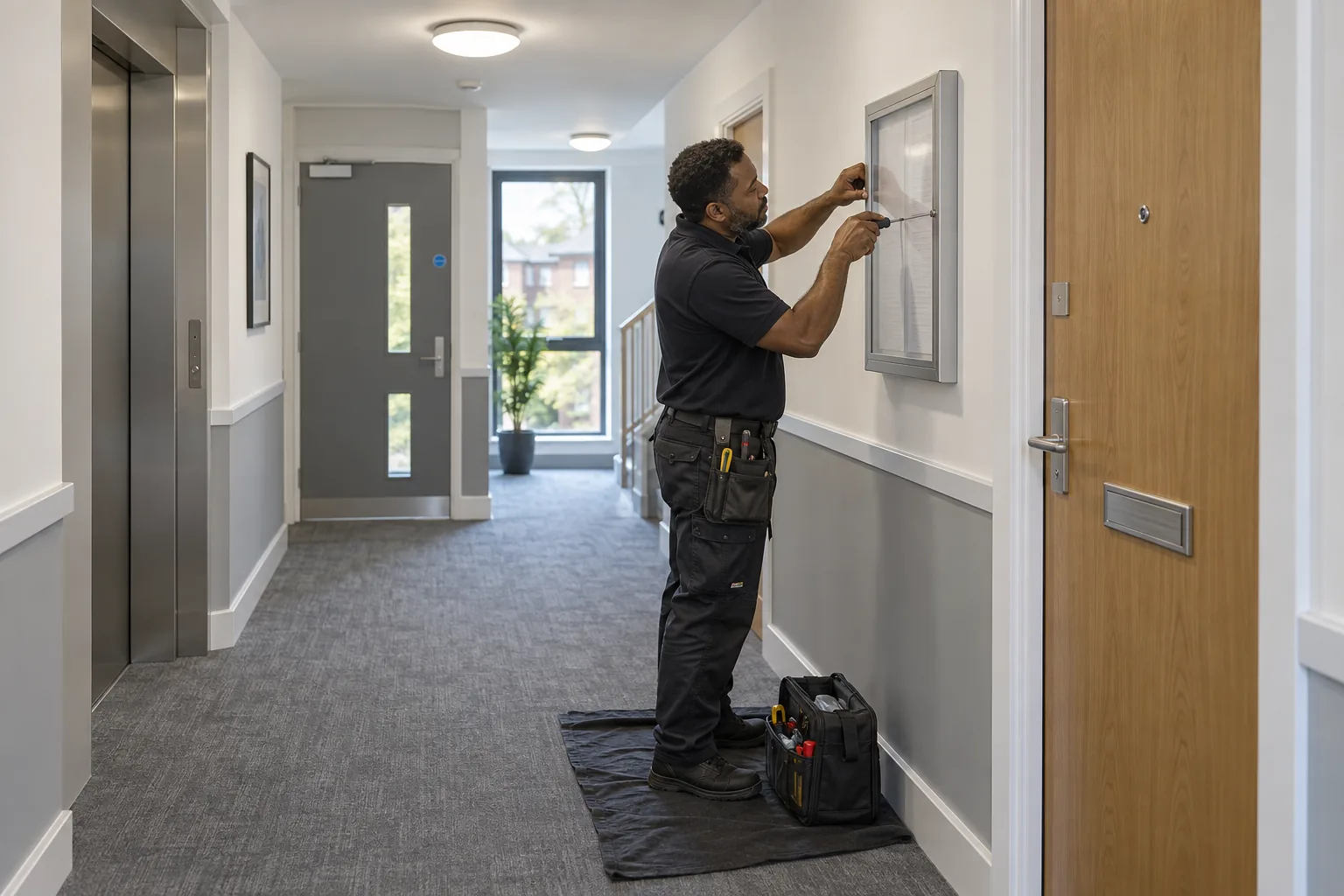
Barnet describes the Watling Estate Conservation Area at Burnt Oak as predominantly residential, with houses and flats alongside schools, churches and two shopping areas. The council’s town-centre plan links the centre’s 1930s growth with the Northern line and estate development. That relationship still matters when bulky products arrive near busy pavements or station-linked routes.
Choose an internal holding area before the delivery. Keep one path open between the entrance and the occupied rooms, and separate new components from items being removed. The appointment should not rely on the pavement, shared lobby or collection point as an overflow workspace.
RUN A ONE-WAY MATERIAL FLOW
Count cartons inside the authorised boundary and photograph damaged packaging.
Assign panels, hardware bags and instructions to a named product and room.
Keep the route open and bring only the components needed for the current stage.
Label useful spares, flatten waste and remove it through the agreed disposal route.
CONTROL THE DOMESTIC WORK ZONE
A mixed task list creates clutter when every box and removed fitting is opened at once. Use small, named zones and close one before the next begins.
Reserve a clean floor area large enough for one product. Count hardware into shallow trays and keep the instructions visible instead of spreading pieces along a corridor.
Measure tight turns and cover vulnerable corners. Do not wedge communal or fire doors open to make repeated journeys easier.
Bag old brackets, handles and screws by task. This prevents sharp pieces entering general packaging and preserves anything the owner wants to compare.
Product tools, shelf pins and touch-up pieces stay labelled with the item. Unidentified loose hardware is rarely useful after several assemblies are mixed.
Confirm who takes cardboard, plastic and replaced fittings. Town-centre collection points and commercial bins are not assumed to accept job waste.
PRICE THE PROVEN SAMPLE
Select task type, item count and expected duration. The result uses Bob’s published weekday labour rates. Hardware, specialist sourcing, parking, town-centre access, disposal and repair of failed backgrounds remain outside the automatic estimate.
ASSEMBLY NEEDS A CLEAR DELIVERY SLOT
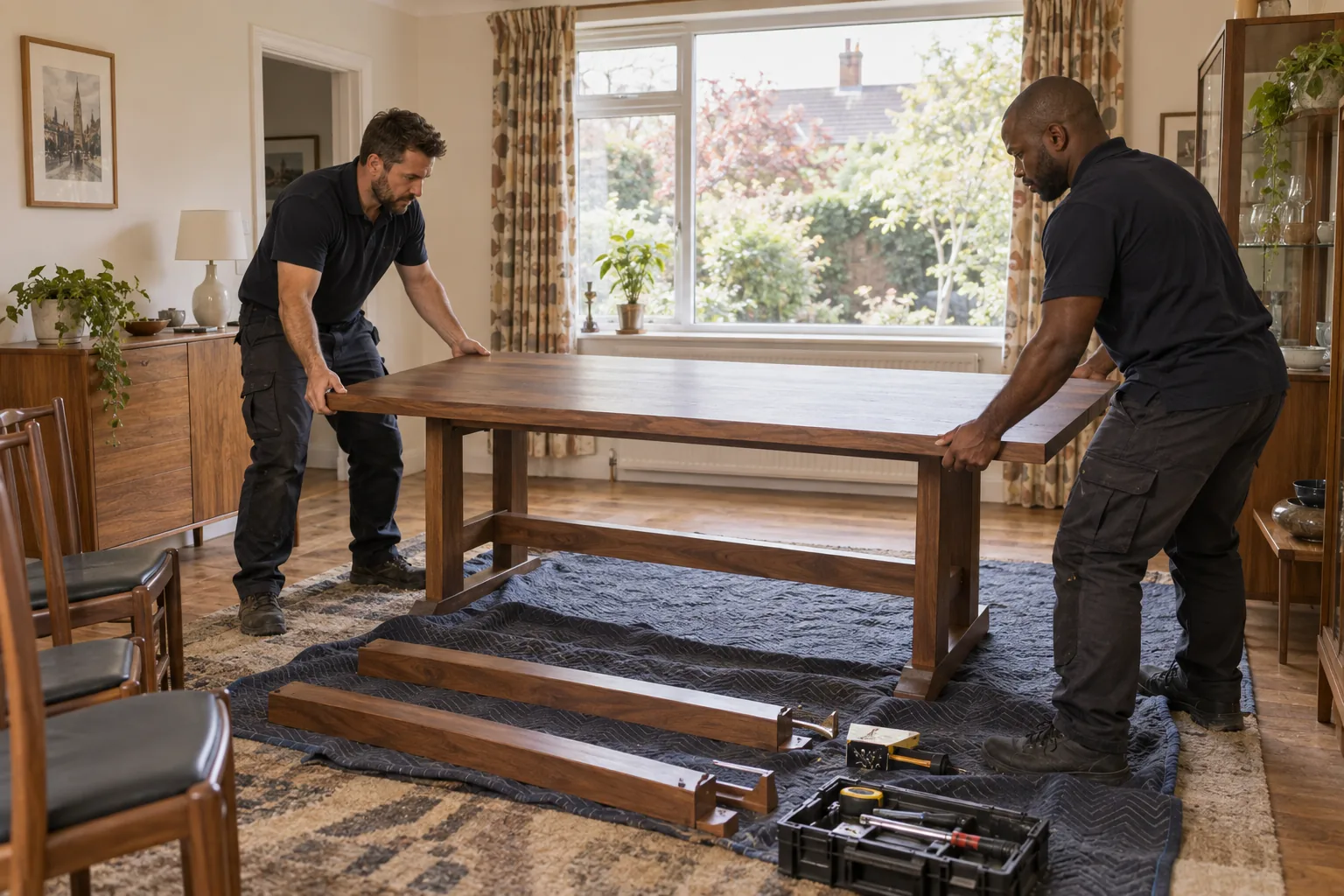
Burnt Oak town-centre streets include time-banded household waste collection arrangements, while busy pavements and entrances cannot become temporary storage. Confirm where cartons can be received, opened and flattened inside the authorised property boundary.
For a dining table, inspect the route and final chair clearance before moving components through the building. Protect corners, keep fire doors operational and assign packaging disposal in advance rather than assuming a communal or commercial bin is available.
RETURN THE HOME, NOT ONLY THE PRODUCT
Operate assembled furniture, then walk back to the entrance. Remove protective film, check corners for transit marks and make sure ordinary doors close normally. Instructions and named spares stay with the owner; packaging and rejected components follow the agreed waste route. If a shared fitting was noticed during the visit, report it to the responsible manager rather than altering it as part of a private job.
Doors, drawers, restraints and levelling points are tested before loading.
Hallways, thresholds and shared approaches are empty and usable.
Every retained spare, returned item and unresolved defect has a label.
NEARBY COVERAGE
Property maintenance north-west of Burnt Oak.
Prepared flat and household work to the south-east.
Measured repairs north-east of the estate.
BURNT OAK LOGISTICS QUESTIONS
Use a clean authorised area inside the property with enough space to count parts. Pavements, shared lobbies and escape routes are not assembly or storage zones.
Use one hardware tray and labelled component group per product. Close and clear the first work zone before opening the next set of cartons.
Do not assume it can. Follow Barnet’s current collection instructions for the address and agree job-waste removal before cartons are opened.
Use the published-rate calculator for a provisional duration, but confirm every required package before booking assembly. Handling waste, parking and a second attendance are not silently included.
Not every task, but the owner should check the property and current controls before altering protected exterior features or significant fabric.
Remove protection and cartons, inspect corners and thresholds, and confirm that doors used during the work close normally. Report shared-building defects to the manager.
PLAN WHAT ENTERS AND LEAVES
Include carton sizes, entrance turns, the indoor sorting square and the final room positions. State who keeps old items and who removes packaging. Bob’s can assess a realistic Burnt Oak appointment that protects occupied rooms and returns the shared approach clear.