Support equipment without trapping heat or cables

Media Furniture and Speaker Setup in Surbiton

Amplifiers, records, screens and speakers place different loads on furniture and need space for ventilation and connections. A Surbiton media setup should map equipment at operating size before cabinets or brackets are fixed. List the heaviest component and the one most likely to need servicing, then rehearse removing each without lifting over another device. Keep remote sensors, control doors and turntable lids inside the physical model. This prevents a visually tidy cabinet from becoming impossible to operate or maintain once every shelf is loaded.

  • Equipment and record loads declared by shelf
  • Ventilation clearances taken from manuals
  • Cable connectors included in cabinet depth
  • Wall speakers positioned outside doors and head routes
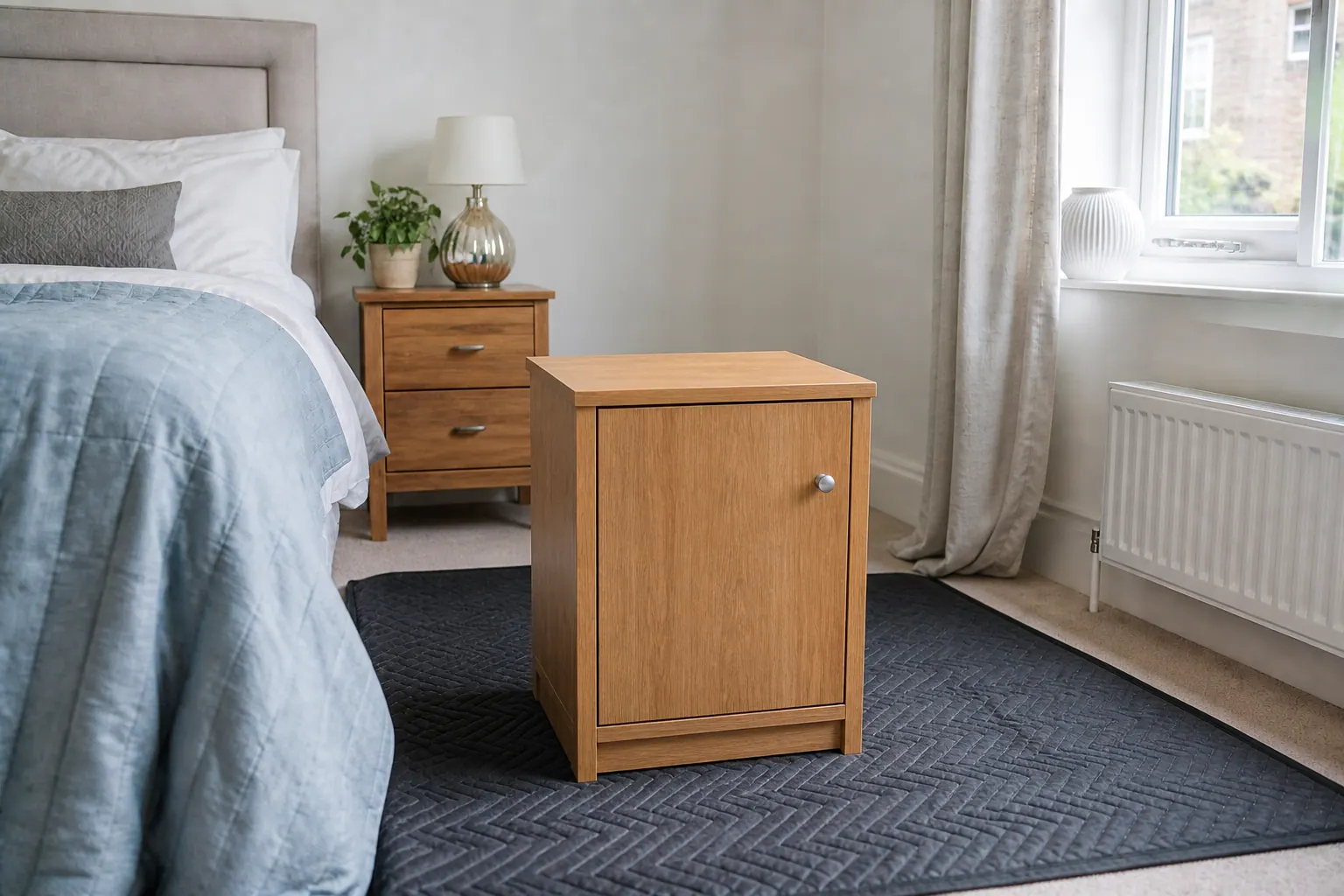
Media cabinet planned around equipment and record loads
Surbiton property focus
15+ years of experience
London and M25 coverage
One accountable team
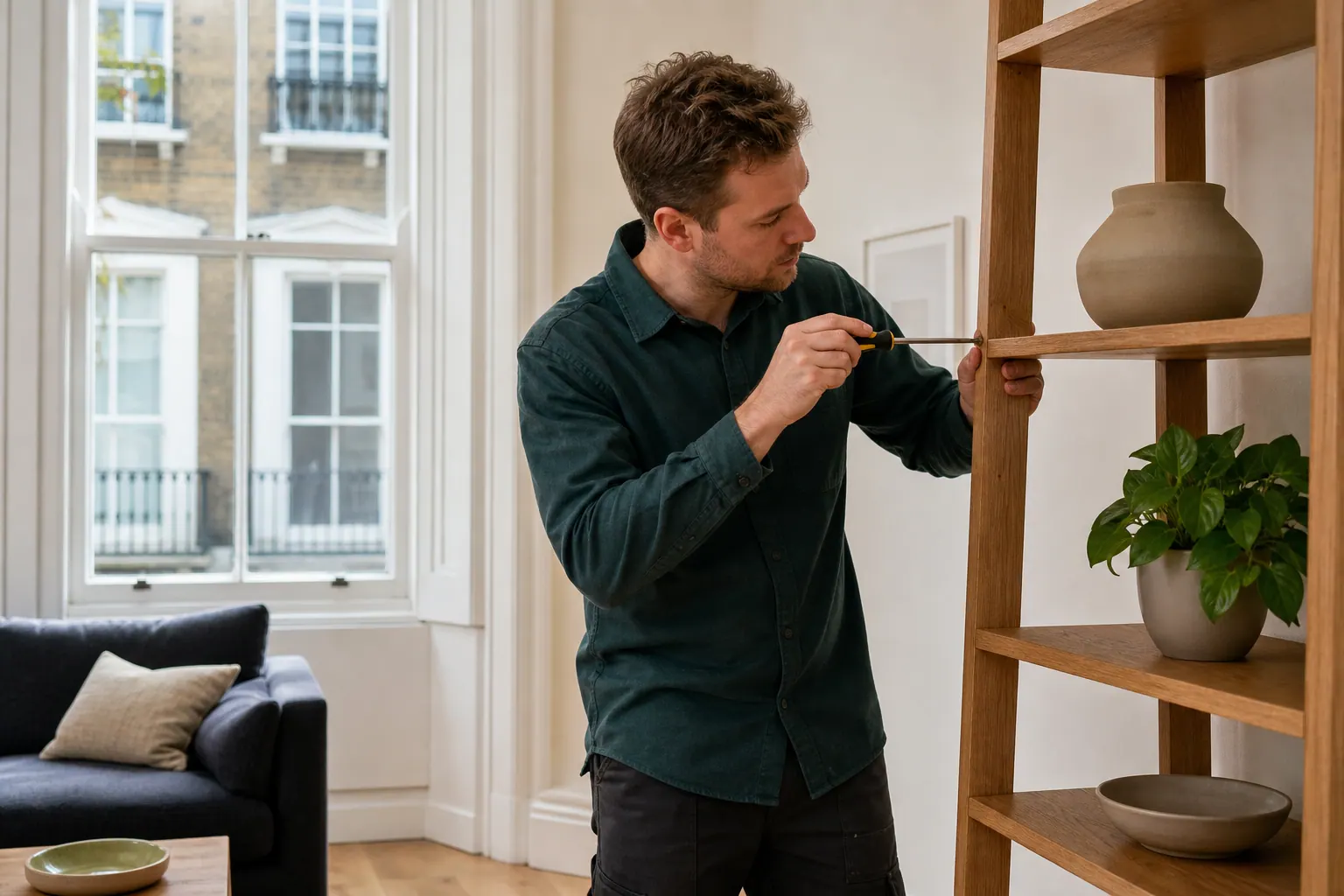
Speaker position tested on a stand before wall mounting

SURBITON PROPERTY NOTES

Trial speaker positions on stands before drilling

Use stable stands or floor marks to test listening position and household circulation without claiming an acoustic design. Open doors, drawers and curtains; confirm that a speaker will not be struck or create a sharp projection. Record bracket model, speaker weight, fixing pattern and the manufacturer’s allowed orientation. Wall construction and concealed services need assessment before mounting. Valuable or specialist equipment may require the audio supplier’s installer. Cable routes should remain protected, inspectable and free from pinch points. If the best physical position needs a new fixed power or concealed route, an electrician and possibly a specialist installer should plan it.

PRACTICAL CONSIDERATIONS

Measure every connector, lid and ventilation gap and A media cabinet must support heat, weight and repeated access

01

Measure every connector, lid and ventilation gap

Record each component’s weight, width, depth and height from its manual. Add the projection of plugs and cable bends behind it, plus the movement of a turntable lid, disc tray or control knob. Mark manufacturer ventilation clearances and keep them separate from decorative spacing. Include the weight of records, which can concentrate heavily on a short shelf. Sketch how equipment will be removed for servicing without dismantling the room. This map often shows that a cabinet advertised for a screen is too shallow once connectors are fitted or too enclosed for an amplifier under load.

02

A media cabinet must support heat, weight and repeated access

Inspect shelf material, span, supports, back panel and levelling provisions before loading. A cut-out back can weaken some furniture and should not be improvised without understanding the design. Follow manufacturer limits and place heavy components low where instructed. Keep ventilation openings free of records, fabric and cable bundles. Do not stack devices unless their manuals permit it. A rocking cabinet must be levelled and restrained using the approved system before valuable equipment is added. If the floor, wall or bespoke joinery capacity is uncertain, seek the relevant carpenter or structural advice rather than testing it with the collection.

03

Build the support before connecting the system

Assemble and level the cabinet according to its instructions, then install any manufacturer restraint into a verified substrate. Load empty equipment positions with temporary equivalent weight where appropriate to confirm shelf stability without risking valuable components. Place each device with ventilation clearance and route cables loosely, labelled at both ends. Add speakers after stands or brackets have been proven. A qualified electrician handles any fixed electrical change. Connect and test one component at a time, then tidy cables without overtight bends or blocked vents. Photograph the rear layout before the cabinet returns to its final serviceable position.

PLANNING THE WORK

Choose help by what carries or powers the equipment

Furniture assembly covers complete media units with instructions and safe build space. Furniture repair may address a serviceable cabinet, while carpenters can assess suitable bespoke ventilation or shelving. TV mounting requires screen, bracket, viewing, cable and substrate checks. Picture hanging does not automatically cover specialist loudspeaker systems; follow the product and supplier route. Electricians handle fixed sockets, new circuits and concealed electrical work. Bob’s can support ordinary physical layout and approved mounting without diagnosing audio performance, repairing electronics or modifying safety-critical product enclosures.

Discuss your property requirementsCall 020 3137 9380

PLANNING THE WORK

Surbiton’s historic rooms can change the mounting choice

Kingston identifies Surbiton Town Centre and several nearby conservation areas with their own character and boundaries. Check the exact address before drilling original panelling, decorated plaster or significant joinery. A freestanding cabinet or speaker stand may be more appropriate where the fixing surface is protected or uncertain, but it still needs stability. Lease and neighbour-noise rules can apply independently of heritage status. External aerials, visible cable routes and building penetrations raise separate questions. Bob’s can implement approved ordinary interior fittings while conservation, electrical and specialist audio decisions remain elsewhere.

Discuss your property requirementsCall 020 3137 9380

PRICING

Pricing based on the agreed Surbiton job scope

The quotation reflects the task, access, expected time and materials. Photographs and measurements help establish what can be priced before the visit and what first needs inspection.

Handyman labourFrom the published rate
MaterialsAgreed for the job
Additional workApproved before it starts

Parking, congestion and unusual access requirements are discussed where they affect the quotation.

NEARBY COVERAGE

Handyman areas near Surbiton

SURBITON HANDYMAN FAQ

Questions about planning handyman work in Surbiton

Can a media cabinet hold a record collection in Surbiton?

Only after the shelf material, span and manufacturer load are checked against the records and equipment planned for each level.

Can the cabinet back be cut for cables?

Do not assume so. The back may contribute to rigidity, and ventilation and warranty requirements should be reviewed first.

Can speakers be mounted on any wall?

Speaker weight, bracket instructions, wall substrate, services and household circulation all need checking before drilling.

Who adds sockets behind a media unit?

A qualified electrician should plan and complete fixed electrical work after equipment position and power needs are known.

How should cables be hidden?

Use safe inspectable routes that respect connector bends, ventilation and product instructions. Concealed fixed routes may need electricians or specialists.

Does conservation status prevent speaker brackets?

Not as a blanket rule, but listed or significant fabric and lease conditions can make stands or another location more suitable.

PLAN THE VISIT

Map the Surbiton media system before loading the cabinet

Send equipment weights, manuals, furniture details and wall photographs. We can scope suitable support and mounting without trapping heat, access or cables.

Call 020 3137 9380Get a quote