
Place and adjust fittings around the person using them

Everyday Usability Improvements for Hoxton Homes

A fitting can be level and secure yet awkward to use. Hoxton homes and community-minded households benefit when storage, handles, mirrors and furniture are positioned around real reach, movement and grip rather than a generic installation height.

  • Final positions tested by the regular user
  • Handles and catches checked for comfortable operation
  • Routes kept clear around furniture and doors
  • Adjustable options used when needs may change
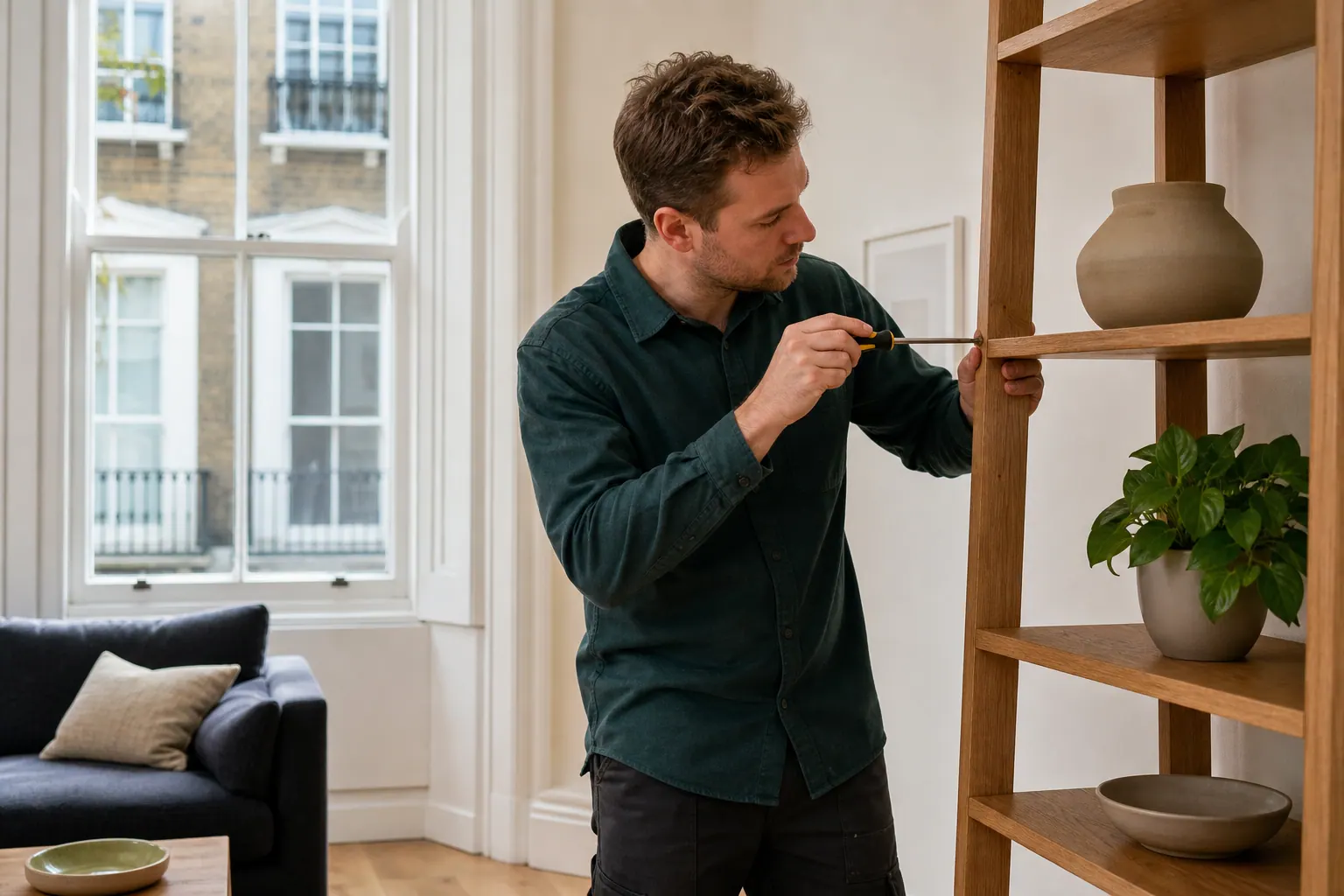
Resident testing the marked height of a wall fitting before installation
Hoxton property focus
15+ years of experience
London and M25 coverage
One accountable team
Handyman checking drawer clearance beside a clear walking route

HOXTON PROPERTY NOTES

Set height by the task and regular user

Mark a proposed shelf, hook, mirror or control position with removable tape and test it before drilling. Consider the object being lifted, not only the user’s fingertips. Frequently used items should not demand stretching over furniture or standing on a stool. A mirror height can serve seated and standing users when its size and sightline are considered. Children’s storage should remain appropriate as use changes and must not invite climbing on unstable furniture. Manufacturer instructions, structural support and service zones still set technical limits. The useful position lies where safe support and comfortable everyday use overlap, not where a standard dimension says the centre line should be.

PRACTICAL CONSIDERATIONS

A handle should operate without avoidable force and Protect the route through a compact room

01

A handle should operate without avoidable force

Stiff latches, small knobs and poorly aligned drawers can be difficult for children, older people or anyone with limited grip. First identify whether friction, alignment, worn hardware or the closing mechanism causes the resistance. Lubrication is not a universal fix and should be compatible with the component. A lever or larger pull may improve use, but hole centres, door construction and appearance need checking. Fire doors, external security doors and specialist closers require the correct competent route. For ordinary internal joinery, test the replacement through its full movement and with normal contents in place. Ease of use must not reduce security or safe closure.

02

Protect the route through a compact room

Measure the open position of drawers, doors and fold-down furniture, then keep a continuous path to the exit, bathroom and essential controls. Radiators, sockets and ventilation grilles should remain accessible. A freestanding item that narrows the route can be worse than limited storage. Wall-mounted solutions may help when the substrate and load allow them, while rounded projections and controlled cable routes reduce snagging. Do not present this as a formal accessibility assessment. It is practical placement based on the household’s stated use. Significant adaptations, structural changes and regulated equipment belong with appropriately qualified specialists and any occupational or landlord advice required.

03

Agree which user takes priority where needs differ

A shared flat may contain adults of different heights, children, guests or support workers. One person’s ideal hook or shelf can be unusable for another. List the items used daily and choose adjustable or duplicated positions where appropriate. Keep private storage distinct from communal equipment. In a rented property, obtain permission for fixings and discuss how they will be made good. Avoid assumptions about disability or age; ask the resident to demonstrate the task if they wish. The handyman’s role is to translate an agreed practical position into a sound installation, not to prescribe clinical adaptations or decide household priorities without the people who use the room.

PLANNING THE WORK

Use a temporary trial before an irreversible hole

Tape a paper outline of the cabinet, screen or rail and live with it briefly when the position is uncertain. Check glare, head clearance, door swings and whether the item can be cleaned. For art or mirrors, view the arrangement from normal standing and seated positions. The trial cannot prove the wall is suitable; substrate and concealed services still need assessment. It can reveal a poor ergonomic choice before drilling tile, panelling or a difficult finish. Protected or communal fabric may require permission regardless of a successful trial. Photograph the agreed outline with dimensions so the final installation does not rely on a verbal instruction given as tools are being unpacked.

Discuss your property requirementsCall 020 3137 9380

PLANNING THE WORK

Handover by performing the everyday action

Place a normal item on the shelf, open the loaded drawer, reach the hook and walk the intended route. Confirm that fasteners are secure and that no adjacent feature is obstructed. Explain load limits, adjustment points and any cure time. Keep spare components and product instructions. Furniture assembly, door repair, picture hanging and odd jobs provide relevant service routes; specialist adaptation equipment may require its own supplier or competent installer. The prices page explains booking options. A practical handover focuses on whether the resident can perform the agreed action comfortably and safely, rather than treating visual alignment as the only measure of success.

Discuss your property requirementsCall 020 3137 9380

PRICING

Pricing based on the agreed Hoxton job scope

The quotation reflects the task, access, expected time and materials. Photographs and measurements help establish what can be priced before the visit and what first needs inspection.

Handyman labourFrom the published rate
MaterialsAgreed for the job
Additional workApproved before it starts

Parking, congestion and unusual access requirements are discussed where they affect the quotation.

NEARBY COVERAGE

Handyman areas near Hoxton

HOXTON HANDYMAN FAQ

Questions about planning handyman work in Hoxton

Is there a standard height for every wall shelf?

No. Intended load, wall support, furniture and the regular user’s reach all matter. Mark and test the proposed height before fixing.

Can round knobs be replaced with lever handles?

Sometimes, after spindle, latch, fixing pattern, clearance and door construction are checked. Security and fire-door requirements must not be compromised.

Can furniture be fixed without narrowing the route?

Measure the item in its open and closed positions. A revised position or wall-mounted alternative may help if the substrate safely supports it.

Do you carry out formal accessibility assessments?

No. We can work to an agreed practical brief; clinical, statutory or major adaptation advice should come from the appropriate professional.

How long should a trial position remain marked?

Long enough for regular users to test normal movement and sightlines. Remove tape carefully and use a product suitable for the finish.

Can two sets of hooks be installed at different heights?

Yes where the wall, spacing and circulation allow it. Confirm what each set will carry so the fixing method matches the load.

PLAN THE VISIT

Test the Hoxton fitting before making it permanent

Show the task, regular user and surrounding route. Bob’s can turn an agreed usable position into a properly assessed installation.

Call 020 3137 9380Get a quote