
Define the clean boundary
Identify food, serving, retail and storage surfaces that must remain untouched. Agree physical protection and the route used for tools and waste.
CONTAINED WORK IN A BUSY DISTRICT · CHINATOWN
A minor fixing inside a busy restaurant, shop or upper-floor flat needs a precise shutdown and restart. Define the clean work zone, delivery route and reopening test before tools enter the premises.
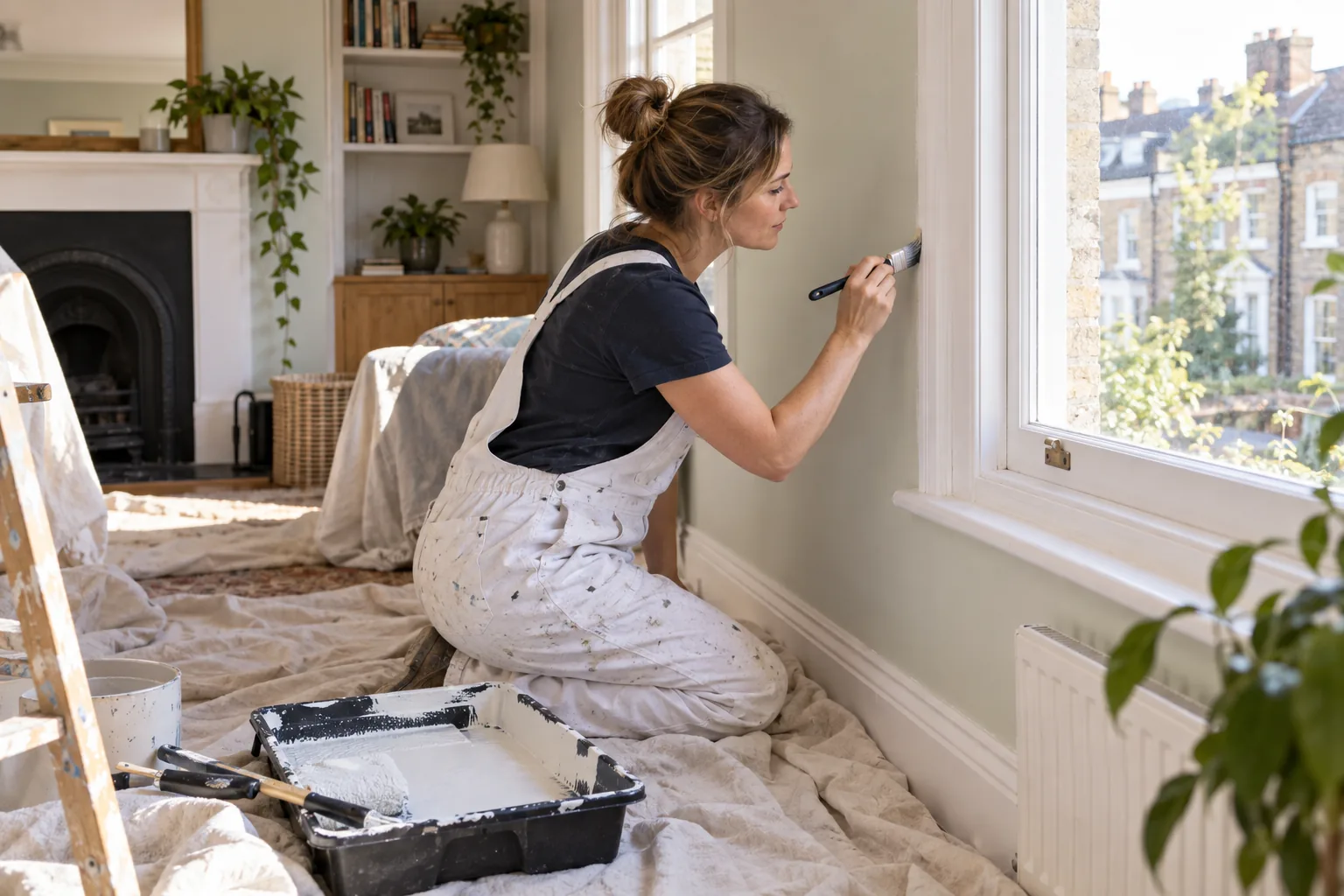
WRITE THE SHUTDOWN FIRST
The task may be modest; its effect on staff, stock and customers is not. A named contact should approve the space, timing and condition both before work and before reopening.
Identify food, serving, retail and storage surfaces that must remain untouched. Agree physical protection and the route used for tools and waste.
Record the earliest access, the hard finish time and any quiet periods. Allow realistic time for protection, cleaning and operational checks.
List menus, signs, shelves or displays being taken down. Label fixings by location so reinstatement does not become a second investigation.
Choose low-dust methods where suitable and isolate nearby stock. Decorative preparation should never drift into an open food-handling area.
The responsible person checks doors, lighting, displays and customer routes. The premises should not reopen on an assumption that everything operates.
A SMALL AREA WITH INTENSE USE
Westminster’s conservation-area material maps Chinatown around Gerrard Street, Newport Place, Lisle Street and adjoining streets between major West End routes. The council’s Soho and Chinatown audit treats the area as a distinct historic and commercial environment. Exterior signs, shopfront features and work visible in the public realm therefore need address-specific checks rather than an assumption that an indoor appointment covers them.
Inside a mixed-use building, draw a vertical occupancy note: trading area at street level, preparation or stock space, then office or dwelling above if present. Give every floor its own quiet period, authorised contact and route. Mark where vibration, drilling noise or a temporary isolation could affect another occupier. Ordinary shelves, internal decoration and display fixings can then be assessed as contained handyman work, while extraction, catering equipment, fire systems and structural alterations leave the sheet for suitably qualified or formally approved handling.
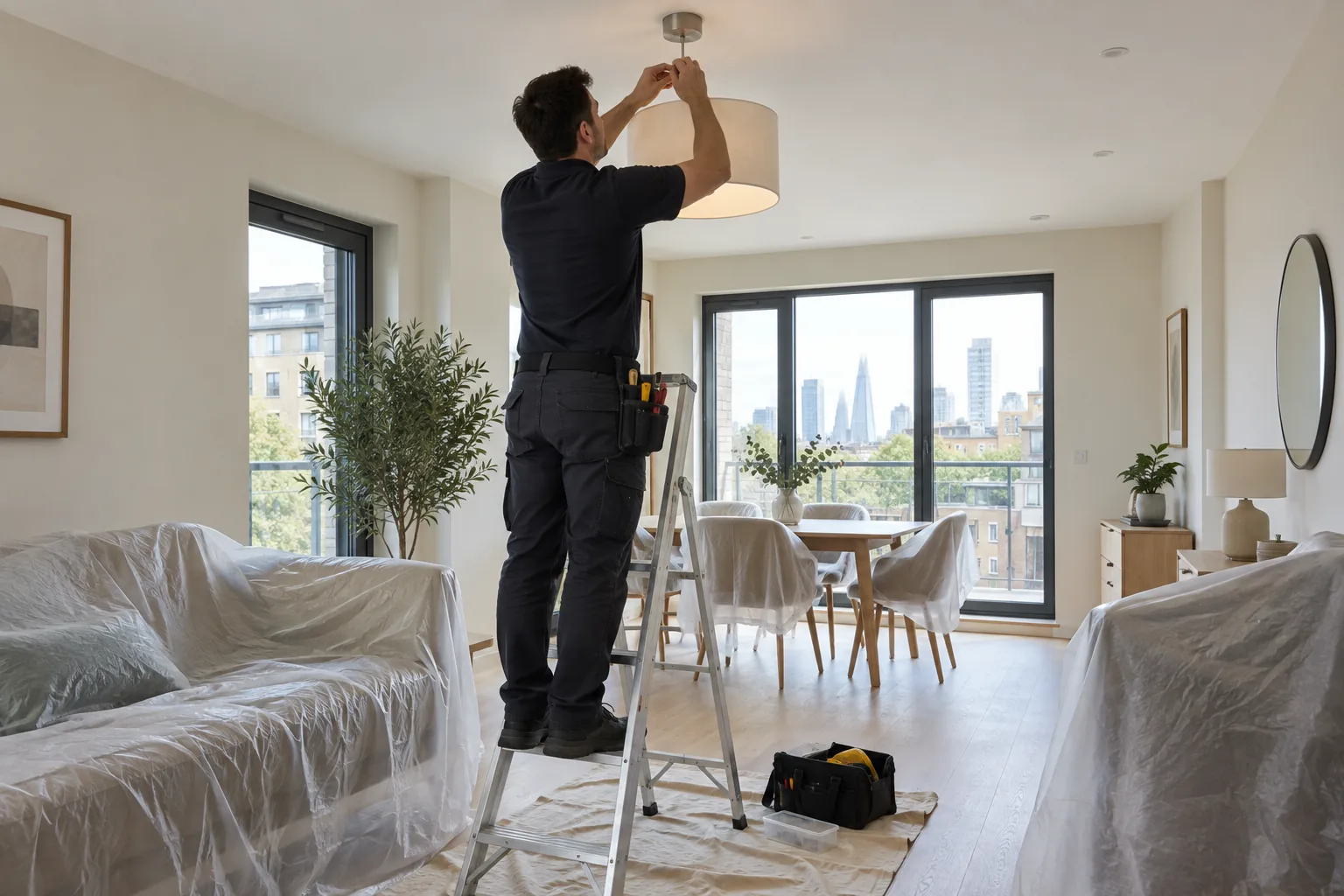
DISPLAYS SHOULD RETURN TO A KNOWN STATE
Photograph the complete wall square-on, then assign a reference to each menu board, frame, shelf or light object. Measure the relationship to doors, counters and sightlines rather than recording isolated fixing heights. Where a seasonal display will change, agree a repeatable rail or fixing grid instead of accumulating new holes with every update.
Check the wall background, item weight and any concealed services before drilling. In a rented unit, keep the written approval and the agreed making-good standard with the drawing. Reversible does not mean insecure: every component still needs a suitable load path and should withstand normal cleaning and customer movement.
ESTIMATE CONTROLLED LABOUR
Choose the closest task, quantity and duration. The estimate uses Bob’s published weekday labour rates; congestion, parking, materials, cleaning beyond the agreed zone and work requiring a specialist or formal approval are assessed separately.
ONE CONTACT, FOUR SIGN-OFFS
The responsible person removes stock and confirms that services or equipment are safe.
Tools, packaging and leads remain inside the agreed area and away from customer circulation.
The fixing, finish and surrounding surface are checked while the area is still accessible.
Removed items return to their labelled positions and doors, lights and routes are tested.
LEAVE A DISPLAY PASSPORT
Draw a thumbnail elevation and number every reusable board, bracket and cable cover. Add its exact width, weight and preferred orientation; similar-looking menu panels may have different hole centres. Put the same removable label on the rear of the object, never across its public face. A clear-outline acetate or card template can preserve the drilling grid when the wording changes but the carrier stays.
Create a small parts pouch for proprietary caps, spacers and security keys and mark the matching display number on it. The closing photograph should include that pouch, the reinstated elevation and the unobstructed circulation line. Staff can then change printed content without swapping structural parts or guessing which screw belongs to which carrier. Isolated equipment, fire provisions and catering systems remain on separate specialist records.
Rear labels connect each panel with its location, hardware pouch and drilling template.
New printed matter can use the approved carrier without another pattern of wall holes.
Caps, spacers and security keys are stored against the exact numbered display.
NEARBY COVERAGE
Planned interior maintenance immediately west of Chinatown.
Contained repairs for homes and premises to the east.
Measured fitting and property care across the West End.
CHINATOWN PREMISES QUESTIONS
Only if the operator identifies a safe isolated zone and the work is suitable. Dusty, noisy or route-blocking tasks normally need a closed window and proper cleaning before service resumes.
The authorised tenant, owner or manager should confirm the item, position and making-good requirement. Conservation, lease or shopfront controls may require separate advice.
Include protection, setting out, the task, cleaning and restart checks. A window that covers drilling alone is not a workable appointment.
No. It provides an indicative labour estimate for ordinary handyman tasks. Catering appliances, gas, extraction and other specialist systems need appropriate qualified attention.
Send the full wall, both ends of the customer sightline, item backs, weights and close-ups of the surface. Include sockets, switches and any known service routes.
Confirm clear exits, stable displays, functioning doors and lights, removed protection and a clean customer route. The nominated premises contact should complete that check.
DEFINE THE CLOSED WINDOW
Send a floor sketch, full-room photographs, the trading or occupancy schedule and the authorised contact. Mark food, stock and customer zones that need protection. Bob’s can then review the contained handyman tasks and identify items needing landlord approval or a specialist contractor.