
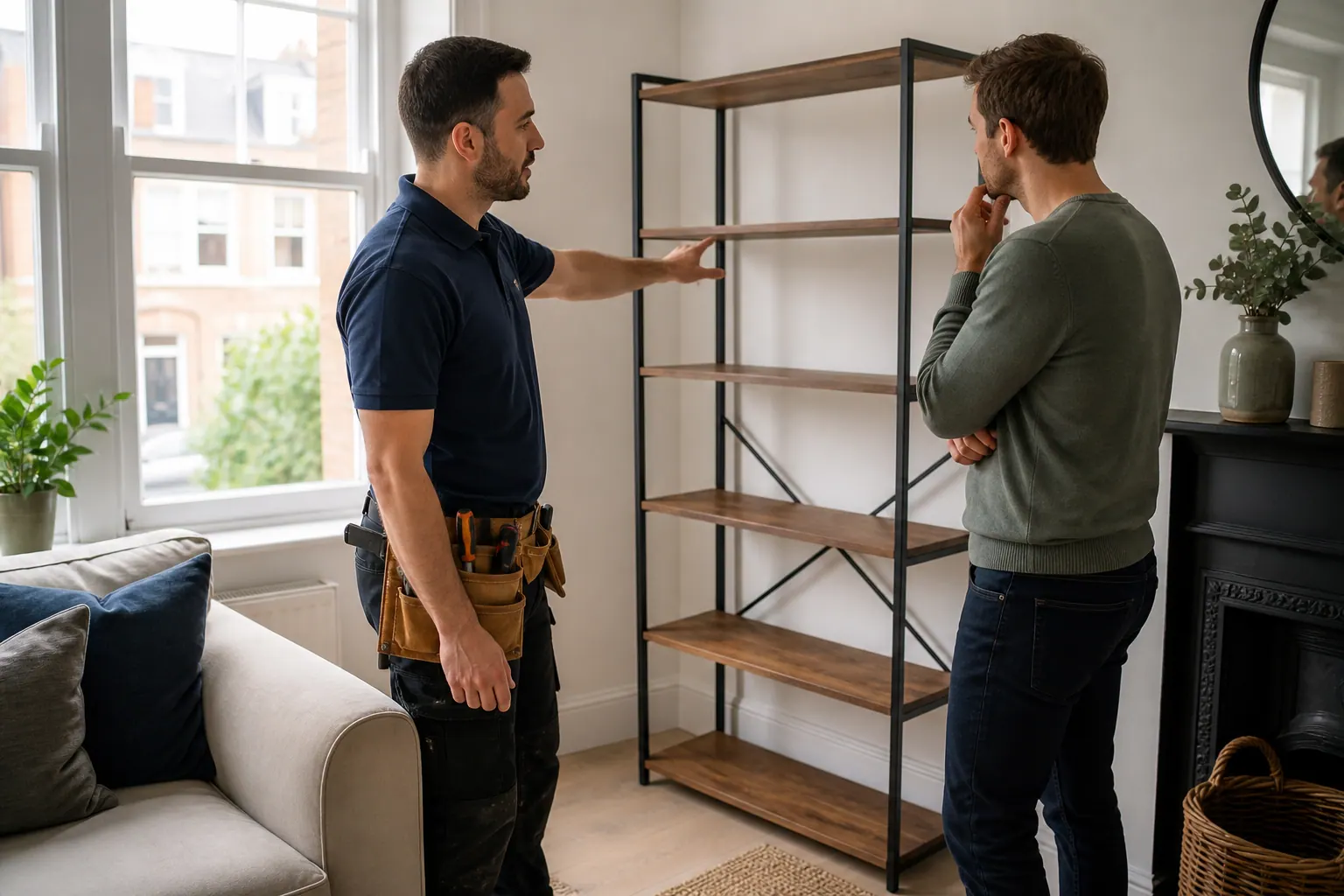
Measured repairs in detailed and managed properties

Careful Handyman Work for Mayfair Interiors

Mayfair interiors can combine historic joinery and plasterwork with later services, fitted furniture and contemporary finishes. Small work deserves an exact brief: what may be altered, what must be protected and who can approve a change if the condition differs from the photographs.

  • Protection matched to delicate floors and furnishings
  • Fixing positions checked before decorative surfaces are disturbed
  • Replacement hardware agreed for scale, finish and function
  • One accountable contact identified for scope decisions
Hand tools carried through the entrance of a detailed period property
Mayfair property focus
15+ years of experience
London and M25 coverage
One accountable team

LOCAL PROPERTY CONTEXT

Decide what the finished repair must preserve and Plan discreet access rather than promising invisible work

01

Decide what the finished repair must preserve

The brief should describe more than the faulty item. A replacement catch may need to align with existing holes; a curtain track must sit correctly without damaging a cornice; a wall-mounted piece may need a position that respects panelling or a balanced room layout. Photograph the complete elevation as well as the defect. Record finishes, dimensions and any hardware references. If an exact match is unavailable, the responsible person should decide between repair, a close alternative or wider replacement. Making that decision before removal prevents a small functional job leaving an unnecessary visual difference in a carefully finished interior.

02

Plan discreet access rather than promising invisible work

Occupied homes, offices, galleries and retail premises can remain sensitive environments even when a repair is modest. Agree the service entrance, reception procedure, working hours and protection route. Remove or cover valuable objects near the work zone, and identify alarmed doors or restricted rooms. Dust extraction and careful setup reduce disturbance, but drilling, adjustment and assembly still create activity that must be accommodated. If the premises remain open, separate the public route and do not place tools in circulation areas. A realistic access plan is more useful than an assurance that work will somehow occur without sound, movement or a controlled workspace.

Brass cabinet fitting being aligned on painted joinery

MAYFAIR PROPERTY NOTES

Historic interiors are not test surfaces

Mayfair includes surviving townhouses and mews within a conservation area, but age and protection vary building by building. Decorative plaster, original boards, joinery and stone should not be explored through casual drilling or aggressive removal. Confirm listed status, ownership and consent. Where a wall’s construction is uncertain, the proposed load and fixing position require assessment. A reversible or less intrusive method may sometimes be sensible, though it still needs to perform safely. If the work calls for conservation craft, structural advice or formal approval, that requirement should be recognised before an ordinary handyman repair alters material that cannot readily be replaced.

WORK PLANNING

Repair, adapt or replace? and Focused help for defined tasks

01

Repair, adapt or replace?

Loose furniture joints, damaged veneers, misaligned doors and worn ironmongery each require a different judgement. Repair may retain a well-made item and its fit within the room. Replacement may be more reliable where parts are fractured, incompatible or already heavily altered. Adaptation can solve a practical problem but may affect appearance or future reversibility. Send photographs from several angles and keep detached pieces. Do not glue, fill or discard components before assessment. For fitted joinery, check whether the defect results from movement elsewhere. Correcting a symptom without understanding a distorted carcass, floor or frame can transfer the problem to another hinge or fixing.

02

Focused help for defined tasks

Picture, mirror and art hanging is suitable for measured arrangements after the wall and hanging hardware are reviewed. Furniture repair addresses local defects in suitable pieces, while carpenters may be more appropriate for substantial joinery work. Door repair covers alignment and hardware where the leaf and frame remain serviceable. Cabinet painting requires proper preparation and product choices rather than a quick decorative coat. General odd jobs can combine straightforward adjustments and fittings once the scope is clear. Electrical, gas, significant plumbing, structural and conservation-specialist work should remain with the corresponding qualified practitioner.

03

Establish the approval chain

A resident, property manager, designer and freeholder may each hold different information. Name one person who can approve small changes during the visit and set a limit beyond which work must pause. Provide building rules, finish schedules and permissions where relevant. If supplied parts are designer-specified, confirm quantities and lead times before removing usable items. For rented or managed premises, decide who receives the completion notes and photographs. This avoids contradictory instructions and protects the tradesperson from choosing an aesthetic or heritage outcome that belongs to the owner. Clear authority is particularly important when the concealed condition differs from the planned method.

PRICING

Pricing based on the agreed Mayfair job scope

The quotation reflects the task, access, expected time and materials. Photographs and measurements help establish what can be priced before the visit and what first needs inspection.

Handyman labourFrom the published rate
MaterialsAgreed for the job
Additional workApproved before it starts

Parking, congestion and unusual access requirements are discussed where they affect the quotation.

NEARBY COVERAGE

Handyman areas near Mayfair

Soho

See the dedicated property-maintenance page for Soho.

View Soho →

MAYFAIR HANDYMAN FAQ

Questions about planning handyman work in Mayfair

Can you fit artwork in a room with decorative wall panels?

The panel construction, ownership permissions, load and hanging system must be reviewed. A specialist or non-invasive display method may be preferable where the finish has heritage or design significance.

Can a damaged original handle be repaired rather than replaced?

Sometimes. Keep every component and provide clear photographs. Repairability depends on the material, failure and availability of compatible parts; significant historic hardware may need a specialist.

How should valuable furnishings be prepared for work?

Remove portable pieces and agree suitable coverings for items that remain. A clear route and work zone are required; protection should never be improvised by resting tools on nearby furniture.

Can work take place outside customer-facing hours?

Discuss the required time, access, alarms and authorised key-holder. Availability depends on the task, but the premises must still provide a safe working area and responsible contact.

Who decides if an alternative fitting is acceptable?

The owner or authorised project contact should decide. Send product information before the appointment and define whether work must stop if the specified item does not fit.

Does a conservation-area address mean all internal work needs consent?

No, but listed status, the nature of the fabric, leases and building rules can each affect the answer. Check the specific property and proposed alteration rather than relying on the address alone.

PLAN THE VISIT

Define the Mayfair task before anything is removed

Share full-room photographs, finish requirements, access rules and the approving contact. Bob’s can plan suitable work without treating a detailed interior as a generic repair site.

Call 020 3137 9380Get a quote