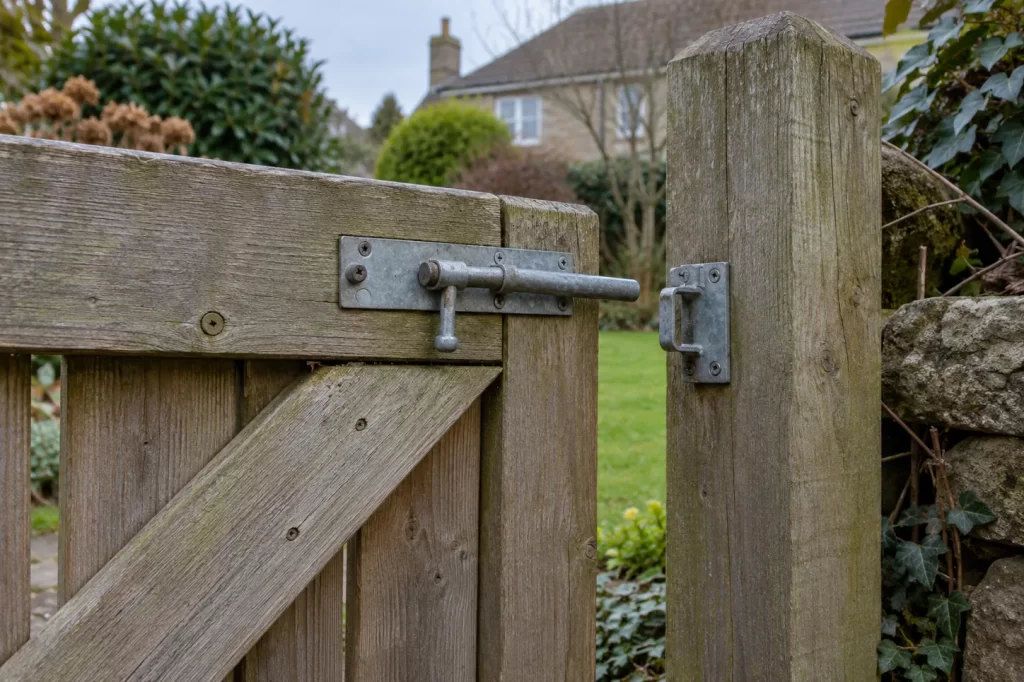
A garden gate that swings shut but will not stay latched usually has a mismatch between the latch and its keep. The bolt may pass above the opening, stop short of the post or spring back because the gate is being pushed away. Start by watching exactly where the metal parts meet. A small hardware adjustment can help when the gate and post are sound; moving the keep to compensate for a sagging gate may only hide the larger fault.
This guide focuses on ordinary timber garden gates with a manual latch. A gate used for required security, pool protection or a shared access route may have specific hardware and performance needs. Do not leave it unsecured while experimenting. If it must latch reliably for safety or access control, arrange a suitable professional repair promptly.
Watch the latch at normal closing speed
Open the gate and operate the latch by hand. A bolt should slide freely, and a spring latch should return as intended. Close the gate slowly while watching from the side, keeping fingers clear of the gap. Does the bolt touch above or below the keep? Does it reach the post but stop against the face of the metal? Does it enter the opening yet pull out when the gate rebounds?
The point of contact is more useful than simply calling the latch “broken”. If the hardware operates normally with the gate open but fails at the post, alignment is the likely issue. If the bolt sticks even when open, inspect the latch mechanism itself. Rust, dirt, a bent plate or a loose handle may be responsible. Do not keep slamming the gate to make it catch: impacts can enlarge screw holes and loosen the post.
Try the closing test at several times or conditions if the problem is intermittent. Timber can swell after rain and shrink during dry weather. A latch that misses only after prolonged wet weather may reveal a tight gate-to-post gap. A bolt that is always low may indicate hinge wear or a gate that has dropped. The existing guide to stopping a gate or fence from sagging addresses the broader gate structure.
Check the gate-to-post gap
Stand back and look at the vertical gap between gate and post. It should remain reasonably consistent from top to bottom when the gate is closed. A narrowing gap at the top or bottom suggests the gate or post is out of alignment. Look at the top rail with a spirit level only as an aid; old garden structures may not be perfectly level. The practical question is whether the gate swings freely and presents the latch at a consistent position.
With the gate partially open, look at its hinges. Loose screws, a leaf lifting from timber or a post moving in the ground can let the latch side drop. A screw that turns without tightening has lost grip; the post or gate timber needs a proper fixing repair, not simply a larger screw driven into the same damaged fibres. The article on stripped screw holes in a wooden door frame describes that material problem indoors, although outdoor timber and weather exposure call for different products.
If the post visibly moves when the gate is pulled shut, do not shift the keep to follow it. The post may need resetting or replacement. Likewise, a diagonal gate brace that has failed can allow the gate to rack. The latch is only the final point of contact; it cannot keep a moving frame square.
Examine the keep and its fixings
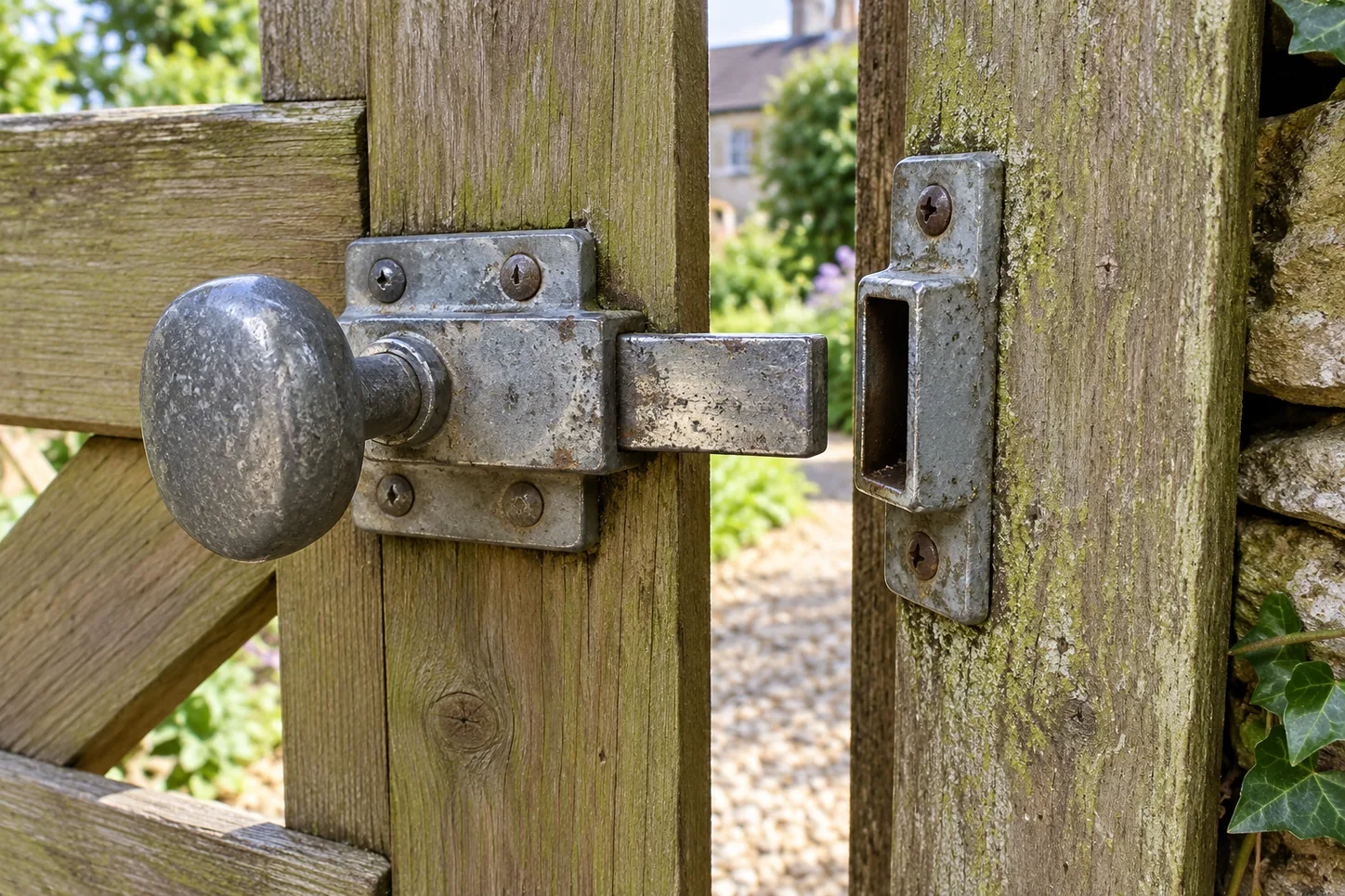
The keep is the part on the post that receives the bolt or latch tongue. Check for loose screws, rusted metal, a bent lip or wood splitting beside the fixing holes. A keep that moves under light pressure will not hold the gate consistently. Remove paint or debris obstructing the opening only after confirming that the latch and keep were correctly matched in the first place.
Mark the bolt’s centre line with low-tack tape near the keep if the mismatch is hard to see. Bring the gate almost closed and compare the mark with the opening. This avoids guessing from old scratch marks, which may belong to an earlier alignment. A few millimetres of movement in a sound, slotted fitting can make a difference; some keep designs have no adjustment and need new fixing positions.
Do not enlarge the opening aggressively with a file or chisel. A wider mouth may let the latch engage but offer less retention, especially when wind pushes the gate. The correct repair might be hinge adjustment, a new matching keep or sound timber repair. If the keep must move far enough to leave old holes exposed, those holes need appropriate treatment so the new screws do not pull into weakened wood.
Decide whether seasonal swelling is involved
Timber gates live outdoors and change with moisture. Look for fresh rubbing marks along the closing edge and top or bottom. A gate that needs a shoulder push in wet weather may be catching before the latch reaches the post. Check whether the exposed end grain is protected and whether water pools around the lower rail. Do not cut away a large amount of timber based on one damp week; the gap can become excessive when it dries.
Some small local adjustment may be justified once the cause is confirmed, but preserve the finish on exposed edges. Cutting through paint or preservative can let more water into the timber unless the surface is properly recoated. If the frame is warped or decayed, a latch adjustment cannot restore a straight closing line.
Vegetation and paving changes can also affect movement. A branch caught in the hinge side or a raised path stone under the gate may prevent full closure. Remove only the obstruction you can identify safely. Do not alter a shared boundary or a neighbour’s planting without the appropriate permission.
Test the repair under ordinary use
After a sound hinge, post or latch repair, close the gate several times at normal speed. It should latch without a shove, remain held when lightly pulled and release with the handle or bolt as designed. Check from both sides if it is intended to be operated that way. Do not test by pulling so hard that you damage a new fitting.
Watch for rebound. A stop block or tight timber edge can push the gate back just as the latch enters. Adjusting the catch alone may not help. The gate should settle at the right depth, with the latch fully engaged and no metal scraping heavily across the post. Light surface marks from normal use are different from a bolt gouging timber on every close.
Maintain the hardware by clearing dirt, checking screws periodically and following its maker’s care instructions. A suitable finish on exposed timber helps limit moisture movement. If the same fault returns after each weather change, have the gate and post assessed together. Repeatedly moving the keep creates a row of weak holes without stabilising the structure.
When to arrange help
For a sound gate with a local latch or timber fixing issue, the site’s handyman repairs page is relevant. A warped gate, decayed post or damaged timber member may need carpentry work. Describe whether the bolt sticks with the gate open, whether the gap changes from top to bottom and whether the problem follows wet weather. A close photo of the latch plus a wider photo showing the hinges and post will help distinguish a catch problem from a gate problem.
The lasting fix starts with the path the gate takes as it closes. When the leaf hangs consistently, the post is stable and the hardware operates freely, the keep can be positioned to receive the latch without force. That is more reliable than filing the metal until it catches once.