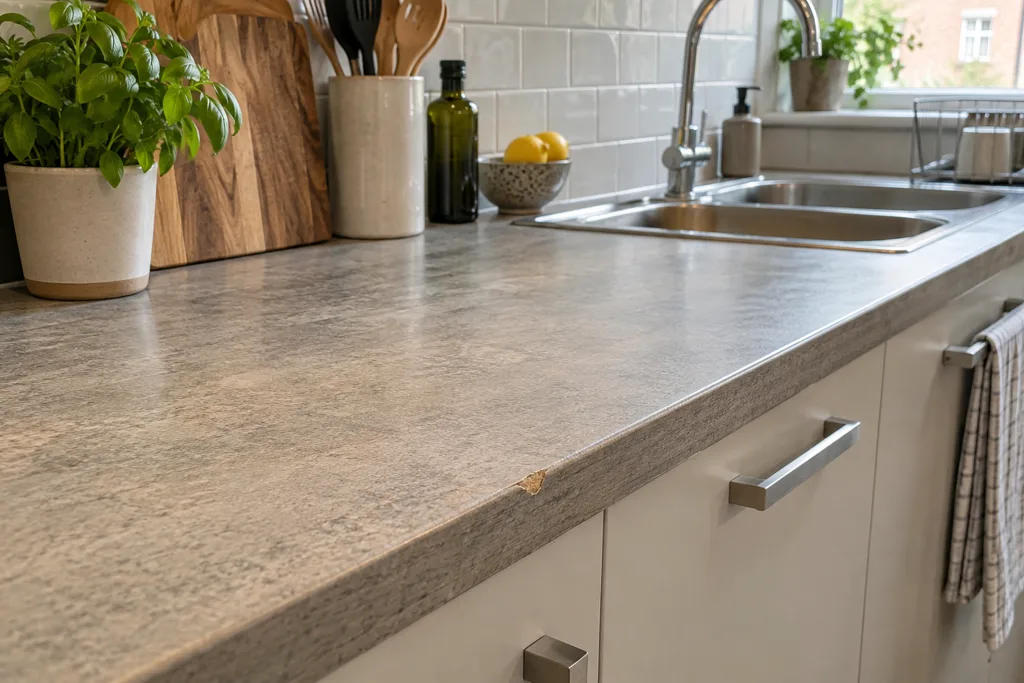
A small chip in a kitchen worktop may be mostly cosmetic. A swollen joint beside the sink is different: water may have reached the core, and a surface patch will not restore its strength. Before buying a repair kit or pricing a new top, identify the material, the cause of the damage and what sits underneath it.
The right answer depends less on how noticeable the mark looks and more on whether the worktop is still sound, dry and safe to use. This guide helps you make that call for common UK kitchen surfaces.
First, find out what you are dealing with
Laminate, solid timber, quartz, granite and solid-surface worktops respond very differently to damage. Laminate is a thin hard-facing layer over a wood-based core; it cannot be sanded back like solid timber. Stone may be hard but can chip at an edge or crack around a cut-out. A solid-surface top may allow a specialist to blend some marks more effectively than a patterned laminate one.
Look at the edge or underside of the worktop if it is accessible. Then inspect the whole affected area, not just the mark. Press gently near a damaged laminate joint: is it raised, soft or crumbly? Check whether a sink or hob cut-out has exposed unsealed material. Look inside the base cabinet for staining, and check the wall and floor below for damp.
If the mark followed a leak, stop the water source before choosing a repair. Our guide to hidden leaks covers clues that are easy to miss, and leak repair help can address the source. A fresh seal over wet material merely hides the problem for a while.
Small chips and scratches: often repairable
A shallow chip away from a joint or cut-out can often be filled and colour matched well enough to be unobtrusive. On laminate, a worktop repair compound can protect the exposed core and improve the appearance, although a patterned surface may never look entirely seamless. Minor surface scratches on some solid timber tops can be sanded and refinished; that approach would damage laminate.
For stone and engineered surfaces, ask a specialist about edge chips or cracks. The repair method and finish depend on the exact material. Avoid trying a general-purpose filler on a food-preparation surface without checking that it is appropriate for the location and manufacturer’s care instructions.
Repair is most attractive when the damage is local, the substrate is stable and the rest of the kitchen is in good condition. It is less convincing when several sections are worn, discoloured or separating at once. Our article on DIY versus professional repairs offers a wider framework for deciding how much to tackle yourself.
Burns and heat marks: depth matters
A faint heat mark may be superficial, especially on timber, but a deep burn can damage the surface permanently. Laminate can blister or discolour when a hot pan is placed directly on it. Sanding the blister flat will remove more of the protective layer and expose the core.
On timber, a small mark may be sanded and refinished if the top is thick enough and the finish can be matched. Deep charring or a mark near a sink joint may make replacement of a section more sensible. Stone and quartz also have material-specific limits; seek the manufacturer’s advice before using abrasives or chemicals.
Swelling beside the sink: usually a bigger problem
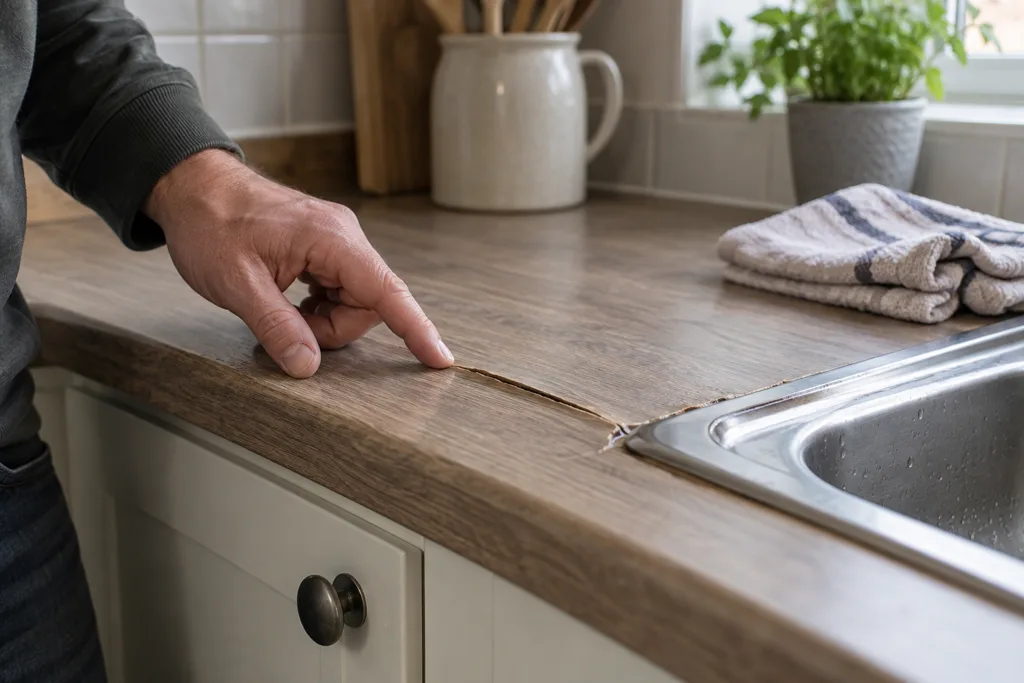
Swelling is common where water has found its way through a failed seal, a cut edge or a joint in a laminate worktop. Once the wood-based core expands, it generally does not return to its original flat, strong shape when dry. A bead of silicone may prevent more water getting in, but it cannot reverse a raised seam or rebuild a soft core.
The first task is to find out where the moisture came from. A loose tap, failed sink seal, leaking waste connection or persistent splash zone each needs a different fix. Dry the area and inspect the cabinet beneath. If the damaged patch is small and structurally sound, a professional may be able to make a limited repair. If the joint has lifted, the sink is no longer properly supported or the core has crumbled, plan for replacement of the affected worktop section.
The article on common plumbing mistakes explains why apparently simple connections deserve care. If pipework or the sink connection needs changing, our plumbing service can assess it. Fixed electrical supplies near the work area should be handled by a qualified electrician where any change is needed.
Cracks, loose joints and movement
A crack that continues through the material, especially near a hob or sink opening, is more concerning than a surface scratch. Repeated movement can make a filled crack reopen. Check whether the base cabinets are level and whether the worktop has enough support at the cut-out or corner.
Loose joints are sometimes repairable if the sections are dry, flat and sound. If one edge has swollen or the cabinets below have shifted, simply pulling the joint tight will not solve the cause. A carpenter can assess cabinet support and the fit of a replacement or repaired section. If the units themselves have been damaged, the decision may expand into a kitchen refurbishment rather than a worktop-only repair.
Repair or replace? A quick decision test
Repair is generally worth exploring when the damage is isolated, dry and superficial; the supporting cabinets are sound; the finish can be matched acceptably; and the worktop still performs its job safely. Replacement is more likely when the core is swollen or soft, cracks affect a cut-out, a joint repeatedly opens, several areas are damaged, or a sink or hob cannot be refitted securely.
Cost is part of the decision, but compare the whole job. A new worktop may require a sink or hob to be disconnected and refitted, cut-outs made, joints formed, splashback edges sealed and cabinets adjusted. A cheap replacement material can become less attractive if those associated tasks are extensive. Conversely, paying for several cosmetic patches on a failing top is rarely good value.
If you are already changing the layout, measure appliance spaces before choosing a replacement surface. For one common layout change, see our guide to fitting a dishwasher in a cupboard space. The position of that appliance affects the length and support of the new top.
What to do before asking for a quote
Take one wide photo showing the full run of cabinets and close photos of each damaged area. Note the worktop material, approximate length, location of the sink and hob, and whether there is any active leak or soft cabinet material. If you have the original product details, keep them handy. A repairer can then tell you whether a local fix is realistic or whether a measured replacement is the better route.
Bob’s can assess the surrounding joinery and coordinate kitchen refurbishment work where a worktop or cabinet section needs changing. The useful first step is a clear diagnosis: fix the cause, confirm the support beneath and then choose a finish that will last.