
A bedroom that can open and store
Check wardrobe doors, bed clearance, window movement and useful hanging height together. New storage should not force a door stop into a walkway or cover a socket needed in normal use.
OPEN · CLOSE · STORE · RESET
A room can feel awkward because its window will not stay open, a door clips the floor, storage blocks a corner or wet-area finishes have failed. Bob’s turns those everyday frictions into a testable room-reset brief.
WINDOWS, DOORS AND AIRFLOW
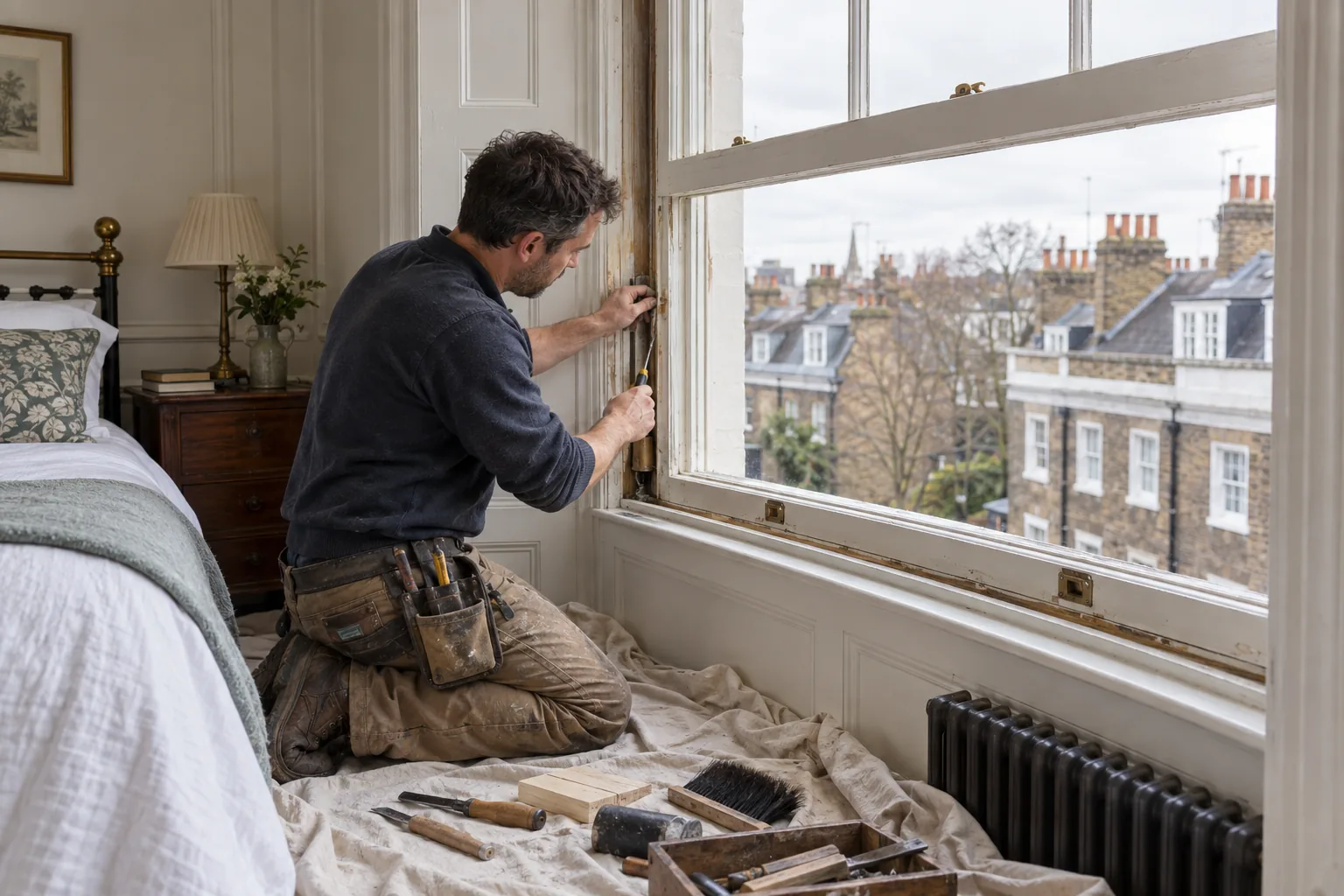
A photograph cannot show a sash dropping, a door springing back or a handle becoming stiff halfway through its travel. Send a short description of the movement and say whether rain, heating or time of day changes it. Mark the point of contact with removable tape. This helps separate paint build-up and accessible hardware from decay, failed cords, distorted frames or movement beyond a small adjustment.
Keep ventilation paths usable when adding curtains, tall furniture or shelving. A proposed cabinet beside a window needs clearance for handles and cleaning, while bathroom storage should not obstruct an extractor or inspection point. The objective is a room that still opens, airs and can be maintained after the new fitting is installed.
ROOM-RESET CHECKLIST
Treat each room as a small system of movement, storage, light and cleaning access rather than a collection of isolated screws.
Check wardrobe doors, bed clearance, window movement and useful hanging height together. New storage should not force a door stop into a walkway or cover a socket needed in normal use.
Measure blinds or curtain fittings against the opening sash, radiator and furniture line. Confirm where strong support exists before ordering a wide rail or heavy treatment.
Check failed sealant, loose accessories and storage together, but leave active leaks, failed waterproofing and electrical concerns to the correct specialist route before cosmetic work.
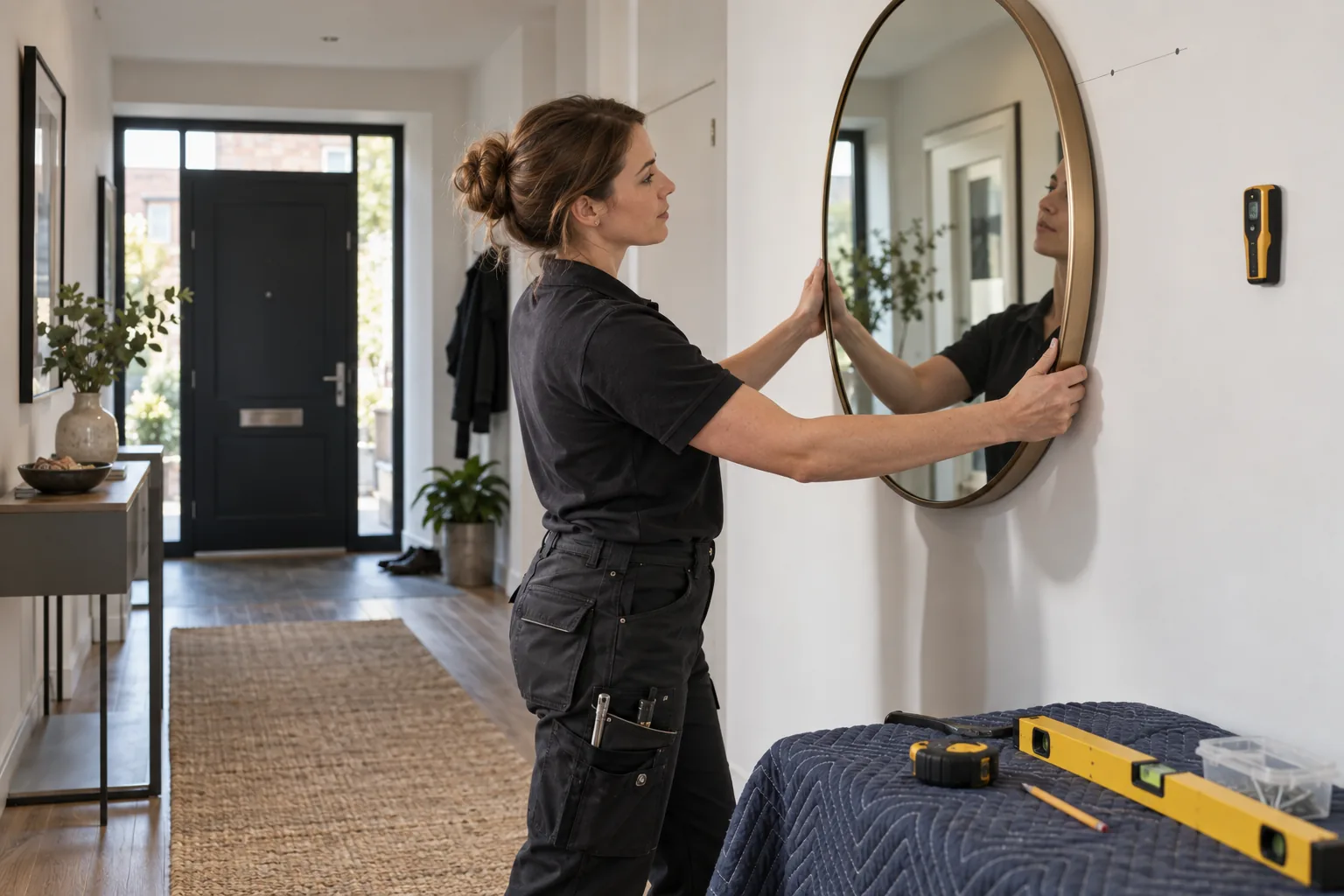
Slim storage and mirrors still need door, meter and escape clearances. Lay out their footprint with tape and test the narrowest point while wearing a coat or carrying everyday bags.
A DISTRICT OF THRESHOLDS
Bromley planning material identifies shopping parades on Anerley Road and around Anerley Station Road, while the broader renewal area links Anerley with Penge and Crystal Palace. A home above or beside active premises can have a narrow entrance, timed deliveries or stairs shared with another use. Confirm where a boxed item can pause without blocking a doorway and whether working noise must avoid trading or resident quiet periods.
Elsewhere in the district, houses and conversions bring different routes and responsibilities. Describe the actual entrance and floor rather than relying on the postcode. If a window, external door or façade detail faces the street, check ownership and controls before changing its appearance. Internal room-reset work still needs a clean route that protects shared finishes.
LABOUR ESTIMATE
Select the closest category and working duration. The result applies Bob’s published weekday labour rates and leaves materials, parking, congestion and hidden defects for confirmation.
RESET ONE ROOM
Open every door and window, then note collisions, narrow points and unreachable controls.
Tape the proposed storage footprint and live with it briefly before fixing.
Finish drilling, cleaning and drying before furniture or textiles return.
Verify circulation, ventilation and hardware, then state any curing restriction.
BOUNDARIES WORTH WRITING DOWN
A fitting can sit inside the flat while relying on a wall, window or door controlled by the freeholder. Establish the responsible party before ordering hardware, particularly where fire separation or external appearance could be affected.
Retain the old component until its failure and dimensions are understood. Repair is sensible where the surrounding material remains sound; replacement is safer when broken board, obsolete parts or repeated modification has removed reliable support.
Cracking, staining and loose trim can be symptoms rather than isolated decoration. Note recent leaks, movement and earlier patches. Making good should follow diagnosis and drying, so the finished surface does not conceal a continuing problem.
ANERLEY HANDYMAN FAQ
Describe its movement in stages, mark the sticking point and note weather or heating conditions. A short video can supplement the still images supplied for scoping.
Only if the required operating and maintenance access remains clear. Include the meter, doors and narrowest circulation point in one measured photograph.
Movement, trapped moisture, poor preparation or an unresolved leak can break the joint. The surface must be sound and dry before another finish is attempted.
First test sash movement, handle clearance, bracket projection and the full curtain stack. The preferred decorative position may not leave enough operating room.
Remove fragile and personal items, keep a route to controls, and leave only furniture whose position forms part of the final layout decision.
Give the exact access route and any known building hours when requesting a quotation. Loading, noise and shared-door rules need agreement before arrival.
NEARBY COVERAGE
Prepared repair visits for nearby Beckenham homes.
Handyman planning for Crystal Palace properties.
See property-maintenance coverage in Forest Hill.
RESET THE ANERLEY ROOM
Send a simple room sketch, moving-hardware notes and marked storage footprints. Bob’s can scope the work around everyday use rather than treating each fitting in isolation.