Radiator Not Heating Up?
- A radiator cold at the top usually means trapped air, fixed by bleeding.
- A radiator cold at the bottom usually means sludge build-up, which needs a power flush.
- Cold patches across the surface often mean a mix of air and sludge.
- A fully cold radiator often points to a closed or faulty valve.
- Bleeding a radiator is a safe five-minute DIY task; sludge and valve issues are best left to a professional.
A cold radiator can be frustrating, especially when the temperature drops. Fortunately, most radiator issues—from cold spots to complete inactivity—are caused by simple, common problems like trapped air, sludge buildup, or a faulty valve. In this guide, we’ll help you identify the likely cause of your cold radiator and walk you through the steps to get your heating system back to normal.
"*" indicates required fields
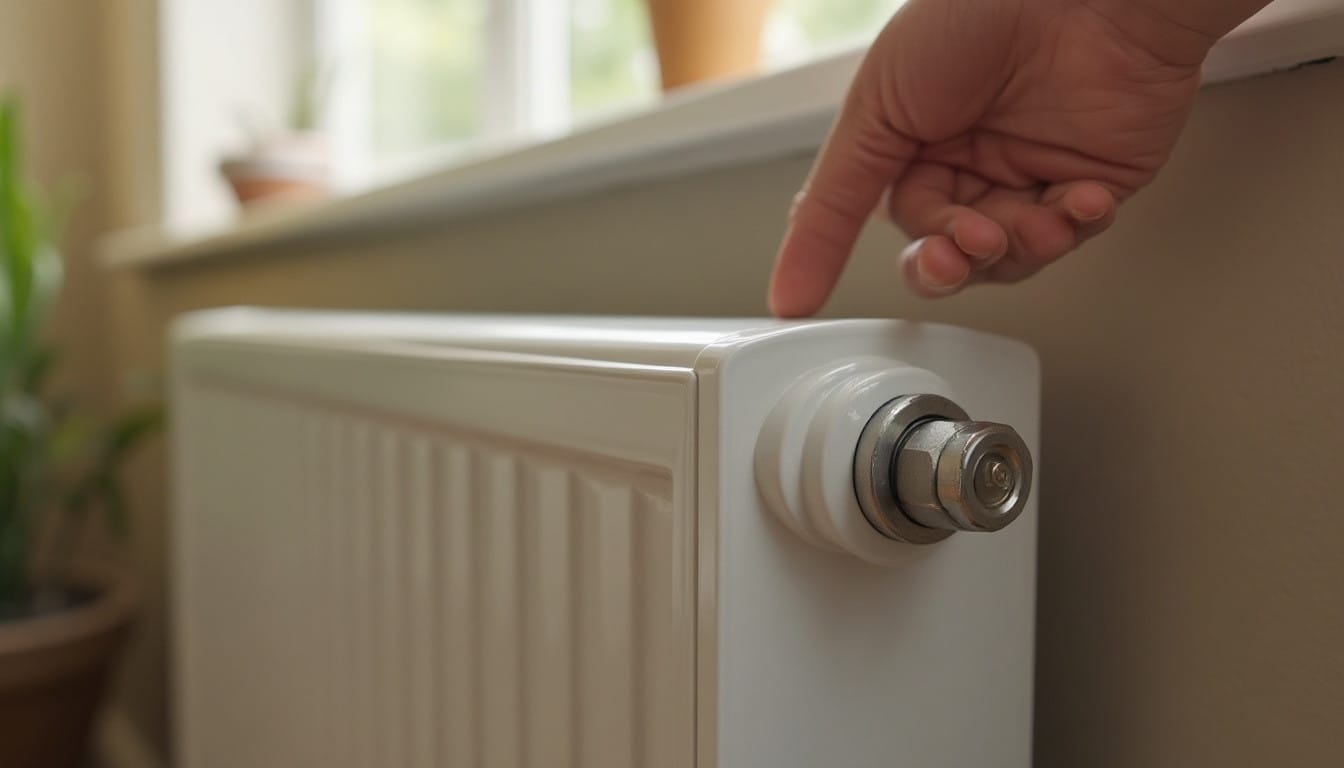
There’s nothing worse than putting the heating on and realising one radiator simply isn’t doing its job. Maybe it’s stone cold, maybe it’s warm at the bottom but icy at the top, or maybe it’s got odd cold patches dotted across the middle. Whatever the pattern, a radiator not heating up properly is almost always a sign of one of a handful of common problems — and most of them are far easier to fix than you’d think.
In this guide, we’ll walk through the most likely causes of a cold radiator, how to spot which one applies to you, and what you can safely try before picking up the phone to a professional.
Cold at the Top? It’s Probably Trapped Air
If your radiator is warm at the bottom but stays stubbornly cold across the top few inches, the culprit is almost certainly trapped air. Central heating systems circulate hot water through a sealed network of pipes and radiators, and over time small pockets of air can work their way in. That air rises to the highest point it can find, which is usually the top of the radiator, and sits there blocking hot water from reaching that section.
This is one of the most common reasons for a radiator cold at the top, and it tends to get worse gradually — you might notice the cold band creeping further down over several weeks as more air accumulates. The good news is that this particular fault has a simple, DIY-friendly fix: bleeding the radiator to let the trapped air escape. We’ll cover exactly how to do that safely a little further down.
Cold at the Bottom? It’s Probably Sludge
A radiator that’s warm at the top but cold at the bottom is a different problem entirely, and unfortunately not one you can fix with a radiator key. This pattern usually points to sludge — a build-up of rust, corrosion and mineral deposits that settles at the bottom of the radiator over months or years of use.
Because sludge is heavier than water, it sinks and gathers along the base of the radiator, physically blocking hot water from circulating through that section. Bleeding won’t shift it, since there’s no air to release. If you press your hand along the bottom of the radiator and feel a distinct temperature drop compared with the top, sludge build-up is the most likely explanation.
The usual solution is a power flush, which uses a powered pump to force a cleaning fluid through the entire heating system at high velocity, breaking up and clearing out accumulated debris. For an isolated radiator with a smaller amount of sludge, a targeted flush of just that radiator may be enough, though a full system flush — best carried out as part of a wider gas boiler and heating service — is often recommended if several radiators are affected or the system is older.
Cold Patches Across the Radiator
Sometimes the problem isn’t confined to the top or bottom but shows up as uneven cold patches scattered across the surface. This is often a sign that sludge and air are both present, or that debris has settled unevenly rather than forming a neat layer along the base. It can also happen when a radiator has an internal blockage caused by corrosion inside the radiator itself, rather than in the wider pipework.
In these cases, bleeding the radiator is worth trying first, since it’s quick and free. If cold patches persist afterwards, that’s a fairly strong indicator that sludge or internal blockages are involved, and a power flush is likely the next step.
Faulty Valves and Thermostats
If a radiator is completely cold — not warm anywhere, not even slightly — trapped air and sludge become less likely explanations, since both of those typically leave part of the radiator working normally. A fully cold radiator often points to a valve or thermostat issue instead.
Every radiator has two valves: a manual valve on one side and a thermostatic radiator valve (TRV) on the other, which regulates temperature based on room conditions. If the manual valve has been closed, accidentally or otherwise, no water will reach the radiator at all. It’s worth checking this first, as it’s the simplest possible cause.
TRVs can also fail, particularly if the pin inside the valve becomes stuck in the closed position. This tends to happen when a radiator hasn’t been used for a long stretch, such as over summer, and the pin seizes in place. In some cases, gently working the pin free (with the radiator system depressurised, or very carefully if not) can resolve this, though a stuck or faulty TRV often needs replacing — and if the valve is weeping or dripping as well as sticking, that moves into leak repair territory rather than a straightforward swap.
If neither valve seems to be the issue, the fault could lie with the central heating pump or the system’s overall balancing, both of which are best left to a qualified plumbing professional to diagnose.
How to Bleed a Radiator Safely (Step-by-Step)
Bleeding a radiator is one of the few heating repairs most people can safely do themselves, and it takes only a few minutes per radiator.
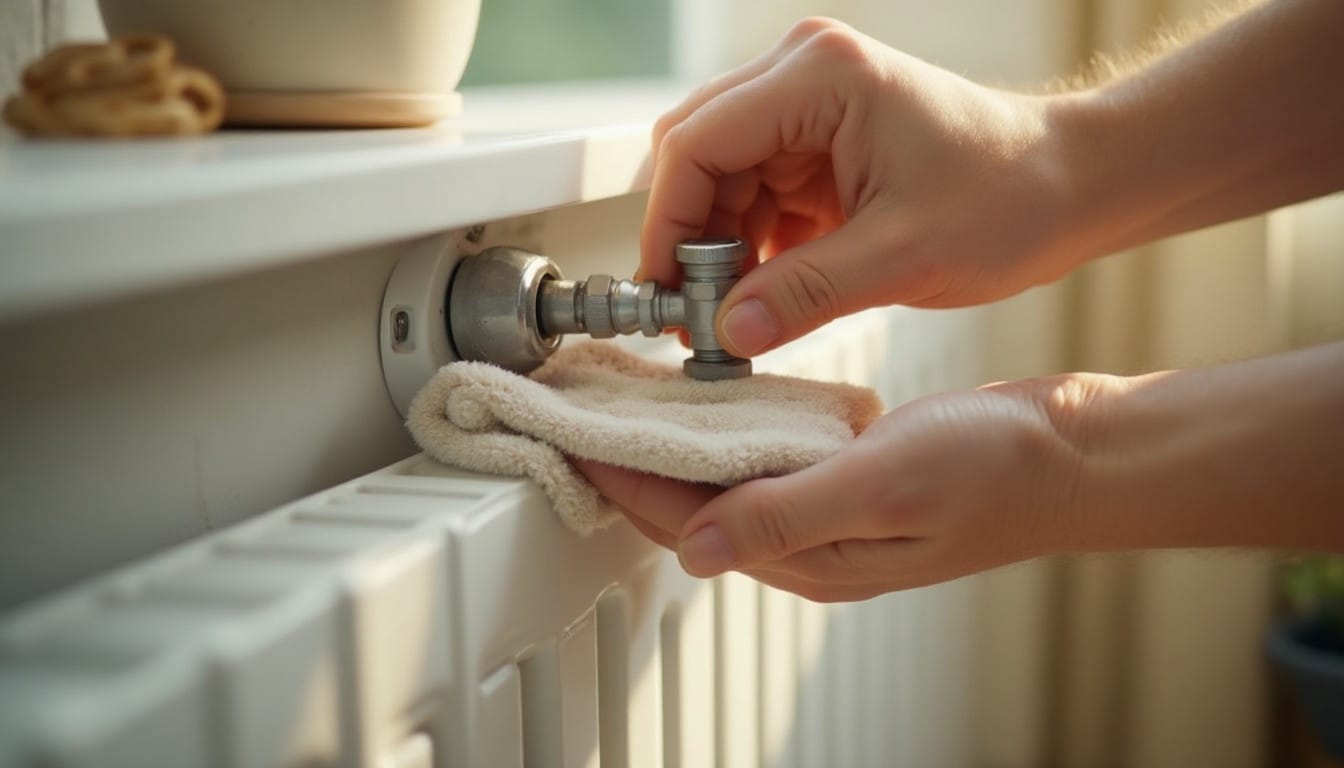
What you’ll need: a radiator bleed key (widely available from hardware shops), an old cloth or small towel, and a container to catch drips.
Step 1: Turn off your heating. Let the system cool down fully before you start, both for safety and so you can judge temperature changes accurately afterwards.
Step 2: Find the bleed valve. This is a small square-shaped fitting, usually at the top corner of the radiator on either side.
Step 3: Hold your cloth underneath. A small amount of water will escape once air starts releasing, so keep a cloth and container in place to catch any drips.
Step 4: Insert the key and turn slowly. Turn the bleed valve anticlockwise, just a quarter to half turn. You should hear a hissing sound as trapped air escapes.
Step 5: Wait for water to appear. Once the hissing stops and a steady trickle of water starts coming out instead, close the valve promptly by turning it clockwise.
Step 6: Check your system pressure. Bleeding a radiator can lower the pressure in your boiler system, so check the pressure gauge afterwards and top up if needed, following your boiler servicing provider’s instructions.
Step 7: Turn the heating back on and check. Give it twenty to thirty minutes and feel the radiator again. It should now heat evenly from top to bottom.
If you have several radiators to bleed, work through them one at a time, starting with the ones downstairs and furthest from the boiler.
When to Call a Professional
Bleeding a radiator is safe and straightforward, but there are situations where it’s best to bring in a professional rather than continue troubleshooting yourself. If bleeding doesn’t resolve a cold top, if you suspect sludge and need a power flush, if a valve appears stuck, damaged, or leaking, or if your boiler pressure keeps dropping after bleeding, these are all signs of a problem that needs proper diagnosis and tools.
It’s also worth calling in help if multiple radiators across the house are affected at once, since this often points to a system-wide issue such as widespread sludge build-up, a failing pump, or a problem with system balancing, rather than a fault with one individual radiator. Bob’s Handyman Services covers this kind of diagnostic and repair work across London and the M25.