

A regional route into local property care

Handyman Services Across North London

North London makes more sense as a set of household maintenance routes than as one building type. Use this hub to move between the hill districts, inner neighbourhoods and northern centres, then organise recurring repairs by room, component and season. The local page supplies context; the maintenance record supplies the evidence needed to act.

  • Local guides arranged into practical district groups
  • A maintenance log that records symptoms and earlier action
  • Seasonal checks separated from immediate defects
  • Specialist faults removed from the ordinary task list
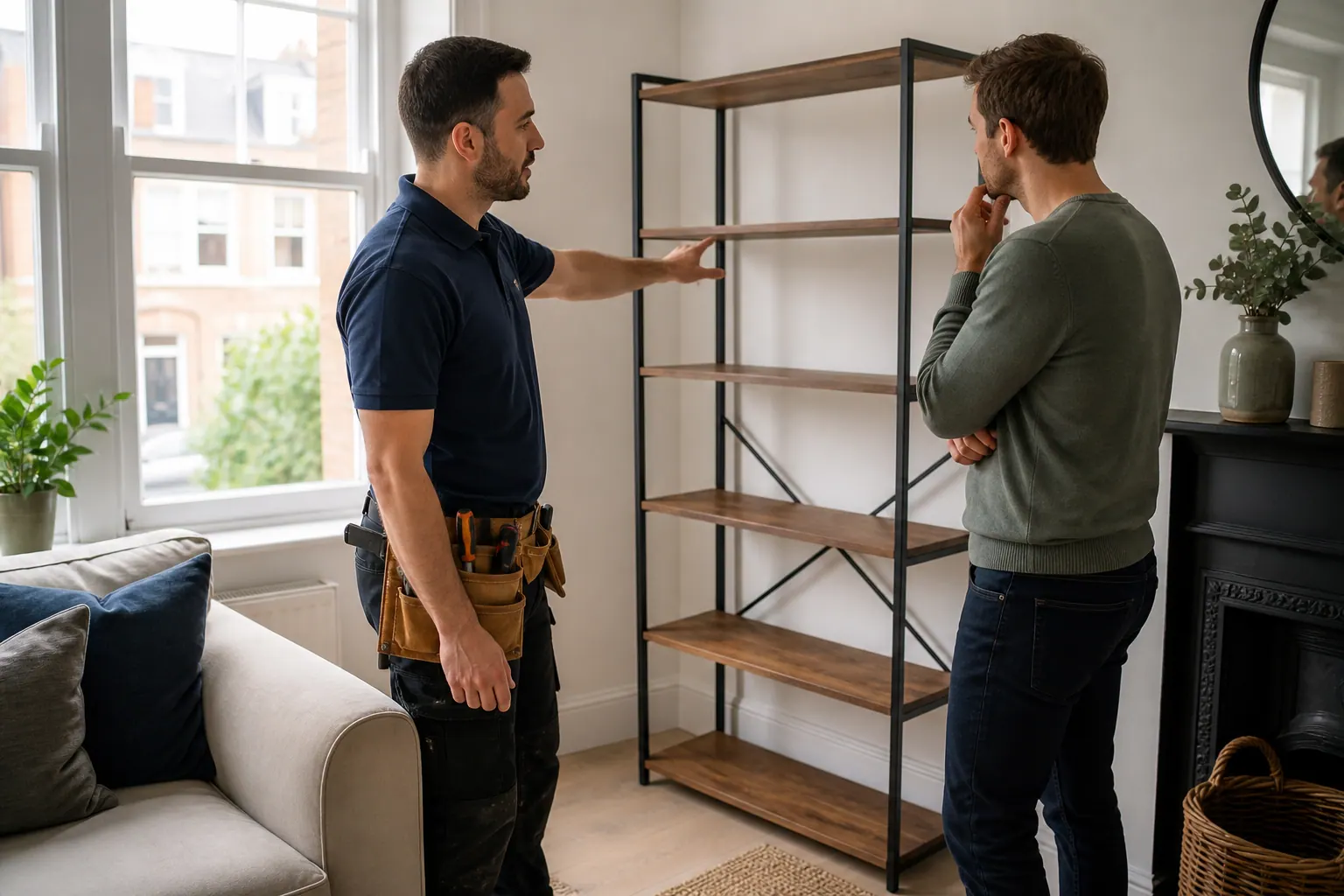
Handyman preparing tools for a planned visit in a London home
North London property focus
15+ years of experience
London and M25 coverage
One accountable team
Room-by-room repair notes arranged beside fittings and measurements

NORTH LONDON PROPERTY NOTES

Use a twelve-month wheel for preventive tasks

Place ordinary checks around the year instead of waiting for unrelated defects to become one urgent list. Before colder months, review accessible draught hardware, door operation and visible sealant condition. After winter, look for movement, staining or exterior wear that needs diagnosis rather than immediate covering. Before redecorating, allow time for repairs and drying; before new storage, measure the contents and test circulation. The wheel is a reminder, not a claim that every component needs annual work. Keep manufacturer intervals and landlord duties separate. Photograph change at the same angle, date each observation and escalate live water, unsafe power or security failure at once. This creates useful evidence without encouraging unnecessary replacement.

PRACTICAL CONSIDERATIONS

Create a household maintenance index before choosing a service and Read the building in layers rather than by architectural label

01

Create a household maintenance index before choosing a service

Give every issue a location, component, symptom and date first noticed. Add a wide photograph, a close view and any label, instruction sheet or previous repair note. This index separates a recurring defect from a newly damaged fitting and shows which tasks share a room or preparation stage. Mark each entry as monitor, assess or repair; do not give an unexamined crack or damp mark a cosmetic solution. Gas, fixed electrical, structural, roof-access and active-water concerns leave the ordinary list immediately. The postcode then opens the correct local guide, but the component record decides who should examine it. A maintained index is particularly useful when several family members, a landlord or a managing agent report problems at different times.

02

Read the building in layers rather than by architectural label

A terrace may contain an original stair, later partitions, replaced services and a recently fitted kitchen. A divided house can combine private rooms with communal systems; a purpose-built flat may place responsibility outside the front door. Note each layer that the proposed task touches. Original joinery may favour careful repair, a proprietary unit depends on its manufacturer’s components, and an unknown partition needs investigation before carrying a load. Record who owns the surface as well as what it appears to be. Upper floors, shared halls and narrow turns affect movement, but they do not identify the substrate. This layered reading produces a better decision than applying one period description to every wall, door and fitting.

03

Use the area guides as local filters, not interchangeable landing pages

The North London collection is organised so a customer can move from a broad regional question into an area-specific property context. Hampstead, Highgate and Belsize Park discuss different constraints from Islington, Angel or Highbury. Crouch End, Muswell Hill, Finchley, Golders Green, Palmers Green and Southgate introduce other household layouts and practical briefs. Camden Town, Kentish Town, Primrose Hill, Holloway, Finsbury Park and Stoke Newington add denser streets, mixed-use surroundings and varied access conditions. Select the page closest to the actual address, then follow its relevant service links. Boundaries and postal descriptions are not substitutes for checking the building itself, so an adjacent-area page should guide the enquiry rather than dictate the method.

PLANNING THE WORK

Convert index entries into a controlled work cycle

Review the maintenance index and choose entries that are ready: the responsible person is known, products are complete and preceding diagnosis is closed. Retain failed parts and labels. On attendance, compare the recorded symptom with the present condition, protect the immediate zone and agree the stopping point. Work through dependencies rather than room order, so repair precedes finishing and tested support precedes loading. Return removed components when useful for identification, operate the finished item normally and update the entry with the action taken. If concealed conditions contradict the record, reopen the item for assessment instead of forcing completion. The next review should show what changed and what remains outside scope.

Discuss your property requirementsCall 020 3137 9380

PLANNING THE WORK

Heritage and tenure checks belong to the address

Camden alone records 40 conservation areas covering about half the borough, and its Article 4 information explains that rights can be withdrawn for particular properties or areas. Historic England likewise advises owners to ask the local planning authority about the designation and any extra controls. That does not mean every internal shelf or furniture repair needs planning permission. It means the customer should establish listing, conservation, Article 4, lease and freeholder conditions before work affects protected fabric, external appearance or shared parts. Internal approval from a landlord or managing agent is separate from planning consent. Bob’s can work to an approved ordinary brief; it cannot infer legal permission from a North London postcode or turn a handyman visit into heritage certification.

Discuss your property requirementsCall 020 3137 9380

PLANNING THE WORK

Assign each maintenance entry to one responsible route

Odd jobs can close a prepared group of modest adjustments. Furniture assembly needs a complete product and instructions; repairable timber and measured bespoke elements point towards carpentry. Hanging work requires item dimensions, mass and wall evidence, while TV mounting also depends on the bracket, cable path and viewing position. Decorating begins only after the surface is sound and dry. Accessible plumbing faults and fixed electrical work remain with their competent trades. When an entry touches more than one discipline, assign the first action to the system carrying the greatest safety or damage consequence. The maintenance record can then show a referral rather than falsely marking the item complete.

Discuss your property requirementsCall 020 3137 9380

PRICING

Pricing based on the agreed North London job scope

The quotation reflects the task, access, expected time and materials. Photographs and measurements help establish what can be priced before the visit and what first needs inspection.

Handyman labourFrom the published rate
MaterialsAgreed for the job
Additional workApproved before it starts

Parking, congestion and unusual access requirements are discussed where they affect the quotation.

NEARBY COVERAGE

Handyman areas near North London

NORTH LONDON HANDYMAN FAQ

Questions about planning handyman work in North London

Which North London area page should I use?

Choose the page closest to the property address. If the boundary is unclear, send the postcode; the building and job details matter more than the marketing district.

Can several maintenance entries be closed together?

Yes, when they are ready, compatible and supported by photographs, dimensions and complete products. Entries needing diagnosis or regulated work remain separate.

Do you assume walls are solid in older North London homes?

No. Age and appearance do not confirm the substrate. The wall, load and proposed fixing position must be assessed before drilling.

Who checks conservation-area or listed-building permission?

The property owner should confirm the position with the relevant local authority and obtain lease, freeholder or managing-agent approval where required.

What should photographs show for a repair enquiry?

Include the complete item, its surroundings, the damaged detail, any label or hinge code, and enough scale to understand access and size.

Can an active leak be added to a planned handyman visit?

Report active water immediately and use the appropriate plumbing or emergency route. Do not hide it within a list of decorative or fitting tasks.

PLAN THE VISIT

Send one clear North London property brief

Share the postcode, room-by-room list, photographs, product details and access rules. We will help route each ordinary task to the relevant service and local area information.

Call 020 3137 9380Get a quote