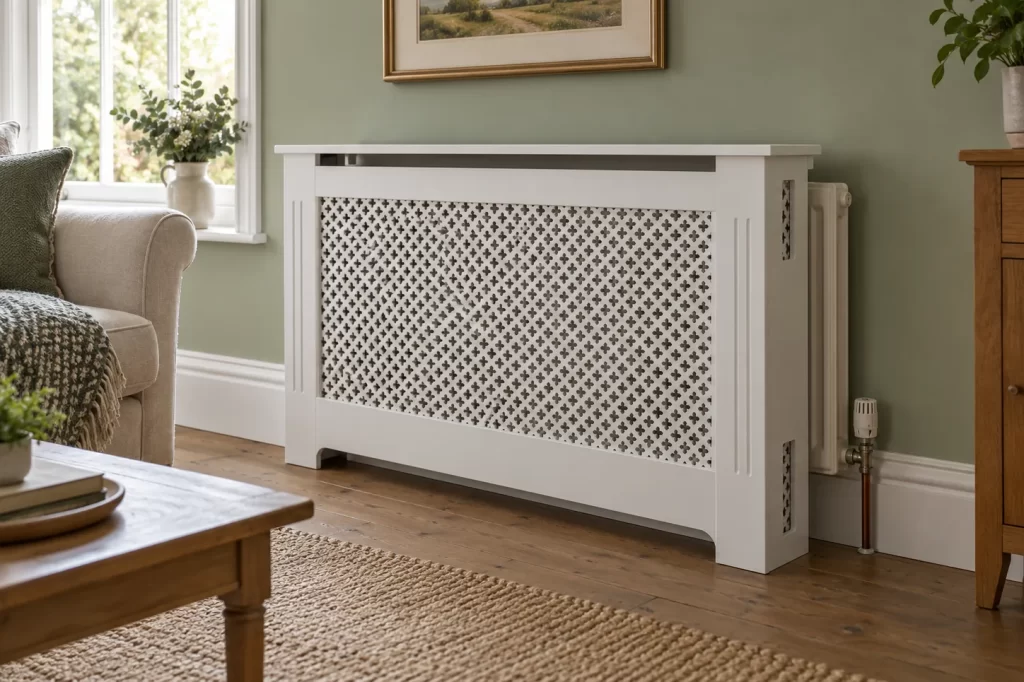
A decorative radiator cover that rocks or pulls away from the wall can tip, catch a person walking past or obstruct access to a valve. Before tightening a bracket, find out which part is moving. The cover may have a loose frame, a failed wall fixing or a floor that does not support both feet evenly. It should be secure without being fixed to the radiator or pressed against pipes, valves and vents.
Radiator covers vary widely. Some are light, freestanding cabinets held against tipping by small wall restraints. Others use stronger brackets and a removable front panel. Follow the maker’s installation guidance if available. The objective is a stable cover that can still be removed or opened for radiator servicing, cleaning and valve access. Do not treat a decorative cover as a substitute for a radiator guard where a safety specification is required.
Make the area safe and let it cool
Turn the heating off and allow the radiator and pipes to cool before inspecting behind the cover. Move small children and pets away from a loose unit. Clear ornaments from the top, then test the cover with gentle pressure at each upper corner. Do not pull it hard enough to make it fall. If it starts to tip, support it and arrange help rather than trying to inspect the bracket while it is unstable.
Look for a visible gap at the wall, a foot hovering above the floor, or a front panel that has come out of its frame. A missing screw or broken plastic fitting may be obvious, but note where it belongs before replacing it. Photograph the whole cover and both end panels. A cover that repeatedly shifts despite tight wall fixings may be racked or too wide for the space.
If water is visible near a radiator valve or pipe, do not conceal it behind the cabinet. A leak is a plumbing issue and should be dealt with separately. If the radiator does not heat properly, the existing guide to radiator heating causes addresses that symptom; a loose cover does not explain every cold radiator.
Identify the actual fixing system
Some covers have L-shaped brackets at the back, while others have straps, keyhole plates or a rail. Inspect from the side with a torch rather than reaching blindly into the gap. The bracket may fasten to the cover, the wall or both. A screw that has pulled out of the wall needs a different repair from one that has torn through thin MDF on the cabinet side.
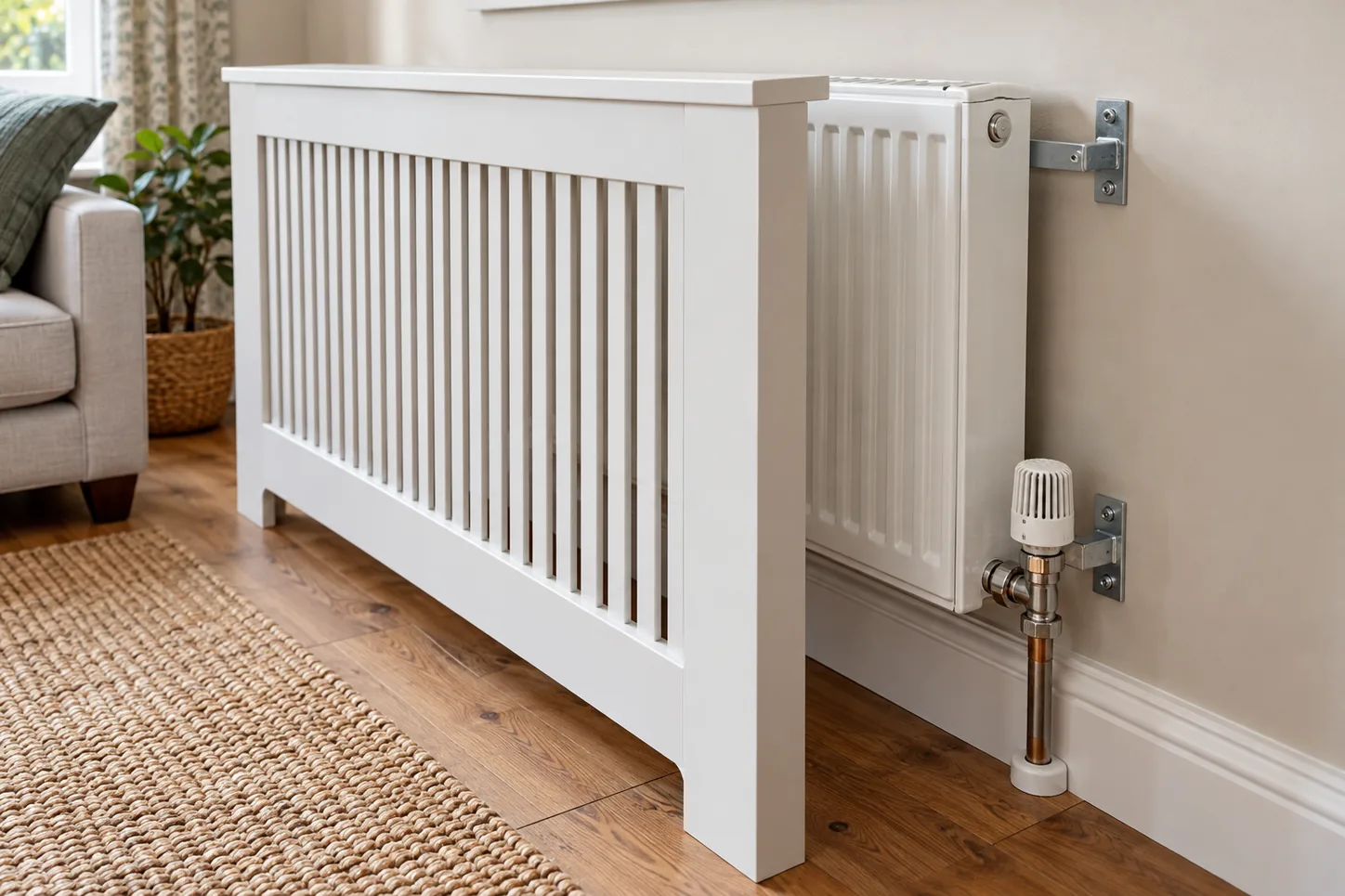
Check whether the cover is square. A loose corner joint can let the whole cabinet twist, causing a bracket to miss its wall fixing. Inspect cam locks, screws and dowels according to the construction. If the board has swollen from a leak or damp cleaning, a screw may no longer grip. Do not drive a larger screw at random into crumbling engineered board.
Wall construction matters too. A solid masonry wall, plasterboard partition and tiled surface need different fixings. The article on types of wall fixings provides background, but select the actual fixing according to the cover’s weight, the wall and the manufacturer’s installation method. Pipes and cables may run close to radiators, valves and adjacent sockets. Establish a safe drilling position rather than assuming the old hole is safe for a longer fastener.
Preserve airflow and valve access
A cover changes how warm air circulates around a radiator. Its top, front and lower openings should remain as designed. Do not push the cabinet tight against the radiator or block a vent with a new backing board merely to make it feel rigid. It also should not rest on hot pipes or the thermostat head. Check the maker’s recommended clearances; they vary by design and radiator type.
You should be able to reach the thermostatic radiator valve and any bleed point when maintenance is needed. A cover that can only be removed by disturbing pipework is poorly arranged. Valves need free air circulation to sense room temperature; enclosing a thermostat head tightly may affect operation. Consider whether the cover must be moved for cleaning and whether the fixing can be released without damaging the wall.
Do not store paper, textiles or electrical items inside or against the cover. A loose panel can shift into a heating surface, and stored items impede airflow. If the cover is used as a shelf, keep its load within the manufacturer’s guidance. A heavy collection of books or plant pots may strain joints and wall restraints that were designed mainly to prevent tipping.
Check floor contact before tightening the wall bracket
The cover should stand on its own feet or base as designed. If one foot does not meet the floor, tightening the upper bracket can pull the cabinet out of shape. Place it in its normal position and check for a rocking corner. A floorboard, tile edge or thick rug can cause a small mismatch. The cover may have adjustable feet; use them only as the maker specifies. A suitable pad may protect a floor, but several stacked pads are a poor permanent support for a tall cabinet.
If the frame is twisted, place it on a reliably flat surface once it has cooled and can be lifted safely. Check the corner joints and front panel alignment. A bowed side panel can make a freestanding cover unstable even on a level floor. Correct the cabinet structure before installing stronger wall fixings. The fixing is meant to restrain a stable cover, not pull a damaged one square.
For a cover fitted over skirting, check whether cut-outs at the back allow it to stand close enough to the wall. Forcing the top backwards while the bottom bears on skirting creates leverage at the bracket. A carpenter may need to adjust the cabinet opening or create a suitable spacer, preserving ventilation and easy removal. Do not cut a large opening through an uncertain panel without checking its effect on strength.
Repair the failed fixing properly
If a screw has simply loosened in sound material, the correct size and method may allow it to be tightened. Stop if it spins without grip. A wall plug that has enlarged its hole, a bracket bent out of shape or a cabinet panel that has torn around its fixing needs a more considered repair. Replacement brackets should match the cover and be mounted at positions that support its intended movement and removal.
When work requires drilling near the radiator, turn the heating off and keep clear of pipe routes. A detector can help but does not remove all uncertainty. If the existing fixing location is too close to plumbing or cannot be verified, use a competent fitter. Do not screw through the cover into the radiator casing or through the wall merely because a longer fastener seems stronger.
After refixing, test gently at the top and sides. It should not rock, pull from the wall or obstruct the radiator controls. Remove and replace any removable front panel as intended, then confirm it stays seated. Run the heating normally and check that warm air can leave through the designed openings. If a new rattle appears only when the heating runs, investigate thermal movement or a loose panel rather than packing the cover tightly against the radiator.
When to arrange help
The site’s handyman and odd-jobs service is relevant for a sound cover needing appropriate fixing. Carpentry services suit a cover with damaged timber or a poor fit around skirting. Arrange plumbing help if there is water at the valve or pipe. Tell the repairer whether the cover rocks on the floor, whether its brackets are still attached and whether it needs to be removable for access.
The lasting repair keeps three things distinct: the cabinet bears its load properly, wall fixings prevent tipping, and the radiator retains airflow and service access. Securing one by sacrificing another can turn a small wobble into an awkward heating or maintenance problem.