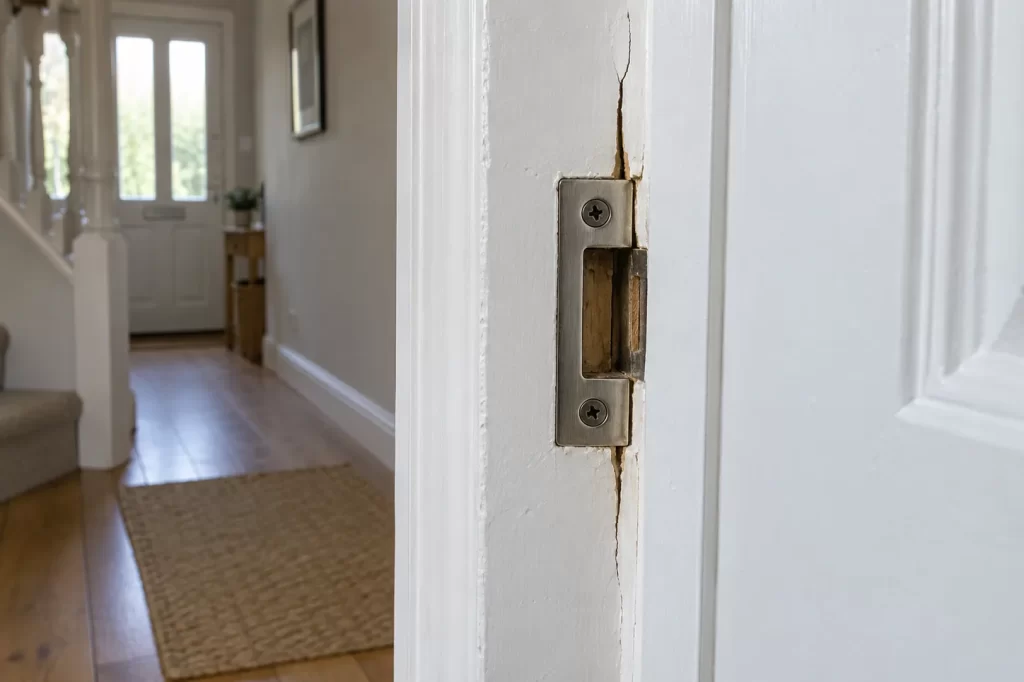
A door jamb can split when a door is forced, caught by a strong draught or struck while furniture is moved. The damage may be a fine crack in the painted surface, or it may run through the timber that holds the latch keep. Those are very different repairs. If the door no longer closes securely, the frame moves when pressed, or sharp timber is exposed, stop relying on the door until the damage has been assessed.
This article focuses on timber around an ordinary internal door. An external entrance door, a fire door, a communal entrance or a frame showing signs of forced entry deserves prompt specialist assessment. Security and fire performance depend on more than how tidy a repair looks. Do not fill and paint over a split simply to make it disappear.
Identify exactly which piece has cracked
Stand on the side of the doorway where you can see the closed door and trace the split. The jamb is the frame member that supports the door and latch. The narrow door stop is the strip the door rests against when shut. The architrave is the decorative trim covering the frame-to-wall joint. A split architrave may be a modest trim repair; a split through the jamb beside the strike plate can weaken the latch fixing.
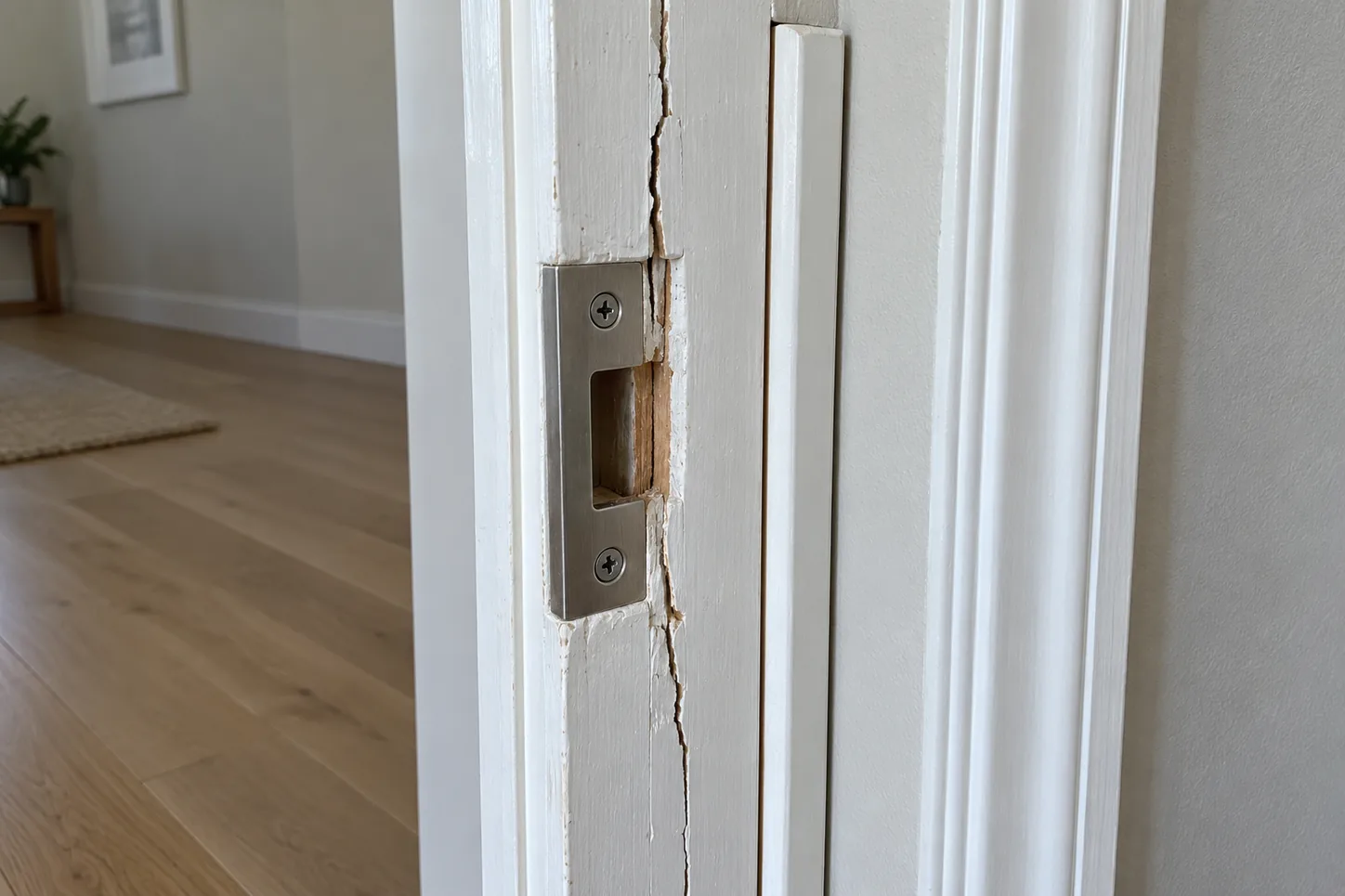
Look at the crack’s length and direction. A short line in paint that does not open under gentle pressure is less concerning than a gap following the grain past a screw hole. Do not probe a damaged edge with bare fingers. Photograph the area from straight on and from the side before touching hardware; the images help compare movement later and make the fault easier to describe to a repairer.
With the door open, look for a matching mark on the door edge. A latch that has been striking the frame outside its keep may have contributed to the damage over time. A sudden split following one hard impact may indicate a different force. The cause matters because a new timber insert or fastener will not last if the door continues to hit the same point.
Check function without forcing the door
Close the leaf slowly. Watch whether the latch meets the keep, whether the jamb moves and whether the door sits at its normal depth. If it needs a shove to latch, stop the test. Repeated force can extend the split. Try the handle with the door open to separate a sticky latch mechanism from a damaged frame. The published guide on a broken handle or lock addresses mechanism symptoms in more detail.
Inspect the hinges and the reveal around the door. If an upper hinge has pulled loose, the leaf may have dropped and placed extra load on the keep. The existing article on stripped screw holes in a wooden frame explains why screws can stop gripping even before a visible split appears. A sound jamb repair should correct the alignment fault as well as restore the wood.
If the crack widens when the latch engages or you can move the plate by hand, the timber holding it is no longer acting as a secure fixing. Keep the door out of use where practical and arrange repair. On an entrance door, treat a failed keep as a security issue rather than a cosmetic inconvenience.
Why filler alone often fails
Ordinary decorating filler is meant to smooth a stable surface. It cannot restore a split length of timber that takes repeated latch impact or screw load. Even a hard setting filler can crack away if the two sides of the split continue moving. Painting over it may hide the evidence while the keep loosens further.
A narrow cosmetic split in a non-load-bearing piece of trim may be repairable after the trim is securely fixed. A longer crack through sound timber may call for controlled bonding, clamping and new fixing positions, depending on its depth and the material. Where wood fibres have crushed or broken away around the keep, a fitted timber repair or partial jamb replacement may be needed. There is no universal filler or screw size that works for every frame.
The frame construction also changes the options. Some jambs are solid timber; others are engineered or form part of a proprietary door set. A thin veneer over weaker core material cannot always hold a new fixing in the same way as solid wood. Older frames may sit over uneven masonry or hidden packers. Cutting into the jamb without understanding what supports it can loosen the entire opening.
Make the area safe while awaiting repair
Remove loose splinters only if they can be lifted without enlarging the split, and keep children and pets away from a sharp edge. Do not tape over a failed latch and assume the door is secure. If the door serves an essential route or provides privacy, arrange an appropriate temporary measure with the responsible property owner or specialist. Avoid obstructing an escape path.
Do not drive a long screw across a crack as an improvised brace. It may split the wood further, miss sound structure or interfere with a concealed service. Likewise, glue squeezed into a closed painted crack may never reach the damaged fibres. A temporary wedge can hold a light internal door open during inspection, but it should not be left as a substitute for a working door where access, fire separation or safety depends on closure.
Record the event if a single impact caused the damage. A concise note of when it happened, what hit the frame and whether the door worked before can help the repairer find both the immediate break and any pre-existing weakness. In a rented property, report it promptly through the usual route rather than carrying out irreversible work without authority.
How a repairer decides between local repair and replacement
A carpenter will generally assess sound timber on both sides of the split, the position of the keep or hinge, and the load the joint must carry. A short local split with intact surrounding fibres may accept a careful repair once the leaf is aligned. A long crack through several fixing points, widespread rot or repeated previous repairs may justify replacing a jamb section or the frame. The decision is based on the strength needed, not just the visible width of the crack.
They should also check why the door hit hard enough to cause damage. A slamming door, a latch that misses its keep or a closer with excessive final speed may otherwise damage the new work. The strike plate must return to a sound fixing position and the door must latch with normal pressure. A repair that looks neat but needs to be slammed shut is unfinished.
Finishing should wait until the functional test succeeds. Exposed timber may need appropriate priming before paint. Matching an old profile or gloss level can take more than one coat, especially where the architrave and stop also suffered damage. A small variation in finish is easier to accept than a concealed structural weakness around the latch.
When to get help quickly
Arrange prompt door repair if the door cannot latch, the frame flexes, the split crosses the keep or hinge fixings, or the damage followed forced entry. For a sound internal door that needs a fitted timber section or trim replacement, carpentry services are relevant. Explain whether the crack is in the jamb, stop or architrave; photos of the whole doorway and the close damage help clarify it.
Do not assume a small crack is harmless because the door still closes today. Watch for widening, fresh paint fractures, a loose plate or a changing door gap. Those signs mean the frame is continuing to move. Conversely, a stable hairline in decorative trim may need only a modest surface repair once the underlying frame has been confirmed sound.
The useful distinction is between appearance and function. First identify the damaged component, then check whether the latch and fixings still have firm timber behind them. Repair or replace according to that structural condition, and correct the impact or alignment problem that caused the split.