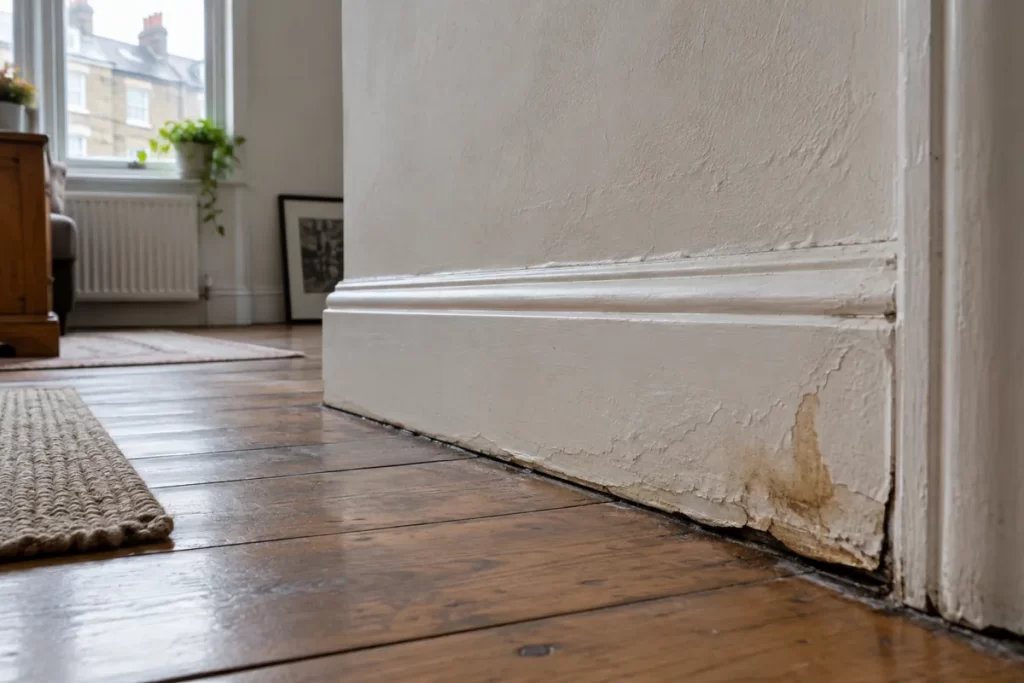
A skirting board can look sound from across the room and crumble when you press a fingertip into its lower edge. After a leak, the visible stain is only part of the decision. The board, wall and floor all need to dry, and the source of water must be fixed before anyone paints over the mark.
Some skirting can be kept with careful preparation. Swollen MDF, soft timber and persistent damp usually need a different approach. Here is how to assess the damage without turning a small repair into a repeat job.
Stop the water before assessing the finish
Start by establishing where the moisture came from. A single plumbing incident, rain driven beneath a doorway and condensation behind furniture can produce similar marks but need different remedies. If a pipe, tap or fitting is still leaking, arrange to find and fix the leak first. If the source is unclear, our guide to signs of a hidden leak explains clues such as recurring stains and a musty smell.
Take photographs before cleaning or removing trim, particularly in a rented property or if an insurer is involved. Move furniture away to let air circulate. Wipe up standing water and follow the advice of a relevant professional if sockets, wiring or a major escape of water are involved. A soaked wall or floor may need a broader water damage repair assessment.
Do not judge the board while it is wet. Timber may shrink back as it dries, though distortion can remain. MDF is less forgiving: once fibres have swollen, the edge rarely returns to a crisp, paintable profile.
Identify the board and the type of damage
Most modern homes use painted softwood or MDF skirting. In older London properties you may find taller, more decorative timber profiles, sometimes built up from several mouldings. Knowing the material helps you judge the repair.

- Surface stain only: the paint has marked, but the board stays firm and flat. Once fully dry, cleaning, stain blocking and repainting may be enough.
- Small local dent or open joint: sound timber can often be filled or refixed before decorating, provided no damp remains.
- Swollen lower edge: common with MDF. It may feel fuzzy or raised and usually calls for replacement of the affected section.
- Soft or crumbling timber: points to decay or prolonged moisture. The damaged material needs removing, and the wall and floor behind it should be checked.
- Board lifting from the wall: fixings or plaster may have failed. A replacement board alone will not solve a damp or unsound backing surface.
Press gently with a fingertip, not a tool that could gouge the material. Compare the affected area with a dry section. Note any gap at the wall or floor and whether the floor covering is lifting. A stain travelling along several metres of skirting suggests a larger moisture problem than a short mark beside a repaired pipe.
Give the wall and floor time to dry
This is the part most likely to be rushed. A wall can feel dry to the touch while moisture remains behind the skirting, in plaster or beneath a floor covering. Painting too early traps the problem and may lead to peeling paint, mould or another swollen board.
Keep the room ventilated and heated sensibly. A dehumidifier can help after a larger incident, but drying time depends on the amount of water, material and ventilation. If the affected area is extensive, or damp keeps reappearing, get a moisture assessment. The site also has advice on dealing with mould, which is worth reading if growth appears around the wall. Cleaning visible mould without fixing persistent moisture will not settle the underlying issue.
If floorboards, laminate or carpet were wet, mention that when arranging the repair. The flooring and tiling service may be relevant where the floor edge has also lifted or warped. A skirting board can hide the perimeter of a damaged floor; it should not be used to conceal a problem that still needs drying.
When a repair makes sense
Keep the board if it remains firm, straight and securely attached after the area dries. A localised paint stain may need a suitable stain-blocking primer before repainting. A minor open mitre or gap can be refixed and filled once the wall is sound. Small dents in dry timber are usually straightforward to make good.
Match the existing finish carefully. New paint on one metre of old white skirting may show as a brighter strip, so you may prefer to repaint the full run between natural breaks. Our guide to why paint peels and how to fix it covers preparation issues that matter here too. If the wall has a tide mark, that surface may need separate stain blocking and redecoration.
Filler is for a sound, dry surface. It is not a cure for mushy MDF, rotten timber or an ongoing leak. Likewise, a bead of caulk along a wet joint can make the gap look tidy while leaving moisture behind it.
When replacement is the better option
Replace a section when MDF has visibly swollen, timber is soft, the profile has warped, or fixings no longer hold in sound material. The joiner should inspect the exposed wall and floor edge after removing the damaged piece. If the plaster or substrate is damp, let it dry and repair it before fitting new skirting.
Matching an older profile can be the tricky part. A standard modern board may sit awkwardly beside a deep Victorian moulding. A carpenter can assess whether a matching length is available or whether a discreet join and shaped trim will be needed. In some rooms it is neater to replace the entire short wall run than to splice a tiny piece in a prominent spot.
Where the repair follows a larger escape of water, coordinate the order: leak fixed, moisture checked, wall or floor made sound, then skirting fitted and decorated. This prevents the finished trim from being removed again to tackle a hidden problem. If the repair is part of several jobs, use the handyman booking checklist to record the leak date, affected rooms and materials.
A practical decision for your room
Once the source is fixed and everything is dry, the decision is mostly about material condition. Firm, flat skirting can be prepared and repainted. Raised MDF fibres, soft timber, significant warping or repeated damp call for removal and inspection. If you are unsure, photograph both the damage and a sound section of the profile before seeking a quote.
Bob's carpentry service can assess a damaged board and plan a matching repair or replacement. Tell the team if the leak is still being investigated, so the trim work can be scheduled after the moisture problem is resolved.