
Furniture joint
Hold one joint at a time during a safe reproduction to identify movement without over-tightening the whole product.
COMPACT FLAT · MOVING FURNITURE · VIBRATION CLUES
A room beside a busy street or railway needs furniture that remains stable without turning every wall into a permanent fixing surface. Bob’s helps define movable zones, restraints and observation points.
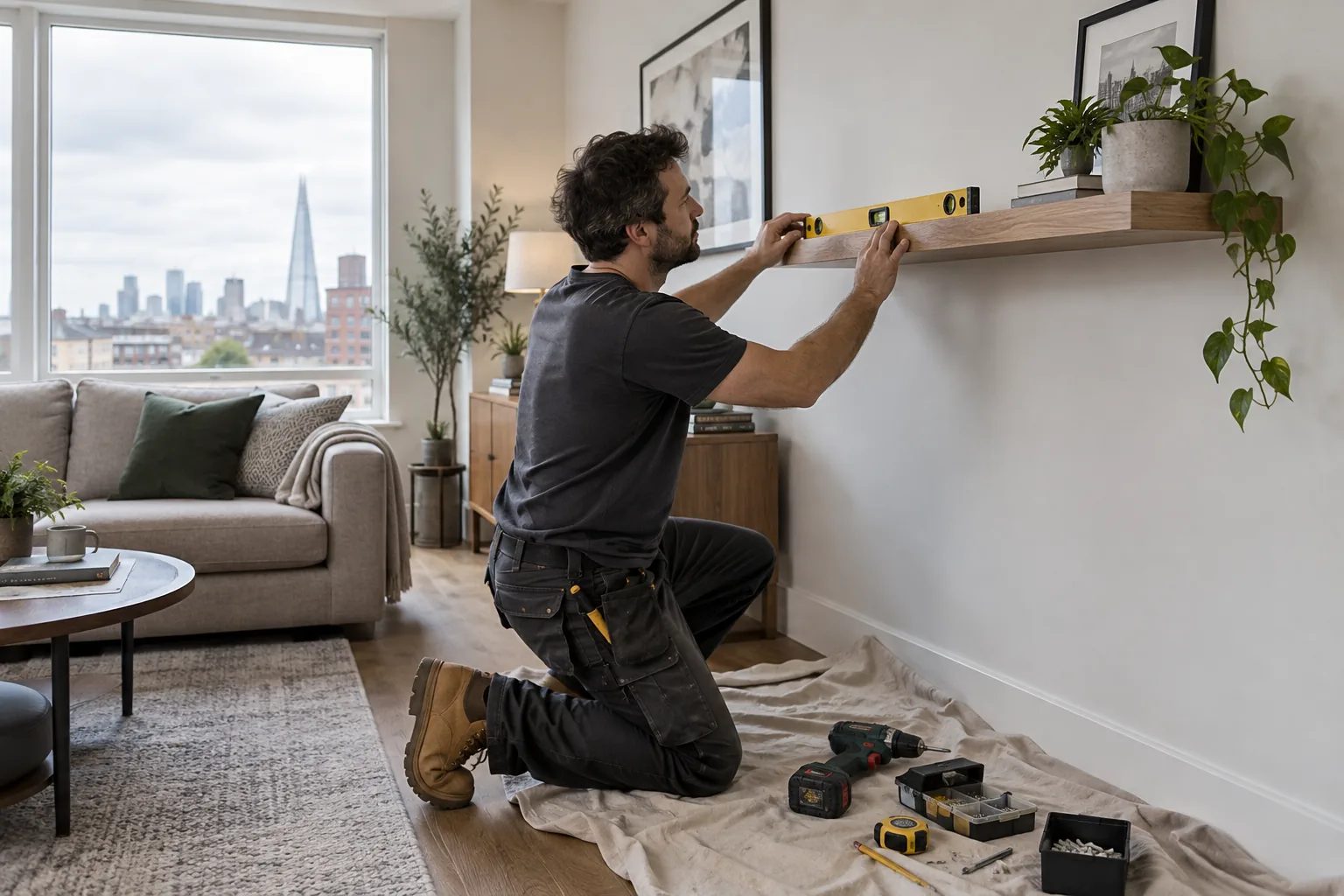
TRANSPORT AND INDUSTRIAL EDGES SHAPE THE CONTEXT
Tower Hamlets identifies Cambridge Heath as a neighbourhood centre. Its planning documents around Marian Place and The Oval describe employment buildings, railway and canal edges, family housing ambitions and a need for noise screening beside the railway. The borough’s character addendum also notes heavy traffic and mixed-use conditions along Cambridge Heath Road. These are area-level facts, not proof of a defect in one home.
Inside a property, reproduce the sound safely. Note whether it follows a train, a passing vehicle, a cupboard movement or a person walking. Check product joints and restraints without claiming the building is moving. Bob’s can assemble and secure suitable furniture or fittings after the wall and permission are confirmed; persistent structural, acoustic or service issues need their relevant professional.
BUILD A RATTLE REGISTER
Record the trigger and location before tightening random components.
Hold one joint at a time during a safe reproduction to identify movement without over-tightening the whole product.
Remove frames, dishes or cables temporarily and repeat the event; contact noise may not come from the support.
Check visible movement, load and bracket engagement. Stop if the support or substrate shows damage.
Log trains, traffic or building activity alongside the sound without treating correlation as confirmed cause.
DESIGN A TWO-MODE ROOM
Use one colour of removable tape for working or dining positions and another for the room after furniture is folded or moved. Open doors and drawers in both states. A desk can serve the day yet block a bed, radiator or window at night; a storage unit may fit the wall but remove the turning space needed to reset the room.
Choose products designed for their movement rather than repeatedly dragging unsuitable furniture. Confirm locks on folding parts and keep fingers clear during operation. Restraints must follow the manufacturer and wall assessment while allowing the intended transformation. Photograph both layouts so future occupants understand where the chair, leads and movable pieces belong.
SOUND TO USEFUL EVIDENCE
Use normal operation and note the exact action and timing.
Remove loose objects or steady one joint without forcing the product.
Adjust suitable furniture or fitting hardware within its specification.
Test the same action and retain the observation if the sound remains.
DEFINED-FITTING LABOUR GUIDE
The calculator uses Bob’s published weekday labour rates. It excludes products, materials, parking, acoustic testing, structural diagnosis, management permissions and fixed services.
KEEP MOVEMENT INTENTIONAL
The product remains stable in use and does not drift into a door or heater.
Mechanisms are tested open and closed without trapped cables or fingers.
Small floor or plan references prevent furniture slowly blocking circulation.
NEARBY COVERAGE
Prepared visits nearby.
Property help to the north.
See coverage to the east.
CAMBRIDGE HEATH ROOM FAQ
Name the action, component and timing. Note whether external traffic coincides, but do not claim a cause without isolation.
No. Follow the product sequence and torque guidance; over-tightening can damage board, threads or moving joints.
Only if product guidance, heat clearance, airflow and both open and closed positions remain suitable.
Use the manufacturer system with an approved wall position and fixing method. Management consent may also apply.
No. It estimates defined assembly and fitting labour, not building noise diagnosis or specialist treatment.
Transform both layouts, open nearby doors, check locked mechanisms and confirm leads, windows and heaters stay clear.
GIVE MOVING FURNITURE A CABLE RESET
Label detachable leads at both ends and state which layout uses them. Keep a gentle service loop near the device, with excess cable supported away from chair wheels, folding joints and heaters. Do not trap extension blocks inside closed furniture or cover them with fabric. When the room changes mode, disconnect equipment using the plug rather than pulling the lead, then return accessories to a ventilated tray. Photograph the safe daytime and evening routes. If another socket position is genuinely required, ask a qualified electrician; furniture should adapt to the approved electrical arrangement rather than creating a permanent chain of strained extensions.
SHOW BOTH ROOM STATES
Include dimensions, wall information and the normal trigger for any rattle. Bob’s can review suitable work without guessing at the building.