

Observe the routine before changing heights handles or storage

Make Everyday Fittings Easier to Use in Mitcham Homes

Merton’s Character Study records Mitcham’s varied housing, heritage and community focus. Inside a shared household, small adjustments can improve ordinary routines when they are based on the people using the room rather than a standard assumed height.

  • Handles and controls observed during normal use
  • Frequently used storage placed within comfortable reach
  • Restricted items separated from shared household zones
  • Changes tested by the people who use them
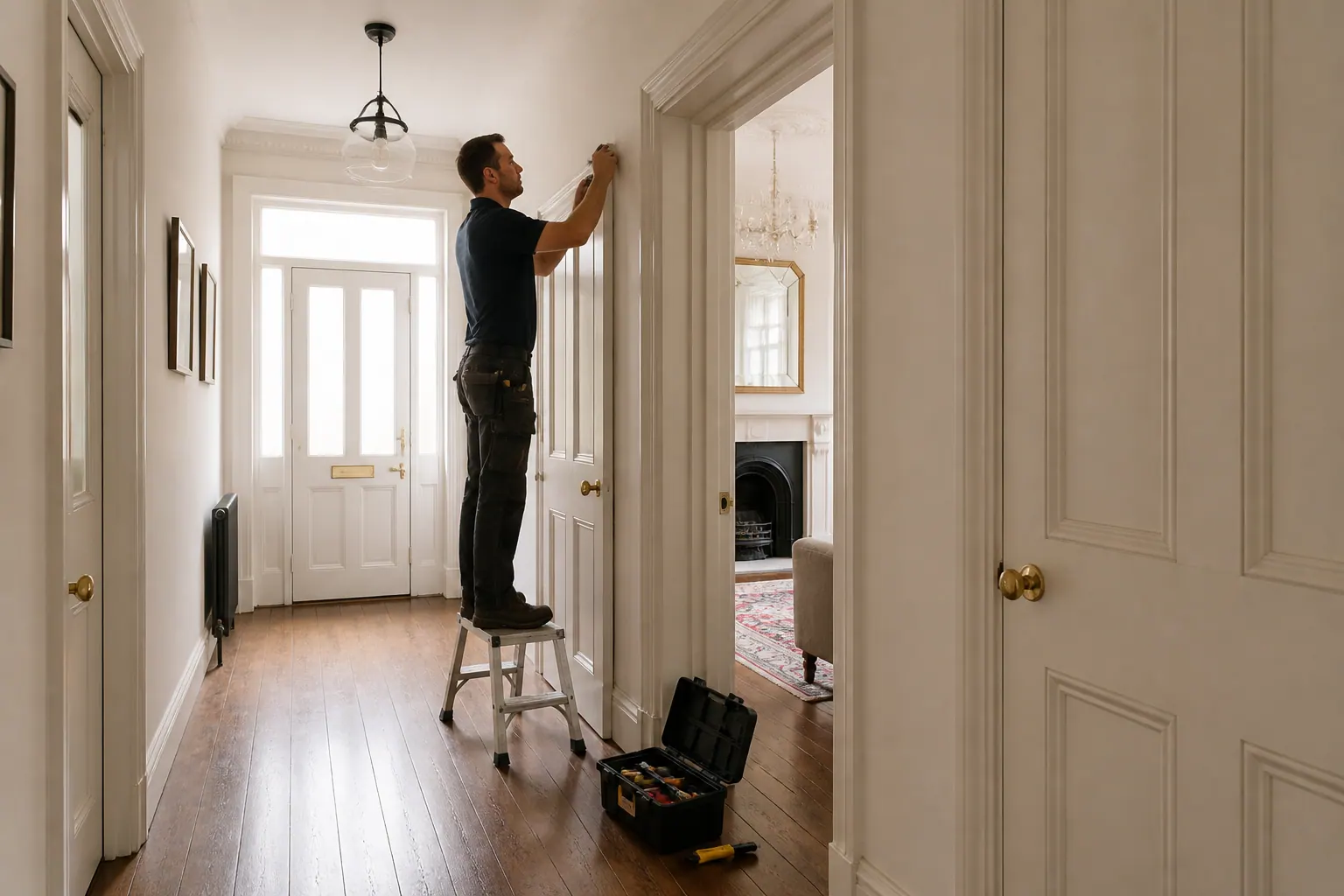
Resident demonstrating the normal use of a cupboard while a handyman takes notes
Mitcham property focus
15+ years of experience
London and M25 coverage
One accountable team

LOCAL PROPERTY CONTEXT

Separate excessive force from inconvenient reach and Allocate storage by frequency, weight and control

01

Separate excessive force from inconvenient reach

A high latch may be awkward but mechanically sound; a well-positioned handle may still be stiff because hinges, alignment or the internal mechanism are failing. Diagnose these conditions separately. Operate doors and drawers unloaded and under normal contents, listening for rubbing and checking the support. Lubrication must suit the component and should not be used to hide damage. Moving hardware leaves holes and can affect door integrity, so adjustment or replacement may be better than relocation. Fire doors, locks and fixed electrical controls require their appropriate competent route. Record the user’s reach and the component’s required operating force in plain observations, without claiming formal accessibility compliance. The result should be easier ordinary use without weakening security or safety.
02

Allocate storage by frequency, weight and control

Empty one cupboard and group its contents before adding shelves or hooks. The safest position follows how often an item is used, how heavy it is and who should have access.

Everyday household items grouped by frequency weight and controlled access

MITCHAM PROPERTY NOTES

Observe one ordinary routine before proposing a change

Ask the regular user to enter, put down what they are carrying, open the storage and complete the task as usual. Do not stage a perfect demonstration with the room already cleared. Note awkward reaches, two-handed catches, doors that require body pressure and objects temporarily placed on unsafe surfaces. A child, older resident and tall adult may each use the same kitchen or hall differently; one person’s convenient position can be another’s obstacle. The handyman brief should identify who the change is for and who else shares the space. This is practical observation, not an occupational-therapy assessment. Where a medical, care or regulated adaptation is needed, obtain the proper specialist input. Minor household adjustments should still be based on real use rather than a generic diagram.

WORK PLANNING

Use labels and contrast only where they solve a real confusion and Keep useful access separate from unrestricted access

01

Use labels and contrast only where they solve a real confusion

A small text label may be useless in low light, while a colour cue without words can be ambiguous. Ask users which cupboard, switch or container is repeatedly confused. Choose a durable removable label with plain wording and position it consistently. Do not cover product warnings, ventilation or inspection marks. In a shared home, agree language and symbols rather than creating a private system understood by one person. Contrast can also come from a handle or backing plate, but replacement hardware must fit and support ordinary operation. Test one example before changing a complete set. The goal is quick recognition during the routine, not decorative labelling on every surface.

02

Keep useful access separate from unrestricted access

Making daily items easier to reach does not mean every object should be exposed. Cleaning products, sharp tools, medication and spare keys need storage appropriate to the household and product guidance. Child-resistant fittings must be used as intended and explained to adults; a handyman should not promise that a general catch makes a cupboard fully secure. Avoid storing liquids above electrical equipment or heavy items over a bed or seat. Keep consumer units, stop valves and ventilation accessible. Furniture may require restraint against tipping, depending on the product and use. Home safety and security, odd jobs, furniture assembly, door repair and carpentry have relevant Bob’s service pages. The prices page explains booking options.

03

Repeat the routine after the room is put back

The work is not tested while the cupboard remains empty and chairs are moved aside. Restore representative contents, then ask the regular user to repeat the sequence. Check that another household member can still pass, that doors do not conflict and that the new arrangement has not hidden a control. Photograph final positions and record adjustment points, load guidance and spare components. Where the property has protected or managed fabric, keep approvals with the record; Merton’s guidance shows why the exact Mitcham address matters for visible alteration. Set a review after ordinary use if the arrangement includes adjustable pieces. A successful change should reduce unnecessary effort without creating a new lifting, trip or security problem elsewhere.

PRICING

Pricing based on the agreed Mitcham job scope

The quotation reflects the task, access, expected time and materials. Photographs and measurements help establish what can be priced before the visit and what first needs inspection.

Handyman labourFrom the published rate
MaterialsAgreed for the job
Additional workApproved before it starts

Parking, congestion and unusual access requirements are discussed where they affect the quotation.

NEARBY COVERAGE

Handyman areas near Mitcham

MITCHAM HANDYMAN FAQ

Questions about planning handyman work in Mitcham

Can a Mitcham cupboard handle be moved to an easier height?

Possibly, but first check door construction, existing holes, hinge action and other users; relocation may damage or weaken some doors.

Why is a door handle hard to use even at the right height?

Alignment, hinge wear, rubbing or a failing mechanism can increase force, so mechanical condition should be checked separately from reach.

Where should heavy kitchen equipment be stored?

Prefer a stable low position with clear grip space and no need to unpack a deep stack before lifting it.

Can every cupboard be labelled?

It can, but labels work best when they address a known confusion, use agreed wording and do not cover warnings or ventilation.

Does a child-resistant catch make chemicals fully secure?

No general fitting guarantees security. Follow product guidance and choose appropriate controlled storage for the household.

How should an everyday-use adjustment be tested?

Restore normal contents and ask regular users to repeat the actual routine while checking circulation, controls and door conflicts.

PLAN THE VISIT

Show us the Mitcham routine that needs to work better

Send room photographs, the fitting involved and a short description of who uses it. Bob’s can assess suitable practical adjustments and storage changes.

Call 020 3137 9380Get a quote