
Maintenance for busy NW5 homes and premises

Practical Handyman Repairs in Kentish Town

Kentish Town combines tight residential streets, converted houses, shopfront buildings and property close to rail infrastructure. A useful repair plan separates ordinary wear from repeated movement, checks who controls shared fabric and records what earlier alterations have left behind.

  • Repeated loosening investigated before another fixing is added
  • Conversions checked for concealed services and altered partitions
  • Home and workspace access planned as separate routines
  • External or historic changes verified before work begins
Handyman walking along a north London residential street with tools
Kentish Town property focus
15+ years of experience
London and M25 coverage
One accountable team

PROPERTY DECISIONS

Read recurring movement before treating it as loose hardware and Three clues that change the repair

01

Read recurring movement before treating it as loose hardware

A shelf bracket, latch or picture fitting that works loose repeatedly needs more than a larger screw. Check whether the support has fractured, the wall surface is detached, a door frame is moving or vibration is exposing a weak earlier repair. Record how long the item stays secure and what happens nearby when the fault appears. In properties close to busy roads or rail routes, it is still wrong to assume vibration is the cause without inspecting the fixing. The practical aim is to distinguish a worn component, unsuitable anchor and unsound substrate. That evidence decides whether a handyman repair is appropriate or the surrounding construction needs specialist attention.
02

Three clues that change the repair

Movement patterns matter. A crack that returns along the same joint may mark two materials meeting; a latch that only misses after heavy use may indicate hinge wear; a fitting that rotates despite tightening can have damaged support behind it. Do not conceal those clues with filler before photographs are taken. Mark the edge of a changing crack discreetly only if appropriate and note dates rather than claiming a cause. Heat, smell, water or sudden structural movement moves the issue outside routine making-good. Bob’s can deal with defined suitable repairs, but a safe visit also depends on recognising when investigation must precede installation.

03

Separate adjustment, installation and trade faults

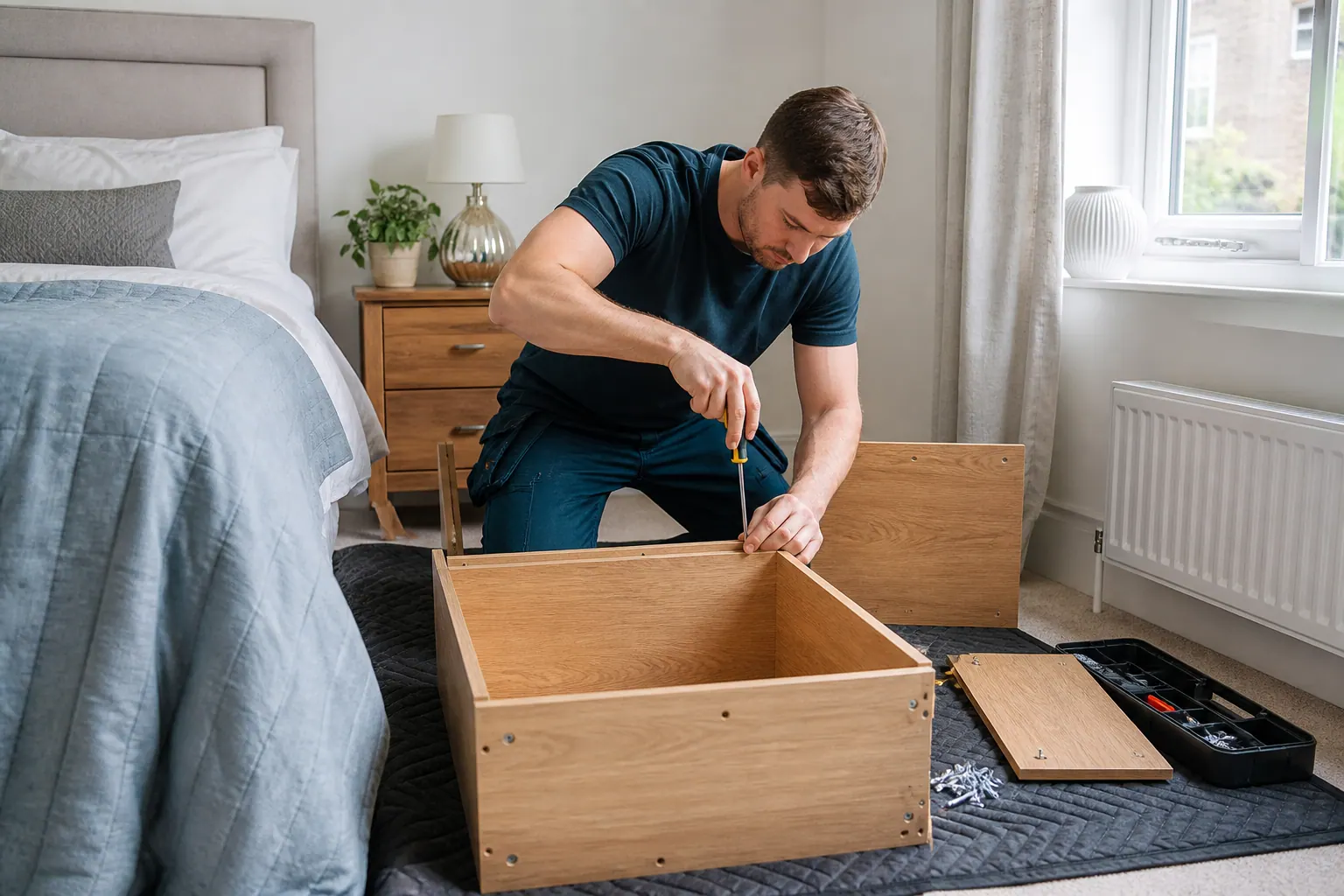
Odd jobs can group straightforward internal adjustments and minor fittings. Door repair is suitable where hinges, latch alignment or compatible ironmongery define the problem. TV mounting and picture, mirror and art hanging each require load, wall and position information. Furniture repair considers whether the item itself remains sound enough to restore. Electrical accessories that are hot, damaged or intermittent belong with electricians; active plumbing faults belong with plumbing. The distinction is based on the fault, not the room. A kitchen cupboard hinge may be general repair, while a damaged cable behind it is not.

SCOPE AND ACCESS

Run the visit as a chain of verified decisions

Begin with the item that affects safety or access. Confirm the condition, then agree whether to repair, replace or pause. Complete dust-producing drilling before clean assembly in the same room. Test each moving part immediately rather than leaving all checks until the end. Keep removed components labelled, particularly when several doors or cabinets use similar hardware. Photograph anything that cannot proceed and record the needed decision or part. This sequence stops uncertainty spreading across the whole list. It also leaves completed items operational even when one concealed defect requires a later specialist or a product that was not reasonably identifiable in advance.

Discuss your property requirementsCall 020 3137 9380
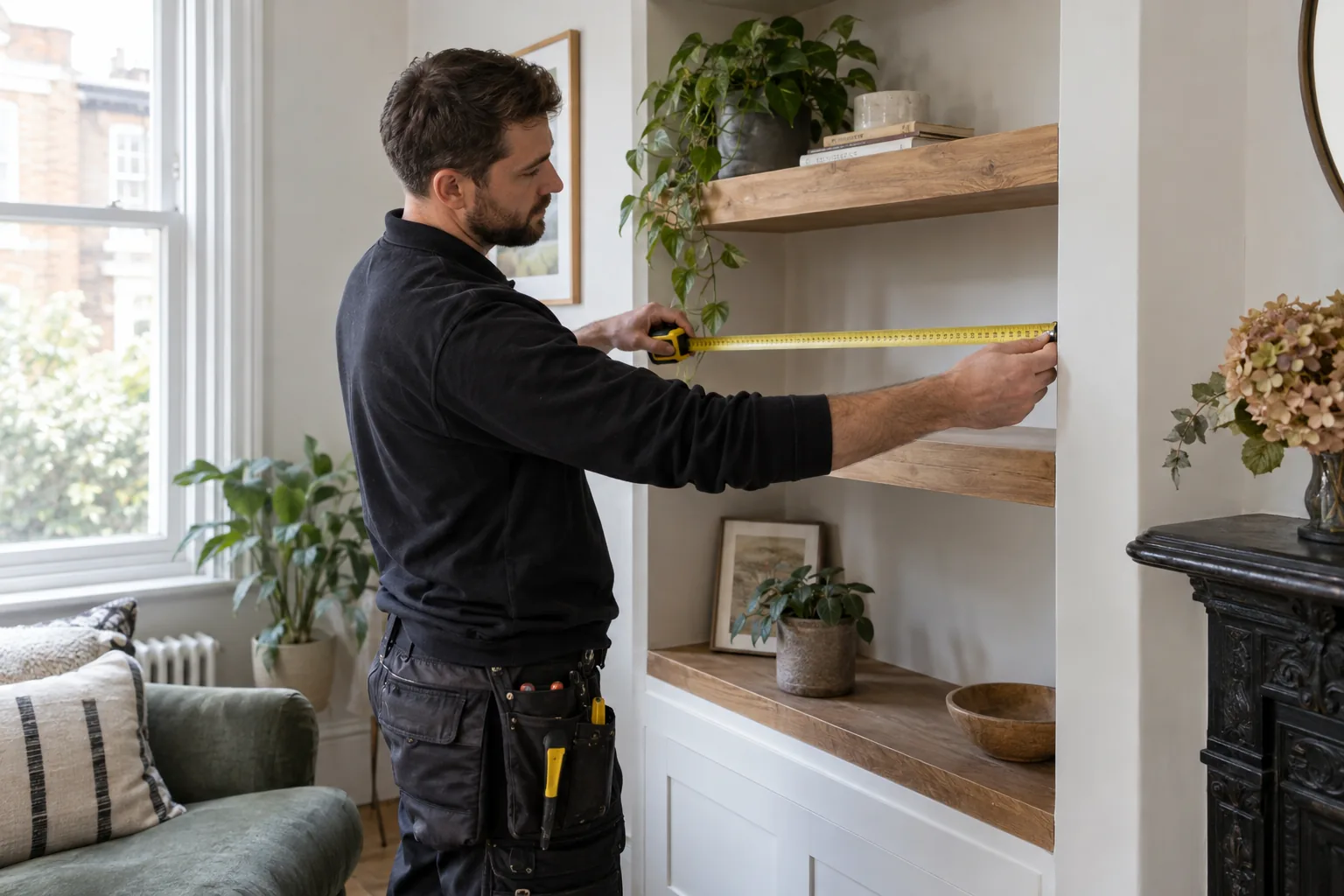
Handyman measuring an alcove before fitting shelves in a London home

KENTISH TOWN PROPERTY NOTES

Converted houses contain decisions made by earlier owners

A room may show one continuous painted wall while concealing an original masonry section, a blocked opening and a later stud partition. Floor levels, boxed pipes and relocated sockets can also reflect previous conversion work. Supply a wide photograph that includes corners, outlets and the ceiling line. If plans or building information exist, make them available. The position of a television, cabinet or track may need to change after the actual support and likely service routes are considered. Avoid exploratory drilling across an unknown area. A successful fitting is placed where it can be supported and used, not forced into a symmetrical position chosen from a photograph.

FINISHING AND HANDOVER

Conservation status is an address check, not a style guess

01

Conservation status is an address check, not a style guess

Camden’s Kentish Town appraisal covers a designated area with its own character and management approach. A building outside that boundary can still be listed or locally significant; a building inside it does not make every internal adjustment a planning matter. Owners should check the actual property before changing external doors, windows, shopfront details or original visible fabric. Ground disturbance for larger proposals has a separate archaeological context in parts of Kentish Town. Bob’s handyman scope remains modest: complete suitable agreed repairs, preserve sound material where practical and leave formal consent or specialist conservation decisions with the responsible owner and authority.

PRICING

Pricing based on the agreed Kentish Town job scope

The quotation reflects the task, access, expected time and materials. Photographs and measurements help establish what can be priced before the visit and what first needs inspection.

Handyman labourFrom the published rate
MaterialsAgreed for the job
Additional workApproved before it starts

Parking, congestion and unusual access requirements are discussed where they affect the quotation.

NEARBY COVERAGE

Handyman areas near Kentish Town

KENTISH TOWN HANDYMAN FAQ

Questions about planning handyman work in Kentish Town

Why does the same wall fixing keep loosening in my Kentish Town flat?

The anchor, wall finish or supporting material may already be damaged. Stop repeating the same method and provide photographs of the item, holes and wider wall for assessment.

Can you mount something across two different wall constructions?

Only after both supports and the bracket positions are understood. A revised location or independent support may be needed rather than mixing unsuitable fixings.

Can one visit cover a home office and household repairs?

Yes, if the desk, mounting loads, cable intentions and separate household tasks are listed beforehand. Electrical alterations must be routed correctly.

Should I fill a returning crack before the appointment?

No. Photograph it and note whether it changes. A repeated crack can provide useful evidence about movement or a material junction.

Does the Kentish Town conservation area stop internal repairs?

Not generally, but listed status, leases and the character of original fabric can affect alterations. Check the specific property and proposed work.

What should be recorded when a task cannot continue?

Record the exposed condition, exact location and missing approval, part or specialist input. That is more useful than covering the issue or describing it vaguely.

PLAN THE VISIT

Show what has failed, not just where it is

Send the repeat history, wide and close photographs, product details and access notes. Bob’s can plan the Kentish Town work around evidence rather than another temporary fix.

Call 020 3137 9380Get a quote