
Object removed test
Where safe and manufacturer-approved, compare the bracket or shelf with and without its normal load to separate object noise from fixing movement.
ANTI-RATTLE FITTINGS · CRICKLEWOOD
Railways and major routes are part of Cricklewood’s physical context, but a loose television bracket or buzzing frame still needs evidence inside the room. Map each contact point before adding pads or tightening random screws.
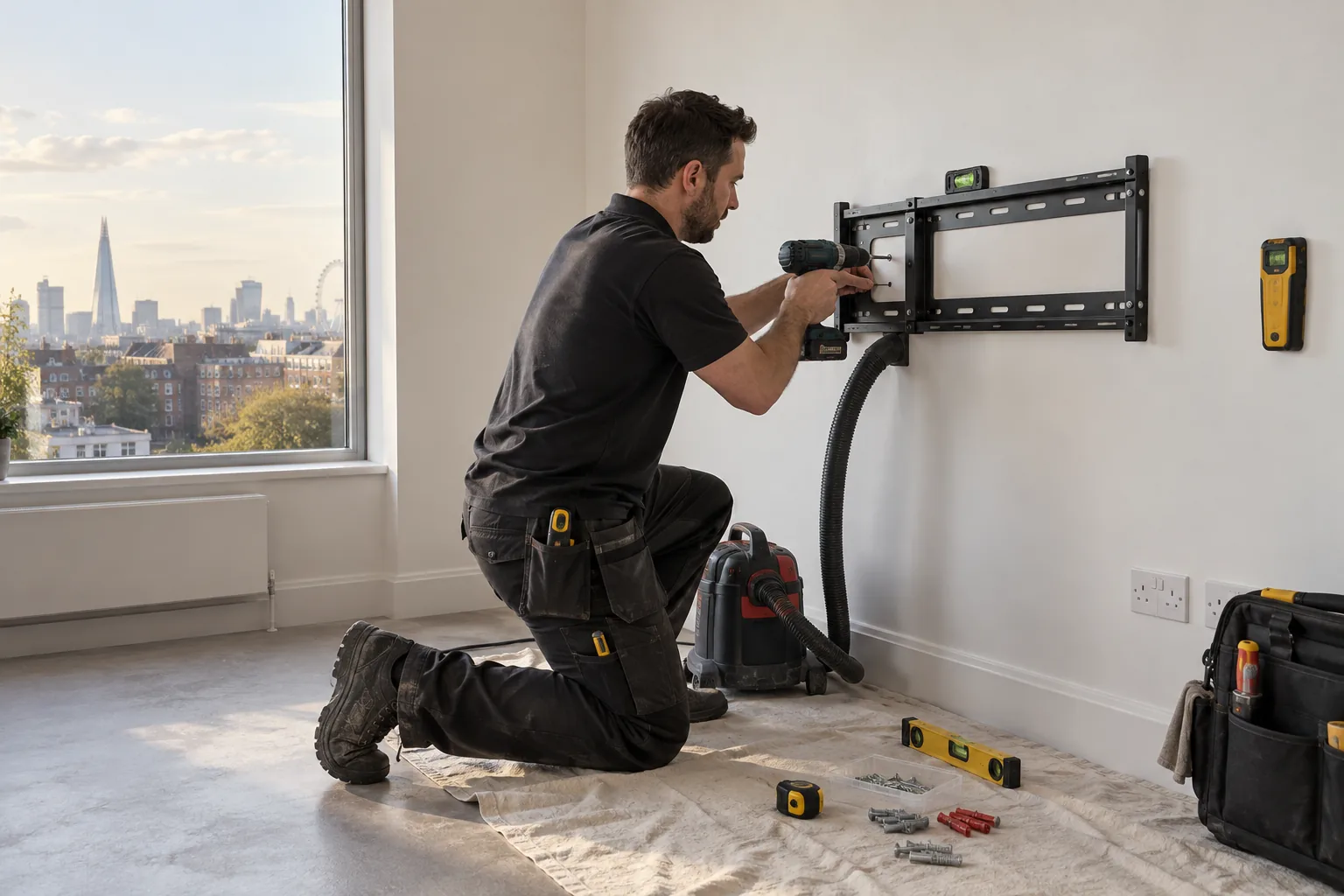
RAILWAY TERRACES AND A BUSY BROADWAY
Barnet describes Cricklewood Broadway and the rail station as the heart of a diverse town centre with independent shops and community activity. Its Railway Terraces conservation material explains how rail expansion brought housing and factories, leaving early suburban streets among major transport routes and larger commercial sites. This context makes vibration a reasonable observation, not a ready-made diagnosis for every loose item.
Record when the buzz occurs and whether light finger pressure stops it. Check the object, bracket, cable cover, nearby blind and furniture separately. A screen may be secure while a loose plastic trim chatters; a frame may touch the wall only at one corner. Bob’s can inspect suitable household fittings without claiming to alter the building’s vibration, party-wall performance or transport noise.
MAP THE CONTACT CHAIN
A secure bracket should not be repositioned merely because something nearby makes a sound. Identify the component and reproduce the condition first.
Where safe and manufacturer-approved, compare the bracket or shelf with and without its normal load to separate object noise from fixing movement.
Hold each loose cable away from wall and furniture in turn. A hard plug or cover can transmit a small vibration audibly.
Use a narrow paper strip to identify which frame or cabinet corner touches the wall. Do not pack every edge indiscriminately.
Place a removable alignment mark across accessible non-decorative parts. A later shift becomes visible without repeated over-tightening.
Record the same short test at quiet and noisy periods. Note nearby appliances as well as external activity.
ISOLATE BEFORE INTERVENTION
Capture the object, time, load and action in a short stable recording.
Test cable, trim, frame and furniture contacts individually using safe light pressure.
Confirm wall background, bracket condition, level and required fastener torque or method.
Restore cables and the normal room arrangement before completing the comparison.
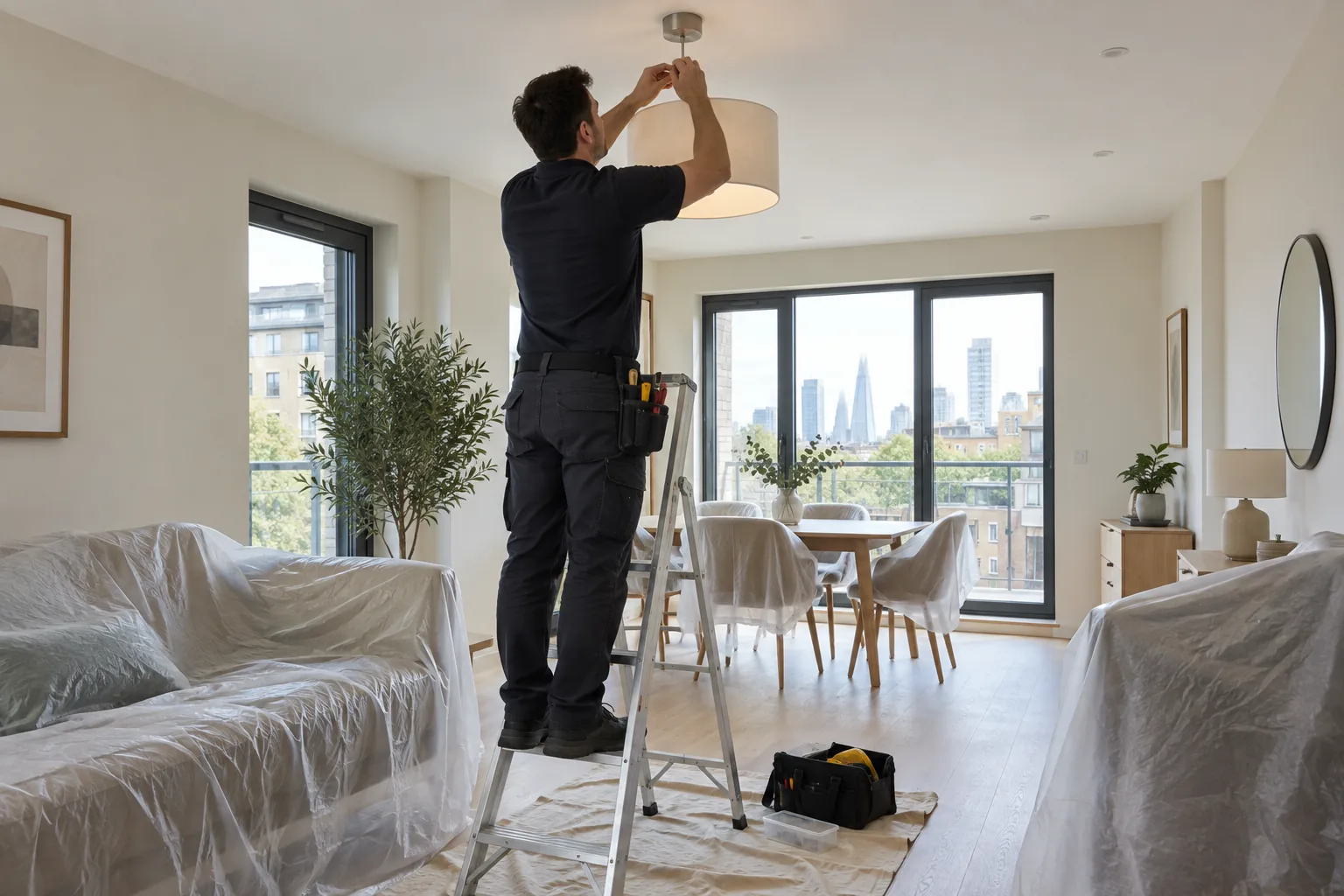
A CABLE CAN BECOME A SOUNDING STRING
A power or signal lead can tap a hard wall, pull against a plastic cover or touch the rear casing. Photograph the complete route, then label both ends before changing it. With equipment safely off, identify the section that has free movement and the exact surface it reaches. Do not crush, sharply bend or trap a lead merely to stop a noise.
Use suitable removable restraint at planned intervals and preserve ventilation, plug access and manufacturer clearances. Keep mains and signal arrangements within applicable guidance; electrical alteration is not implied. Re-energise only under the normal equipment procedure, then replay the original programme or test condition and listen at the recorded seat.
ESTIMATE THE COMPLETE FITTING
Choose the nearest task, quantity and duration. Bob’s published weekday labour rates power the estimate; brackets, cable products, parking, wall repair and specialist sound or structural investigation are considered separately.
LEAVE WITNESS MARKS, NOT GUESSWORK
After the final test, place an unobtrusive removable reference at an accessible bracket joint and photograph it close-up. Record the object weight, product, wall type and cable arrangement. Do not draw on finished walls or rely on a mark that could damage the surface.
If sound returns, compare the reference before tightening anything. An unchanged bracket points attention toward trim, cable or furniture contacts. Visible movement, cracking or loss of fixing strength calls for inspection and may require the item to be unloaded promptly.
Future replacement screens or objects can be compared with the approved setup.
Cable and corner positions can be restored without creating a fresh buzz.
A shifted reference or damaged surface is assessed rather than tightened blindly.
NEARBY COVERAGE
Access-aware fitting work north-east of Cricklewood.
Measured display and decorating tasks to the south.
Prepared household maintenance across neighbouring streets.
CRICKLEWOOD FITTING QUESTIONS
Not automatically. Unload unsafe-looking fittings and inspect them, but noise may come from trim, cables or furniture contact. Security and sound need separate checks.
No. Confirm the product method, wall background and fastener condition. Over-tightening can damage threads, brackets or the supporting surface.
Suitable non-damaging pads may help after the contact point is identified. They do not replace secure hanging hardware or repair a moving fixing.
Provide boxed dimensions, steps, stair turns, door widths, floor level, parking and a clear protected position inside the destination room.
Allow for access protection, wall inspection, setting out, mounting, cable arrangement and final tests. Products and unexpected wall repair remain separate.
No. Check Barnet’s current boundary map and the individual property. Listing, leases and other controls are address-specific.
RECORD THE BUZZ IN CONTEXT
Send a stable recording, the full wall, item weight, bracket details and the shared access route. Bob’s can assess suitable mounting and adjustment work while separating structural movement, transport noise and specialist acoustic questions.