
Water isolation
Stopcocks, appliance valves and visible joints need inspection and hand access without unloading a whole cupboard.
A WORKBENCH WITH BOUNDARIES · CRAYFORD
Crayford combines residential streets, town-centre activity and a working industrial legacy beside the River Cray. A domestic repair corner should organise tools and parts without turning a shared utility room into an unsafe workshop.
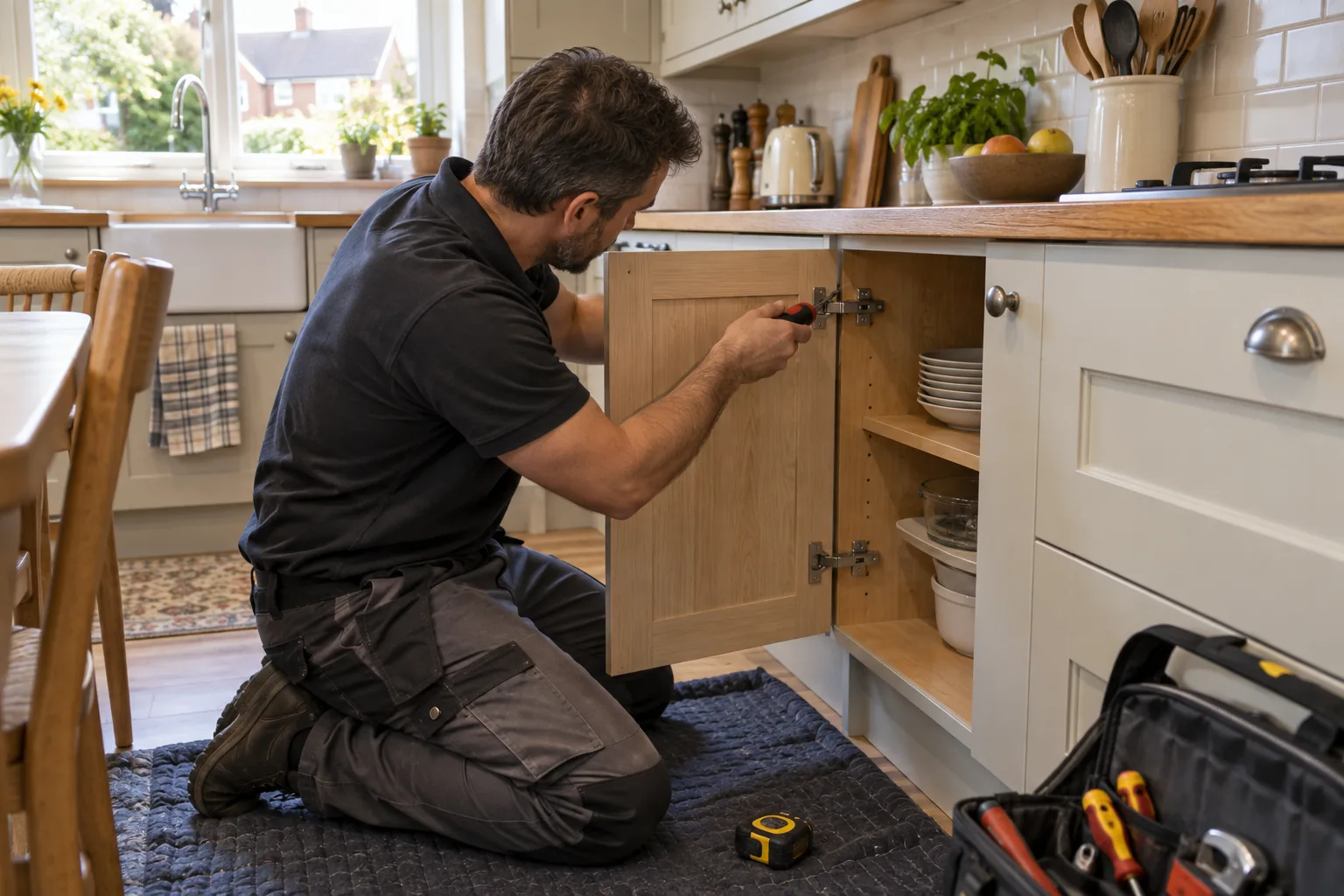
MIXED USE, CLEAR HOUSEHOLD ZONES
Bexley’s Crayford Strategy describes distinct retail, residential, leisure, civic and industrial areas and treats the riverside and public spaces as important parts of the town. The council also lists Crayford Rough and Crayford High Street Open Space among local green spaces. That varied setting suggests a useful household principle: a task bench should have a declared purpose and stop line.
Choose whether the corner is for bicycle checks, picture-frame preparation, simple assembly or tool storage. Do not mix solvents, food, children’s craft materials and loose blades in the same drawers. Photograph nearby pipes, sockets, appliance connections and staining before fitting a cabinet. Bob’s can install suitable storage or repair ordinary joinery while leaving electrical alteration, active leakage and specialist machinery outside the brief.
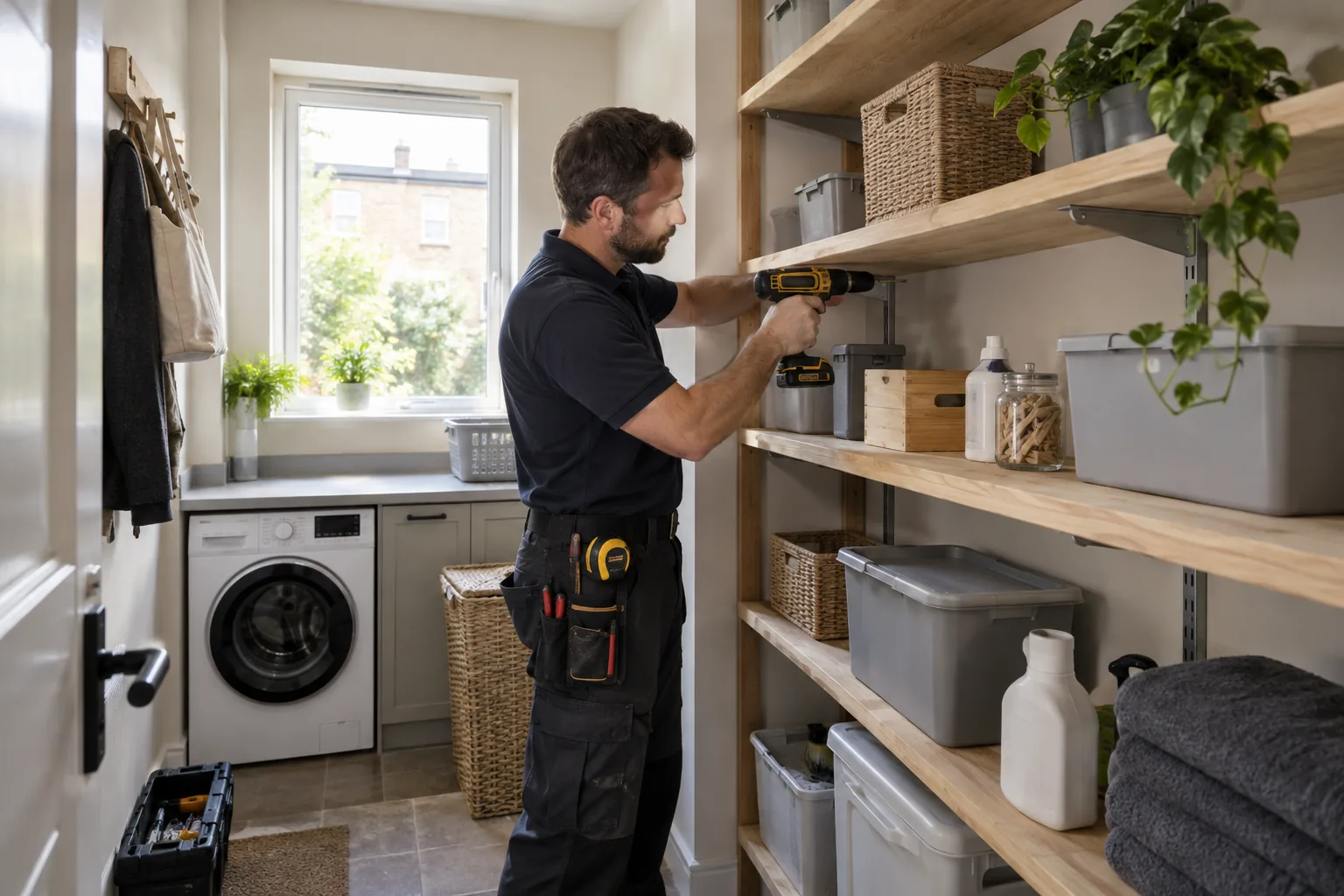
DESIGN FOR THE TASK THAT ACTUALLY HAPPENS
Place the largest routine object on a temporary surface and perform the intended action without tools. The elbows should clear walls and doors, the task light should not be blocked by the user’s head, and small parts should not roll toward a sink or appliance gap. Mark a clean rectangle for active work and keep storage outside it.
A wall rail can hold light hand tools if the background, loads and retention method are appropriate. Heavy or sharp items need more deliberate containment. Fit a shallow lip or removable tray where small screws are common. The final arrangement should still allow an adult to isolate water, reach sockets safely and remove an appliance for service.
DRAW THE RED LINES
The useful surface ends where safe domestic operation begins. Mark these exclusions on the elevation before deciding cabinet width or shelf depth.
Stopcocks, appliance valves and visible joints need inspection and hand access without unloading a whole cupboard.
Follow manufacturer clearances and keep vents free. A convenient panel should not trap heat or lint.
Sockets and isolators must stay visible and safely reachable. Leads should not cross wet or cutting areas.
Open the appliance, room and cabinet doors together. The user should not stand in an escape route while handling tools.
Keep stained or vulnerable surfaces visible until the source is resolved. A fitted back panel can hide a recurring leak.
A BENCH-BUILD SEQUENCE
List the ordinary household activities and exclude heat, hazardous substances and unsuitable machinery.
Mock up depth and width while every nearby door and service point is used.
Secure sharp, heavy and frequently used items according to their risk and weight.
Sweep the surface, retrieve a dropped screw and access valves without dismantling the setup.
COST THE FITTING WORK
Select the closest task, quantity and likely duration. The figure uses Bob’s published weekday labour rates; cabinets, rails, worktops, specialist tools, parking and repair of damp or unsuitable backgrounds are considered separately.
CLOSE WITH AN INVENTORY
Photograph each drawer and rail after loading. Label the maximum shelf loads and keep keys for lockable storage where an authorised adult can reach them, not hanging beside the cabinet. Dispose of broken blades and empty chemical containers through appropriate routes rather than creating a permanent ‘later’ box.
Inspect the area after the first real task. Dust or loose parts outside the taped rectangle show where containment failed. Move removable trays if needed, but do not add weight or depth to fixed storage without checking the original specification.
Their secure location and key responsibility are explicit.
Small trays keep screws and fittings away from appliance gaps and floors.
The final photograph proves that controls and joints were not boxed in.
NEARBY COVERAGE
Prepared property repairs immediately east of Crayford.
Measured home fittings across neighbouring streets.
Practical handyman visits north-west of the town.
CRAYFORD WORKBENCH QUESTIONS
Only with the appliance instructions, ventilation, vibration, connections and removal route considered. The appliance must remain serviceable without damaging the installation.
Use the largest routine object and the available circulation space to test depth. A standard dimension is not helpful if it blocks doors or valves.
The wall background, rail system, fixing method and total load must be confirmed. Sharp or heavy tools also need secure retention.
No. Establish whether the mark is dry and its cause resolved. Retain inspection access where pipes or joints remain nearby.
Include measuring, setting out, assembly, fixing, loading and a clean-down test. Products, disposal and repair of hidden damage remain separate.
Use appropriate secure storage, control keys and avoid exposed blades or chemicals. The household remains responsible for safe ongoing use and supervision.
DEFINE THE HOUSEHOLD TASK ZONE
Send the complete utility or garage wall, appliance doors open, service positions and a list of intended tools. Bob’s can review suitable storage, assembly and carpentry while excluding leaks, electrical alterations and specialist equipment before the visit.