
Travel envelope
Record bars, pedals and wheels through each doorway, corner and lift entrance.
CYCLE ROUTE · LIFTING TEST · CLEAN WALL
A wall rack saves floor area only when the bicycle can reach it through the building and be lifted without striking furniture. Bob’s can assess an approved indoor position using the actual bicycle, route and wall.
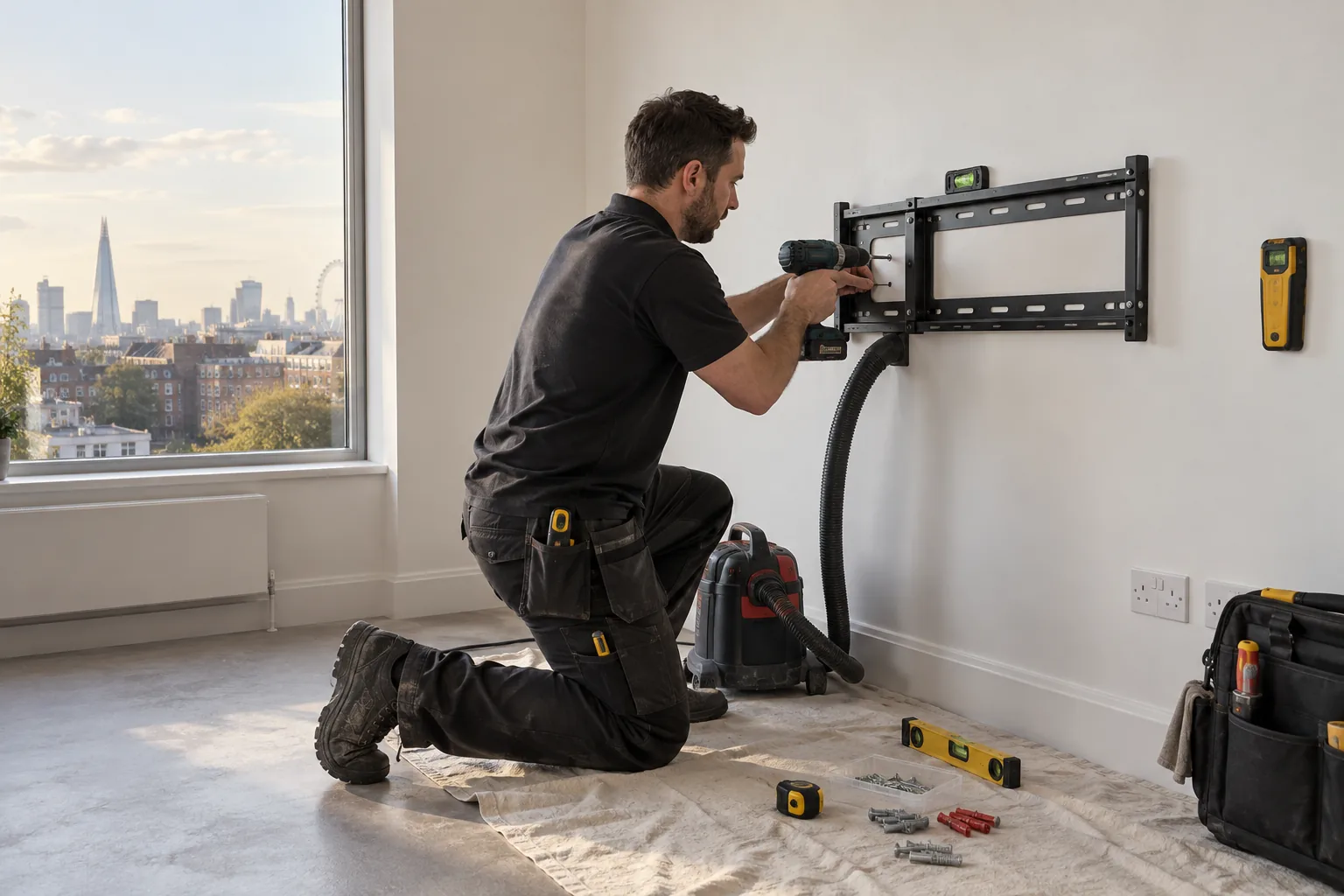
THE WANDLE ROUTES ARE PART OF THE LOCAL PLAN CONTEXT
Merton’s Local Plan identifies Colliers Wood town centre beside the River Wandle, linked by the Wandle Trail and within the wider Wandle Valley context. The council also describes public-realm and access improvements connecting the station, neighbourhoods and Wandle Park. These are verified local facts, not proof that an individual resident cycles.
For a cycle-storage request, identify the bicycle, building entrance, lift or stair, final room and cleaning routine. Confirm management rules for communal areas and drilling. Bob’s can fit a suitable resident-authorised rack after the product, loaded forces and wall support are checked. Communal bike stores, structural work and fire-route decisions remain with the responsible building party.
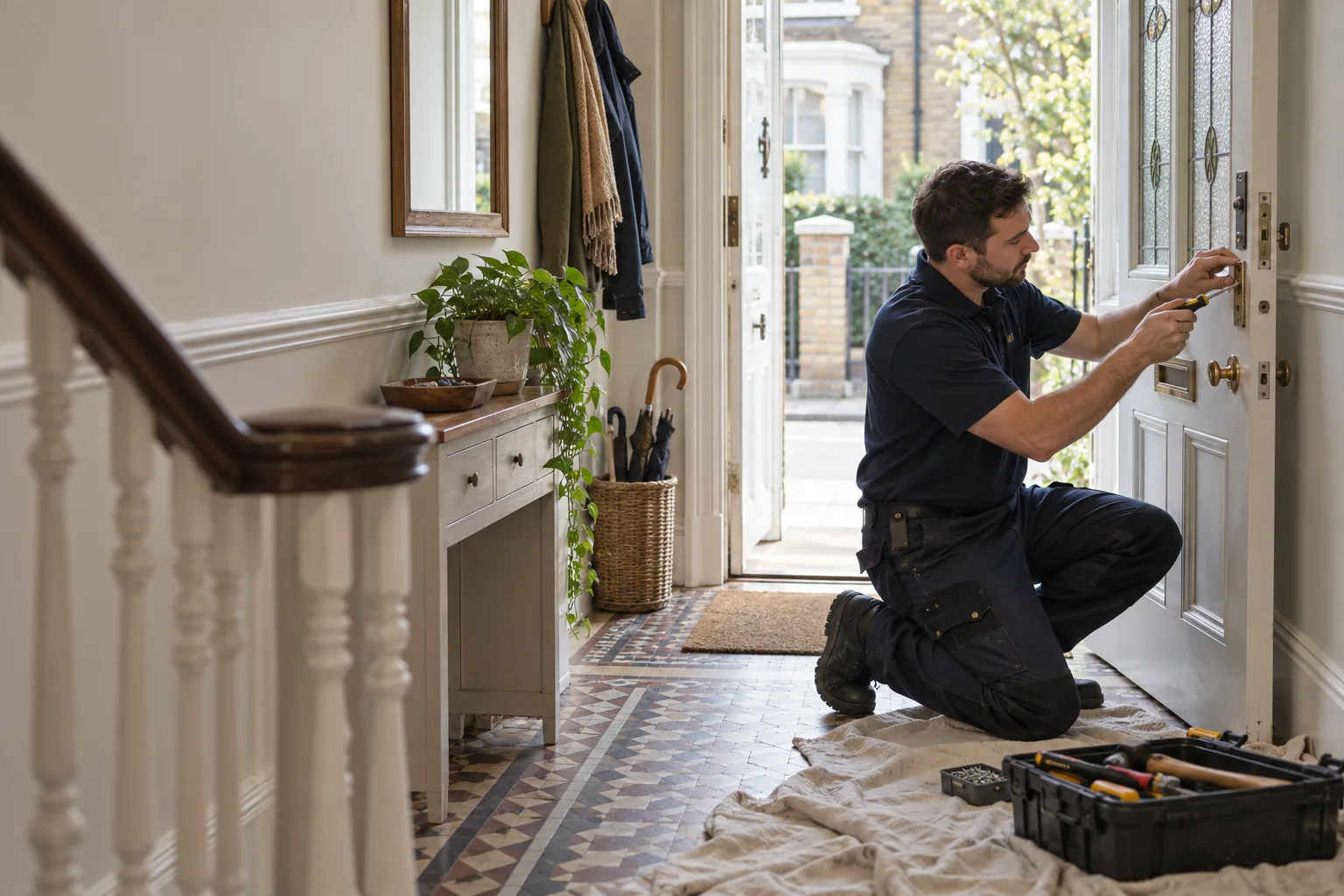
WALK THE ROUTE WITH THE BICYCLE
Measure handlebar width, pedal projection, overall length and the bicycle’s working weight with usual accessories. Walk the route slowly without forcing a lift door or resting tyres against communal finishes. Note where the bicycle changes orientation and where a second person would stand if lifting help is needed. A rack position that requires carrying over a sofa or turning beneath a pendant light is poorly located even when the wall is strong.
At the final position, use a full-size outline and rehearse the rack’s loading movement. Keep sockets, heaters, doors and ventilation clear. Fit a washable contact guard where the product allows, but do not hide damp or damage. Provide a tray or defined cleaning step for wet tyres. Record the rack model, bicycle weight limit and wall information for future users.
CHECK FOUR ENVELOPES
Allow for the person, movement and cleaning as well as the parked machine.
Record bars, pedals and wheels through each doorway, corner and lift entrance.
Trace hands, shoulders and bicycle rotation during placement on the rack.
Keep the stored cycle outside doors, radiators, windows and everyday walking lines.
Leave enough access to wipe tyres, remove the tray and inspect the wall behind.
RACK-FITTING LABOUR GUIDE
The calculator applies Bob’s published weekday labour rates. It excludes the rack, materials, parking, building fees, structural work, cycle servicing and communal-store alterations.
ROUTE BEFORE RACK
Include bags, child-seat brackets, mudguards and anything normally left attached.
Confirm permission and prove doors, lift and turns without marking shared surfaces.
Use a full-size wall and floor mock-up to test reach and body position.
Use the product as instructed, then remove dirt and inspect all contact points.
DO NOT TRADE FLOOR SPACE FOR STRAIN
The user can place the cycle without twisting sharply or balancing it against furniture.
Tyres and accessories do not project into head, shoulder or door movement zones.
The bicycle can be removed and the rack inspected without dismantling surrounding storage.
NEARBY COVERAGE
Prepared visits nearby.
See wider borough coverage.
Property maintenance to the west.
COLLIERS WOOD CYCLE-STORAGE FAQ
Record total length, bar width, pedal projection, wheel size and working weight with the usual accessories attached.
Communal areas and escape routes need explicit building authority; a private resident should not treat spare wall space as personal storage.
Test the manufacturer method with the regular user and actual bicycle. Safe controlled lifting matters more than maximum floor clearance.
Use a suitable washable guard or tray compatible with the rack and finish, while keeping the wall inspectable for moisture or damage.
Send rack instructions, bicycle dimensions and weight, wall and route photographs, plus written building rules where relevant.
Load and remove the cycle, inspect fixings and contact points, clean the tray and retain the rack model, limits and wall record.
KEEP ACCESSORIES OUTSIDE THE LIFTING PATH
Mark where the helmet, lock, pump and removable lights go before placing accessory hooks. A heavy lock should not swing against the bicycle frame or wall, and a helmet should not sit below a dripping tyre. Keep charging devices on a suitable surface following manufacturer instructions; fixed electrical changes require a qualified electrician. Label keys without displaying an address and retain spare rack parts with the installation record. Test the sequence in reverse: unlock, remove accessories, lift the bicycle down and leave without putting equipment on the floor. A clean sequence reduces scratches and stops small objects migrating into the hallway.
START AT THE BUILDING ENTRANCE
Include management approval, wall photographs and the regular user’s lifting test. Bob’s can assess a suitable private installation around the journey the bicycle actually makes.