
Sleeping envelope
Mark the open bed, access at its sides and the route needed to make it safely.
GUEST MODE · STORAGE MODE · CLEAR RESET
A guest room often doubles as storage, study or hobby space. Bob’s can assemble and fit suitable items around two measured layouts so the temporary bed does not create permanent clutter.
LOCAL CHARACTER IS SPACIOUS, NOT UNRESTRICTED
Bexley’s published UDP character description for Coldblow records predominantly two-storey detached and semi-detached buildings, generous setbacks, mature vegetation and notably large plots. The council has since adopted a new Local Plan and publishes an address-based policy framework, so older character evidence should inform observation rather than replace current checks.
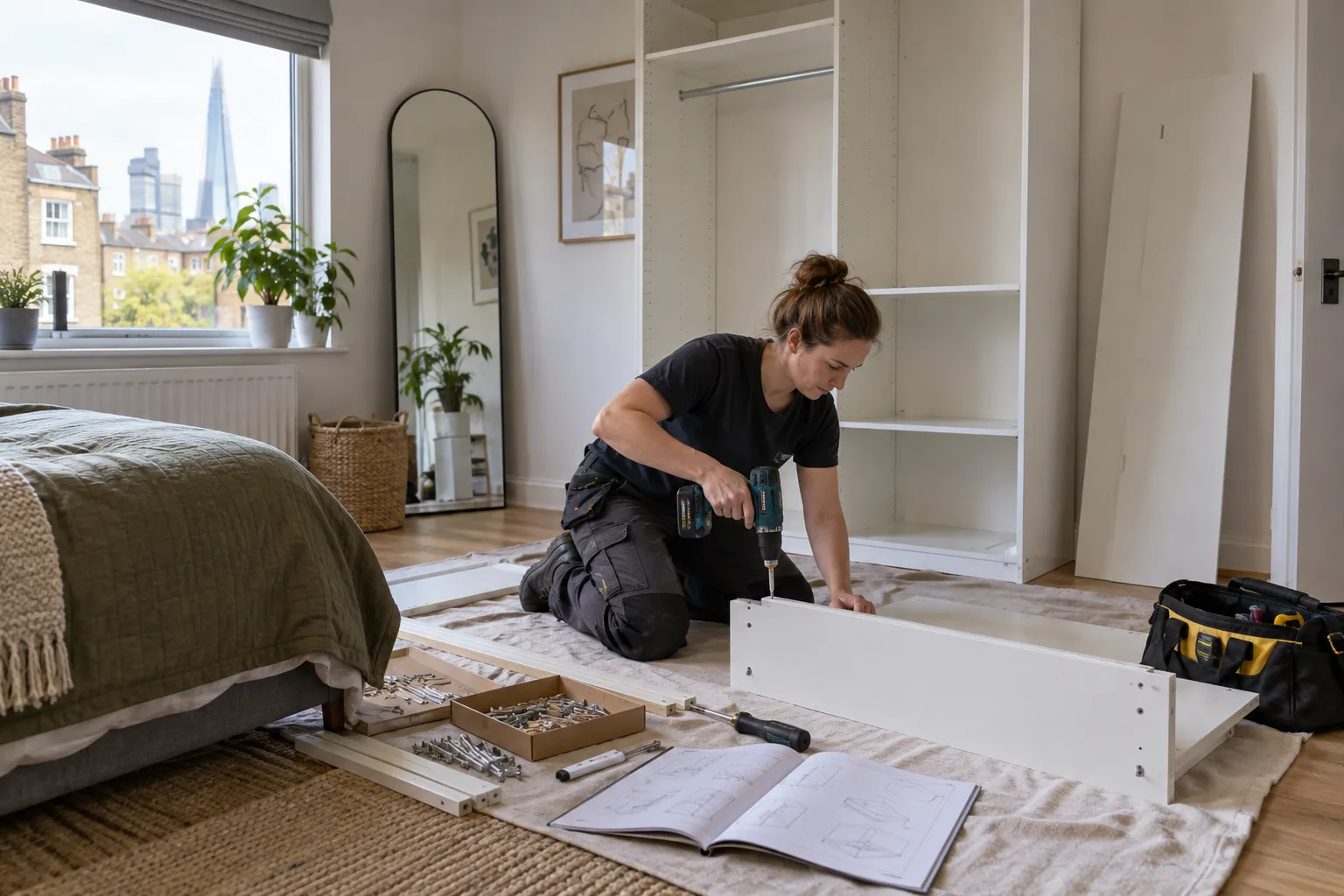
A larger house can still have a compact spare room once cupboards, radiators and door swings are counted. Photograph the complete room and list both everyday and guest functions. Bob’s can assemble suitable furniture, fit approved shelves and adjust ordinary internal items after support and permission are understood. Exterior alterations and significant building work need their proper current planning and technical route.
DRAW TWO FLOOR PLANS
The room should not depend on moving unlabelled possessions into the hall.
Mark the open bed, access at its sides and the route needed to make it safely.
Assign a temporary place for the desk chair, hobby box or drying rack displaced by guests.
Store the full clean set together with a visible size label and ventilation suited to the product.
Keep door, wardrobe, window and bathroom route usable while a bag sits in the room.
RESET BEFORE ARRIVAL
Move everyday items into their planned temporary positions, not into the circulation route.
Follow instructions and check complete floor, wall and heating clearance.
Test lighting, doors, luggage position and access around the made bed.
Close or dismantle as designed, inspect components and return every displaced item.
MEASURE THE BED AFTER IT IS MADE
Open the bed or sofa bed according to its instructions and add the mattress, protector, duvet and pillows intended for use. Thick bedding can obstruct a folding joint or tempt someone to force the mechanism closed. Identify which items must be removed, where they wait during the day and how they remain clean. Do not store bedding against an unexplained damp wall or active radiator.
Place a representative overnight bag without narrowing the door route. Confirm that a guest can reach a light, open the window safely and use wardrobe space without climbing over furniture. Keep extension leads out of the plan; fixed electrical changes belong with a qualified electrician. At handover, label the folding sequence and store loose feet, straps or fasteners with the manufacturer instructions.
ROOM-RESET LABOUR GUIDE
The calculator applies Bob’s published weekday labour rates. It excludes furniture, materials, parking, laundry, disposal, electrical work and structural alterations.
DO NOT BORROW SPACE FROM THE HALL
Every chair, box and everyday object has a recorded temporary position.
Fasteners, straps and feet remain in a labelled pouch attached or stored with the product.
A final photograph defines the ordinary layout so temporary use does not drift into clutter.
NEARBY COVERAGE
Prepared visits nearby.
Household support to the north.
See wider local coverage.
COLDBLOW FLEXIBLE-ROOM FAQ
Use the manufacturer dimensions in its fully open, made-up condition and preserve safe access at the sides and foot.
Only when the product instructions allow it. Bulky bedding can obstruct or damage the mechanism and should have a separate labelled home.
Choose measured positions inside the room or another designated storage space before guests arrive, never an escape route or stair.
Their position, load, fixing and projection need assessment; the sleeping zone should not inherit avoidable overhead hazards.
Send both layouts, furniture instructions, package counts, room dimensions and photographs showing doors, windows and radiators.
Inspect mechanisms, count loose components, air and store bedding correctly, then restore the photographed everyday arrangement.
WRITE A ONE-PAGE ROOM CARD
Record how the bed opens, where bedding is stored, which window or blind parts are delicate and where a bag can stand. Add the relevant lamp switch and any product weight restriction in plain language. Keep private household information and security details elsewhere. On the reverse, write the reset steps for the resident: strip, ventilate, inspect, close, count components and restore the normal layout. Replace the card when furniture changes rather than adding confusing handwritten exceptions. This small handover protects the fittings and makes occasional use repeatable without a rushed explanation each time.
SEND THE ROOM OPEN AND CLOSED
Include the bedding volume, displaced items and any wall fittings. Bob’s can assess suitable assembly and minor installation around a complete reset plan.