
Collect the daily load
Carry the normal bag, coat, keys and any pushchair or cycle equipment used at departure.
THE DEPARTURE TEST · CHINGFORD
The front door, key shelf, coat space and parcel position form one everyday system. Test them during a real departure rather than planning each fitting as an isolated object.
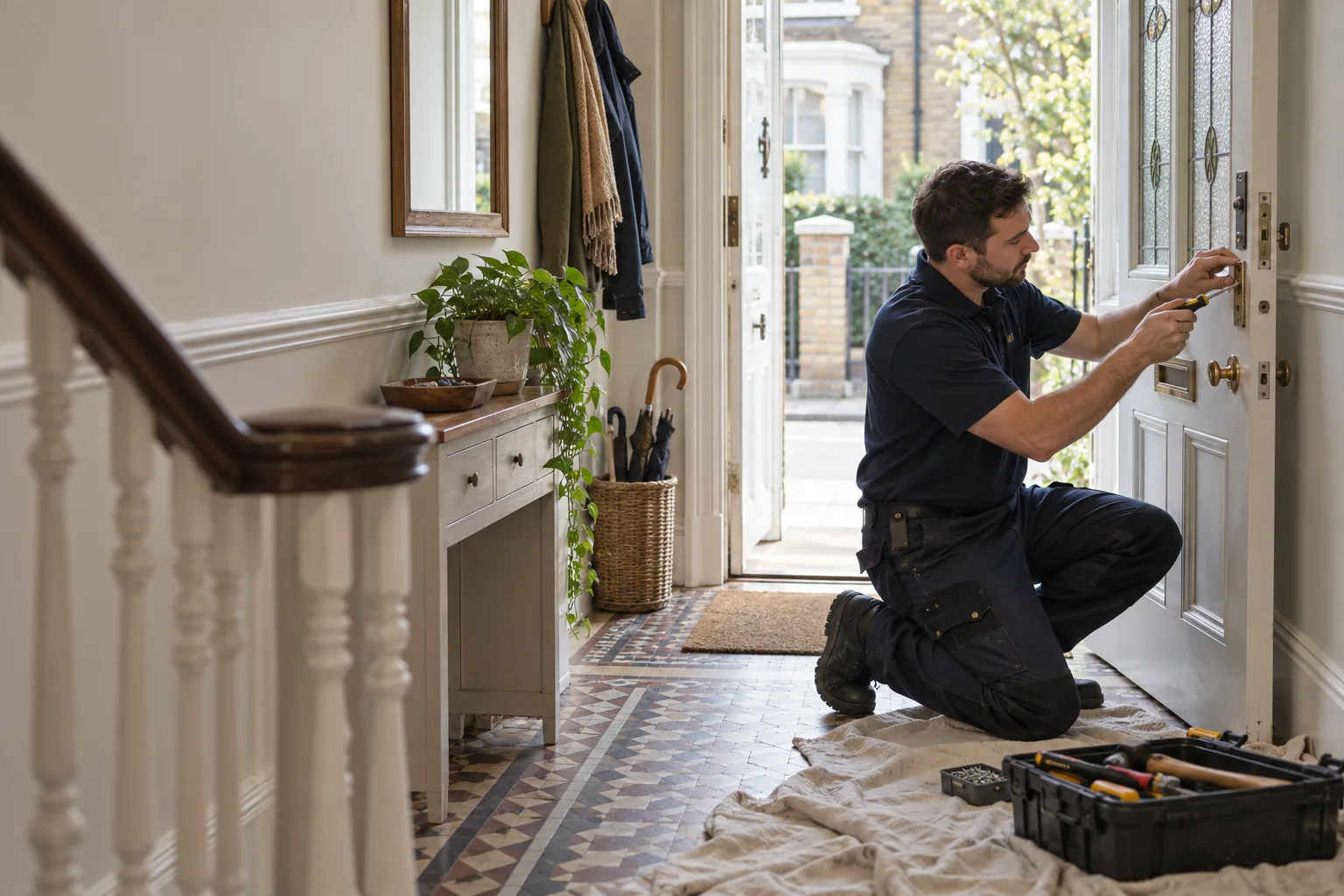
RUN THE ROUTINE WITH BOTH HANDS FULL
Carry the normal bag, coat, keys and any pushchair or cycle equipment used at departure.
Open the cupboard, release the door, use the lock and close the door without setting items on the floor.
Choose a position that does not block the swing, conceal a trip hazard or expose valuables.
Check the internal light, key position and unobstructed route under the evening conditions actually used.
GREEN, STATION AND HOME ENTRANCE
Waltham Forest’s appraisal places Chingford Green on high ground near the Lea Valley and Epping Forest and describes a historic local centre around the Green. The council separately identifies Chingford Station Road as a conservation area and provides appraisals and maps for both places. Some addresses may also be affected by an Article 4 direction. Those controls are property-specific, so an owner should check the current map and planning position before changing an external door, window or other visible feature.
Inside the threshold, a practical brief can still address ordinary failures: a latch that needs a second push, a loose coat rail, an unstable key shelf or furniture that narrows the door approach. Record each action in the order it occurs. This turns several minor irritations into a coherent appointment without pretending that protected exterior fabric is routine handyman work.
AUDIT THE THRESHOLD
The best position is not simply the empty patch of wall nearest the door. A fitting must remain useful while people, clothing, deliveries and moving leaves all occupy the same small area.
Close the door gently and observe whether the latch meets the keep. Check loose hardware and rubbing points before changing the keep position.
Stand naturally with a bag or shopping. The key point should be visible and reachable without leaning across the door or radiator.
Measure bulky garments on the chosen hooks. Their actual projection can obstruct the handle or reduce the clear route more than the rail itself.
Observe where post lands and where a modest parcel could wait. Keep the door arc, escape path and heating clear.
Check glare, shadows and switch access after dark. A fitting should improve the route rather than create a bright reflection or hidden step.
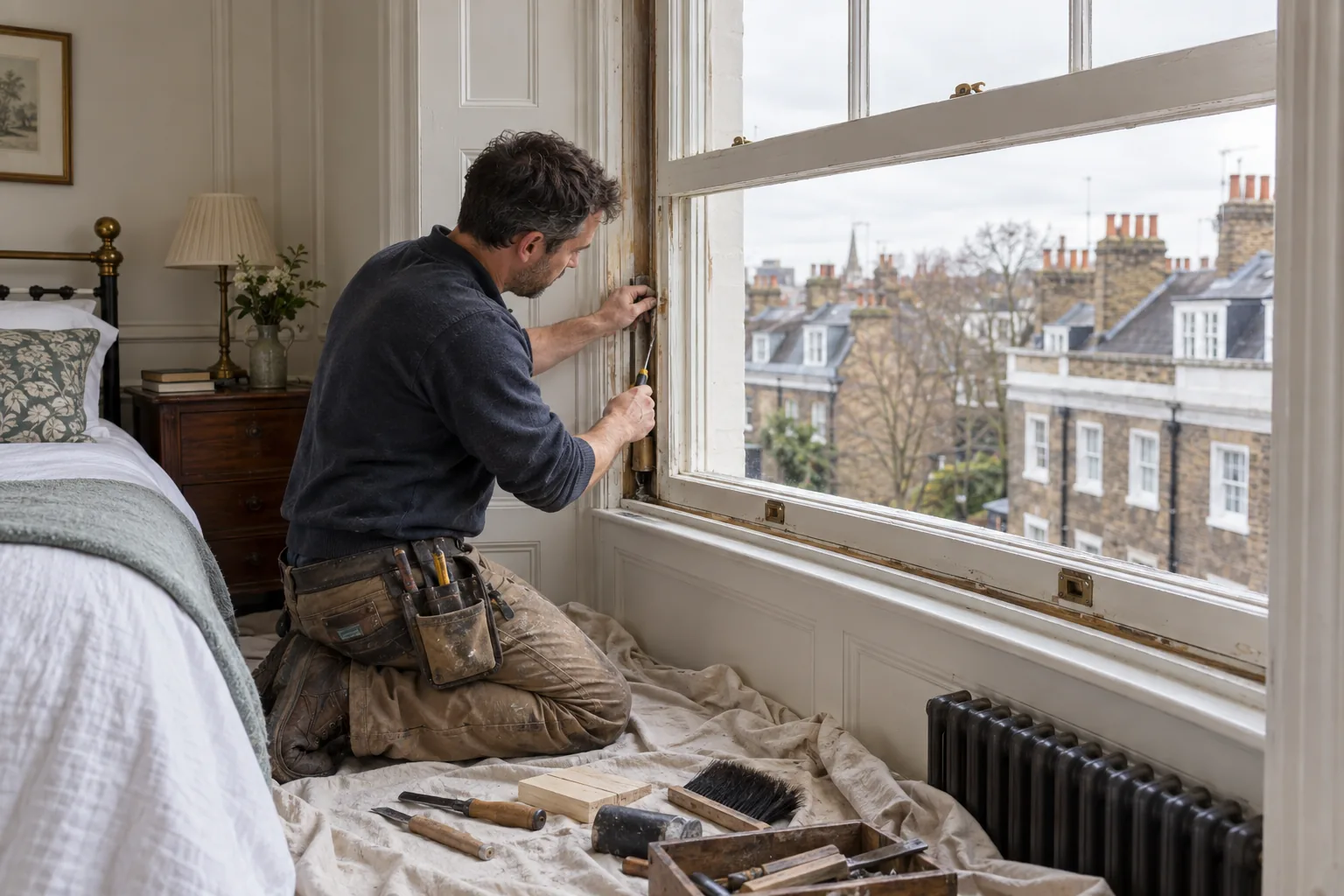
RECORD BEFORE ADJUSTING
A stiff sash, rattling catch or failed cord deserves a full view and a close-up of the fault. Confirm whether the window is timber, uPVC or another system and whether the problem affects opening, closing, draught control or safety. Paint build-up and a loose fastener are different problems from decayed timber or a failed balance.
Where an address is listed or covered by conservation controls, external appearance and historic fabric may limit appropriate changes. Check the council’s current guidance before ordering replacement hardware. For an ordinary internal adjustment, photograph the existing part with a ruler and record its operating direction; visual similarity alone does not establish compatibility.
GROUP SMALL FAULTS SENSIBLY
Choose the closest task, quantity and time. The result uses Bob’s published weekday labour rates; replacement locks, specialist window systems, materials, parking and work requiring consent remain outside the indicative calculation.
KEEP A SEVEN-DAY LATCH DIARY
After work, close the door once in the morning and once in the evening for a week. Note wind, rain, direct sun and any need for extra pressure. Mark the exact contact point with removable chalk rather than trimming timber on a hunch. A fault that appears only after a wet night needs a different diagnosis from a loose lever that misbehaves every time.
Add one side-on photograph of the latch meeting the keep and record the gap around all four edges. Keep hardware dimensions and manufacturer instructions with the diary. If an exterior component is heritage-sensitive, attach the relevant approval and retain the removed original part where the agreed conservation approach requires it. The next repair then starts with evidence, not another cycle of random adjustment.
Morning and evening entries separate persistent misalignment from changing timber movement.
Removable chalk identifies the rubbing edge without premature cutting or filing.
Historic hardware and approval records remain connected with the correct opening.
NEARBY COVERAGE
Measured household fitting and repairs to the south.
Prepared maintenance visits east of Chingford.
Practical handyman support across the borough.
CHINGFORD ENTRANCE QUESTIONS
Possible causes include loose hardware, hinge movement, rubbing, weather-related timber movement or a poorly aligned keep. The door should be inspected before the keep is moved.
Only after checking the wall background, frame position, likely load and full door swing. Bulky winter coats need more projection than the empty rail suggests.
An ordinary internal fitting is generally different from altering visible historic fabric, but listing and property-specific restrictions can be wider. The owner should verify the current position for the address.
Include the whole opening, frame material, operating parts, the fault and a ruler beside any hardware. State whether the window can close and lock safely.
Yes. List each object, its load and wall position, then allow labour for inspection, preparation, fixing and operational tests. Parts and hidden damage remain separate.
Close and lock it gently several times, then repeat while carrying the normal bag and wearing a coat. Confirm the route, handle and key shelf do not conflict.
SHOW THE ROUTINE, NOT ONLY THE SCREW
Send one wide doorway view, close-ups of each fault and a short note describing departure and return. Include item weights and any conservation, lease or ownership controls. Bob’s can assess the ordinary repairs and separate specialist or consent-led work before a visit is agreed.