
Code each item
Use room and number for every shelf, blind, cabinet and furniture restraint.
ROOM INVENTORY · SHARED USE · REMOVABLE CHANGE
Bedrooms change use, furniture moves and small fittings accumulate. Bob’s helps residents create a room record so ordinary repairs and removable improvements do not become an unexplained collection of holes and spare parts.
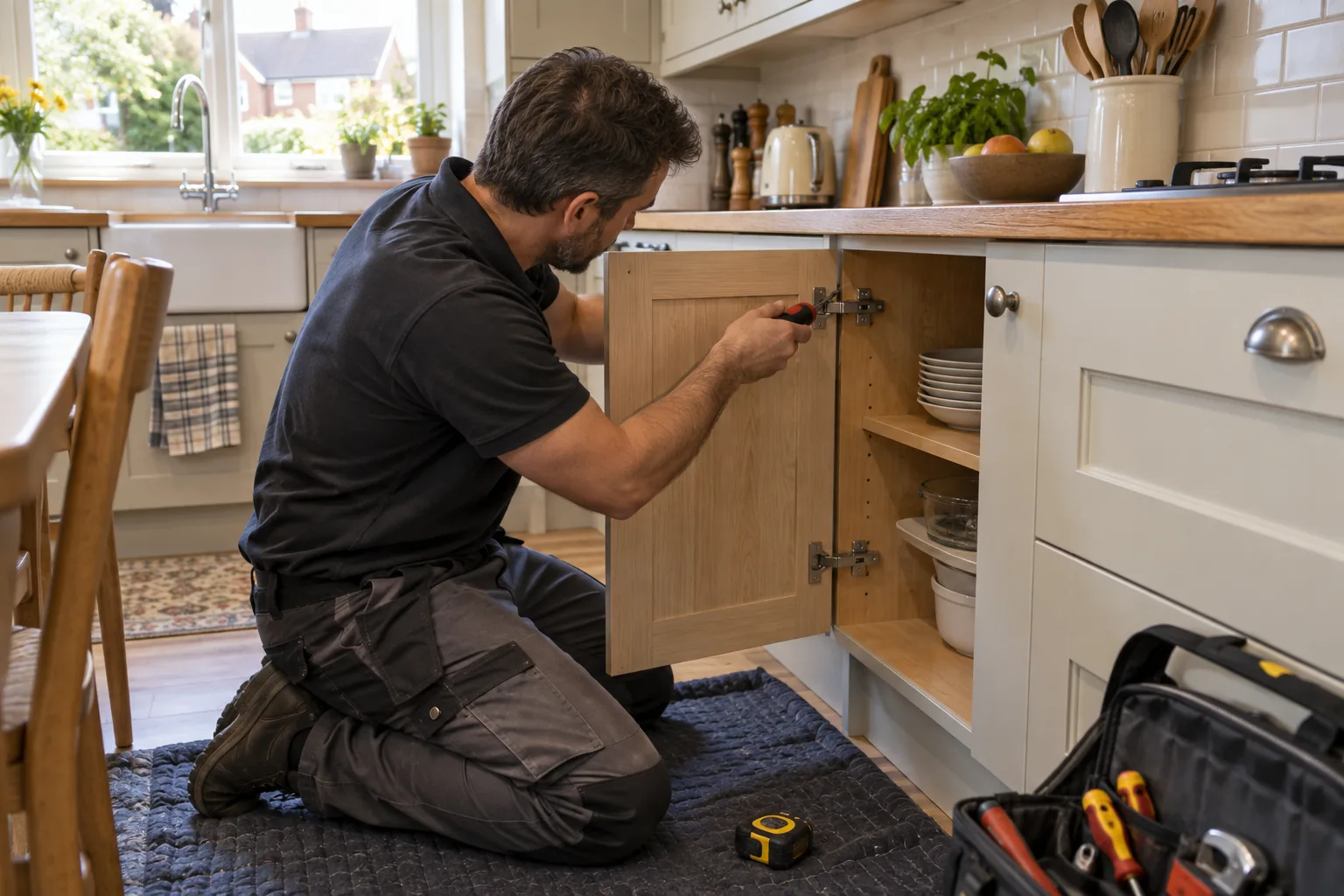
USE VERIFIED ADDRESS INFORMATION
Waltham Forest’s current public records identify Cann Hall as a council ward, and the council includes Cann Hall in its scheduled tree-inspection area. These sources confirm the locality but do not justify claiming that every street shares one housing form. A Cann Hall job should therefore begin with the exact property, tenure and room, not a generic description.
Confirm whether the home is owner-occupied, rented or managed, and whether a fitting belongs to the property. Record communal or exterior items separately. Bob’s can address suitable internal furniture, shelving and ordinary hardware with permission; tenancy disputes, communal assets, structural defects, fixed services and controlled doors remain with the responsible party.
ROOM RECORD TO REPAIR
Use room and number for every shelf, blind, cabinet and furniture restraint.
Show wall, nearby services, door travel and the item’s ownership label.
Agree repair, retain, remove or replace before parts are discarded.
Add completion image, product reference and any remaining limitation.
MAKE CHANGE REVERSIBLE
A clear record makes later maintenance faster and prevents components being mixed.
Screws, brackets and keys remain with their exact product rather than a general household tin.
Keep model and restraint information available when furniture is moved or reassembled.
When a fitting is removed, record the support and any unexpected damage before making good.
Do not dispose of a blind, shelf or restraint until the landlord or owner confirms it is not retained property.
ROOM-LIST LABOUR GUIDE
The calculator applies Bob’s published weekday labour rates. It excludes products, materials, parking, landlord decisions, waste removal, fixed services and defects exposed during removal.
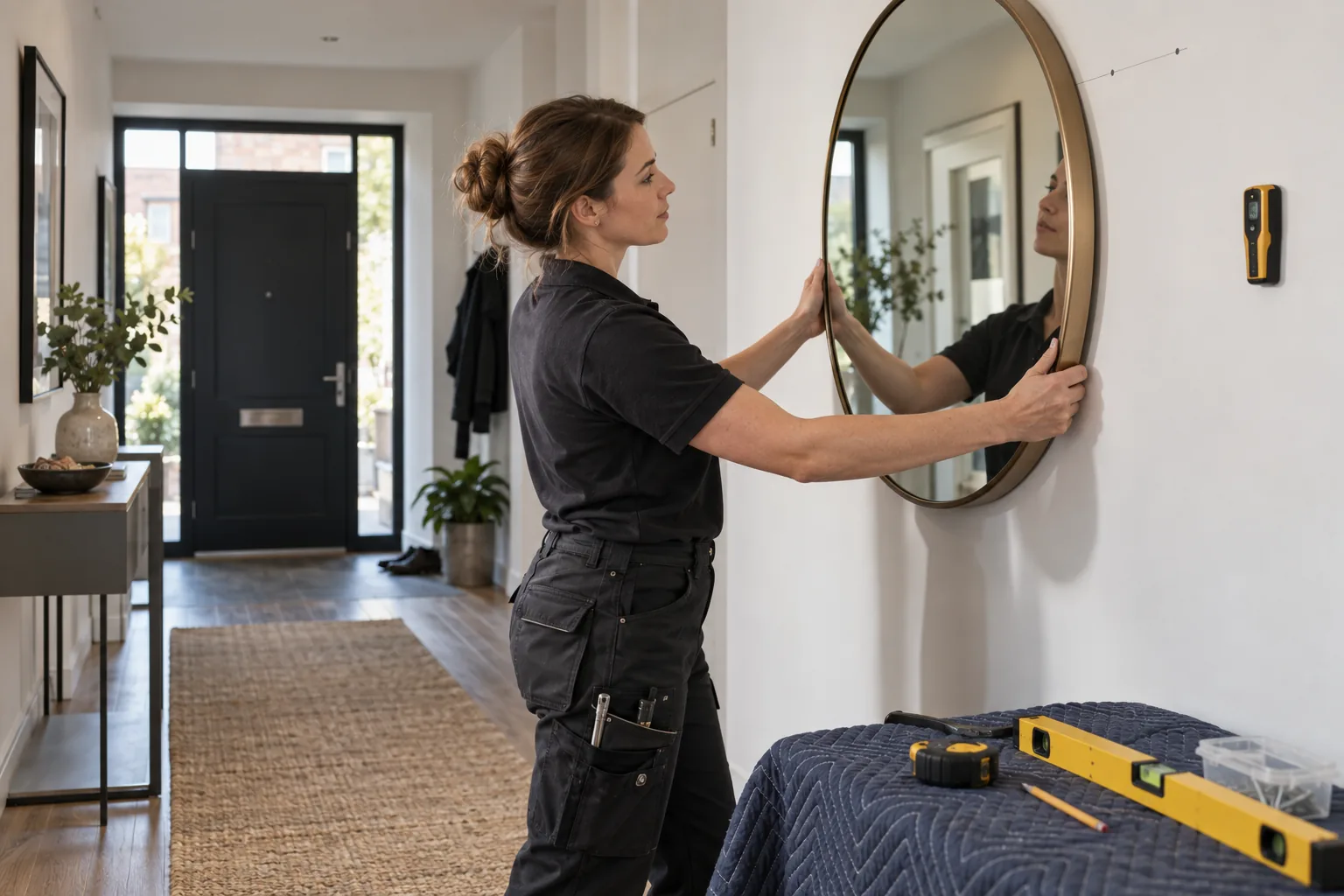
USE A ROOM PASSPORT
Draw a simple room rectangle and label walls clockwise. Add furniture, windows, doors, sockets and each installed item code. Beside the plan, list owner, product, date, intended load and where spare hardware is stored. The passport does not need technical drawing skill; it needs stable names that another person can follow.
Update the page when a bed, wardrobe or desk moves. Recheck door swing, window access, heater clearance and restraints rather than assuming the old position transfers safely. Keep earlier versions so unexplained holes or patches can be linked to a known arrangement. Avoid including personal information that a future contractor does not need.
SHARED ROOMS NEED AGREEMENT
Hook, shelf and handle heights should suit the user without unsafe stretching.
Doors and drawers are tested with normal belongings present.
Furniture and fittings do not obstruct curtains, blinds or the route to close them.
NEARBY COVERAGE
Prepared visits nearby.
Household help to the south.
See coverage to the west.
CANN HALL ROOM-RECORD FAQ
Use a short room name and number, then repeat it on photographs, hardware bags and the completion note.
Check the inventory and obtain the landlord’s written decision before removal or disposal. It may belong to the property.
Photograph holes, substrate, staining, cables or damage with scale before any ordinary making good.
Follow the manufacturer. A new position requires a fresh wall and permission assessment; do not reuse unsuitable holes by assumption.
Enter defined authorised tasks. Product sourcing, ownership decisions and unexpected substrate repair require separate agreement.
Reach, door and drawer travel, window access, privacy fittings and the everyday path around the completed room.
KEEP A CHANGE LOG, NOT A MEMORY
When a room changes user, date the plan and state why furniture or fittings moved: a larger bed, home study, accessibility need or different storage load. Photograph the vacated fixing area before ordinary making good. If the previous restraint or shelf remains sound but no longer serves the layout, ask who owns it and where it should be stored. Do not leave unidentified brackets in a cupboard. A brief reason helps the next resident understand why doors need a particular clearance or why one wall was avoided. It also distinguishes planned change from a defect that still awaits landlord or specialist action. Keep the latest signed permission beside the plan.
GIVE EACH ITEM AN IDENTITY
Include products, loads, permissions and photographs. Bob’s can review suitable work without confusing resident possessions with retained property.