
Observe each sash
Record opening distance, resistance point, rattle and catch engagement without forcing movement.
SASH MOVEMENT · DRAUGHT PATH · SAFE VENTILATION
A sash that rattles, sticks or admits a draught needs an operating record, not an instant coat of sealant. Bob’s helps map movement, catches and room ventilation before suitable maintenance is chosen.
SURVIVING RESIDENTIAL CHARACTER MATTERS
Haringey’s site allocations schedule lists Bowes Park as a conservation area, and council planning material describes its special interest as surviving Victorian and Edwardian residential character. Enfield’s draft local heritage list also records substantial 1880s villas on Palmerston Road, including examples converted into flats. These sources support careful address checks rather than a claim that every house or every fitting is historic.
Photograph the whole elevation or room, then the specific sash, door, architrave or cabinet. Confirm conservation, listing, lease and fire-door status before alteration. Bob’s can assess ordinary accessible joinery and hardware where the boundary is clear. Significant historic repair, rotten structural sections, glazing work, controlled doors and unexplained frame movement need the appropriate specialist.
WINDOW-USE DIARY
Record opening distance, resistance point, rattle and catch engagement without forcing movement.
Use a light removable paper indicator to locate draughts while leaving designed vents untouched.
Note whether rain, temperature or recent decoration changes the symptom without claiming a cause.
After suitable work, operate both sashes and catches and confirm the intended air route remains available.
DRAW THE SASH IN FOUR STATES
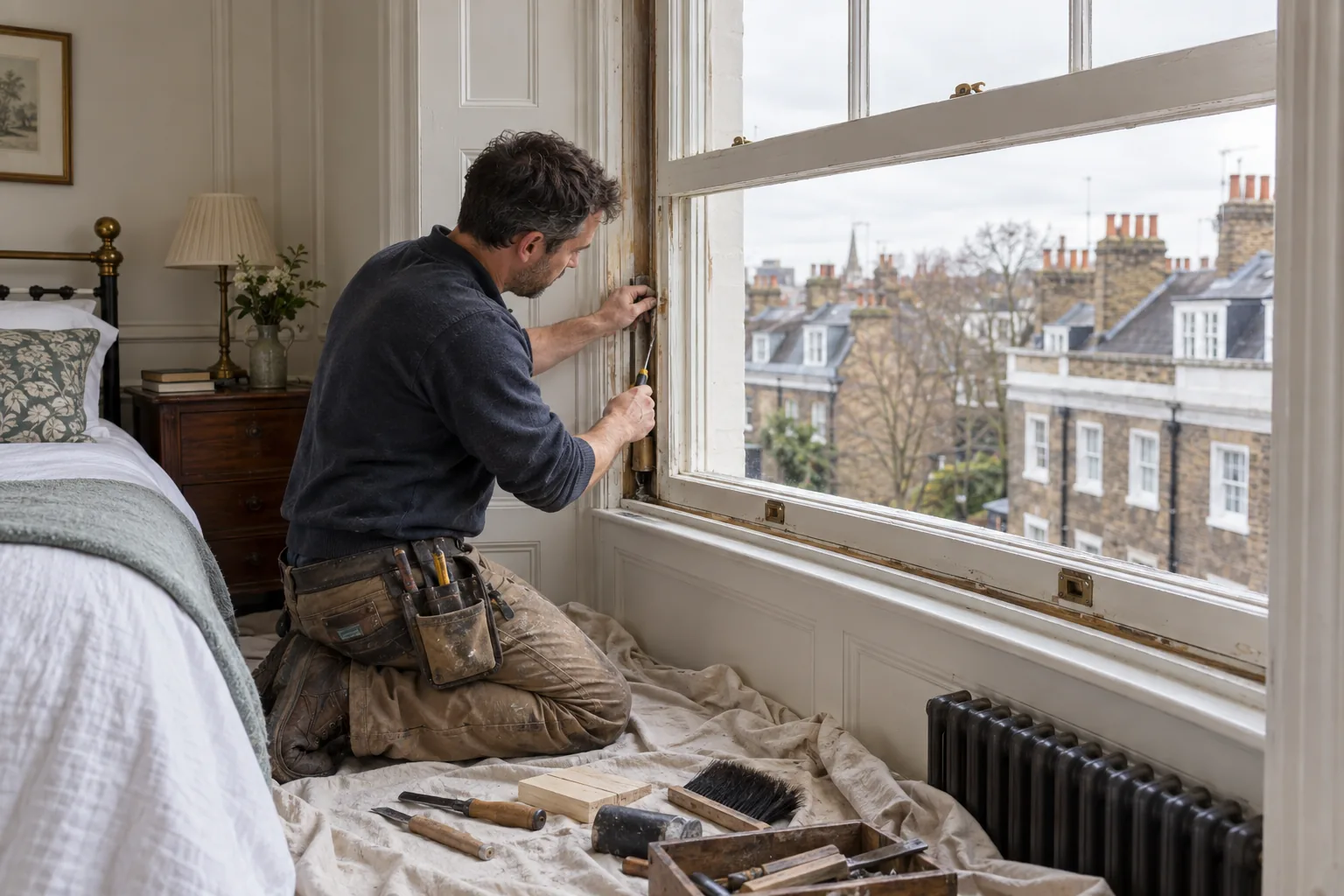
Photograph the window closed and latched, then repeat with the catch released. Raise the lower sash only as far as it moves comfortably and record the gap on both sides. Where safe and intended, check the upper sash separately. A window described simply as stuck may instead have one moving sash, a misaligned catch or paint contact at a specific point.
Use a paper strip to identify local air movement without candles, smoke or improvised heat. Keep trickle vents and other designed ventilation visible. If glass moves, cords fail, timber feels soft or the frame appears distorted, stop ordinary adjustment and seek suitable window expertise. The final record should show what operates, what remains limited and which ventilation route must not be sealed.
KEEP FUNCTIONS SEPARATE
Do not treat draught, rattle, resistance and failed locking as one generic window fault.
Mark the exact rubbing point and check recent coating build-up without stripping broader decorative detail.
Record where movement occurs with the window closed and how it changes when the catch is engaged.
Photograph both halves and the meeting rails. Do not pull the sashes together with excessive force to make hardware engage.
Locate the gap while distinguishing it from a trickle vent or other designed ventilation that must remain functional.
JOINERY-LIST LABOUR GUIDE
The calculator applies Bob’s published weekday labour rates. It excludes materials, parking, conservation consent, specialist restoration, glazing, significant rot and unresolved structural or controlled-door issues.
PROTECT THE PROFILE
Do not flatten surrounding detail to disguise a replacement plate or hurried filler patch.
Window channels, sash travel and intended ventilation must remain functional after decoration.
Label retained hardware and explain any incompatible component that was not reinstalled.
NEARBY COVERAGE
Prepared repairs immediately nearby.
Property help to the north.
See handyman coverage to the east.
BOWES PARK SASH FAQ
No. Record the comfortable travel and resistance point. Forcing it can damage cords, catches, glass or softened timber.
Use a light paper strip around accessible joints in ordinary conditions. Avoid flames, smoke and any test that blocks intended ventilation.
Meeting rails, sash position or hardware may be misaligned. Photograph both components and do not use excessive catch force as a substitute for diagnosis.
No. Designed ventilation must remain operable. Identify the actual unintended gap before selecting any draught-control product.
Give each opening a code and separate symptoms. The calculator can guide defined adjustment time; cord work, decay, glazing and specialist restoration need confirmation.
Operate each sash within its intended travel, engage the catch gently, confirm ventilation and record any remaining limitation or referral.
KEEP THE ORIGINAL EVIDENCE
Include wide views, measurements, marks and the movement fault. Bob’s can assess whether ordinary adjustment or fitting is appropriate without starting with new holes.
KEEP A SEVEN-DAY WINDOW DIARY
Give each window a room code and record morning or evening use, weather condition and comfortable opening distance for one week. Note rattle, sticking, condensation and catch behaviour as separate observations. The diary does not diagnose a defect, but it helps distinguish a constant mechanical problem from a condition that changes. Repeat it after suitable work, using the same operating method. If the limitation continues, the record gives a window specialist clear evidence without relying on force or broad descriptions.