Adapt rooms around real movement and reach

Safer Home Fittings for Battersea Households

A home-safety fitting should respond to who uses the room, what they can reach and how furniture moves under load. In Battersea homes, a measured walk-through can identify practical restraints and barriers without promising that one product removes every risk.

  • Furniture restraint matched to product and wall
  • Gates measured at top, middle and bottom
  • Blind cords and accessible controls reviewed
  • Escape routes and fire doors kept fully operational
Measured family living room with secured storage and clear routes
Battersea property focus
15+ years of experience
London and M25 coverage
One accountable team
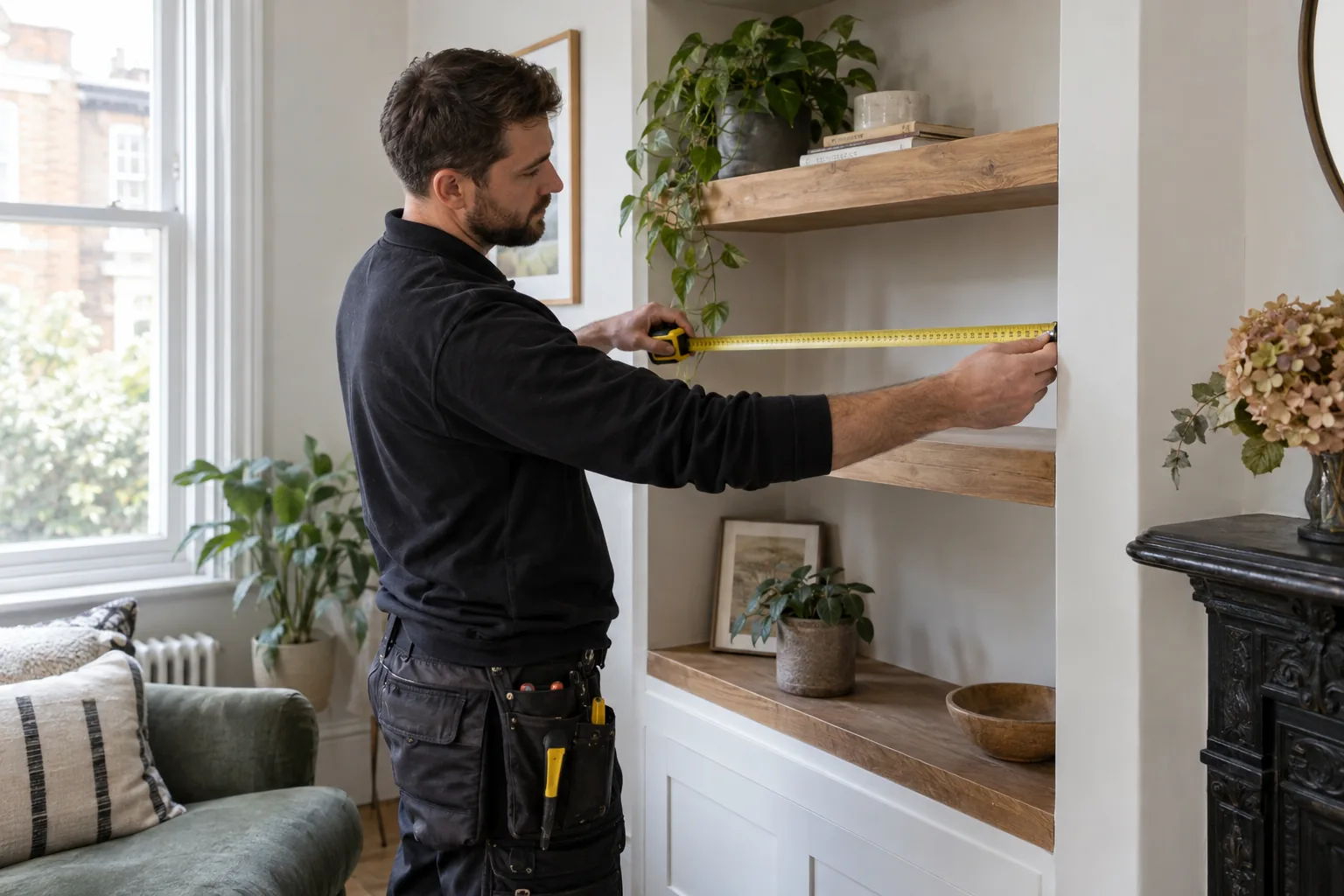
Handyman measuring an alcove before fitting shelves in a London home

BATTERSEA PROPERTY NOTES

Measure a gate opening at three heights

Walls, balusters and skirting can make the top, middle and bottom widths different. Record all three and identify the surface each fixing or pressure cup would meet. Check the product’s location rules: a pressure gate may be unsuitable at a stair top, while drilling into a balustrade or protected joinery may not be allowed. Rehearse adult passage while carrying a bag and confirm that the gate does not block a door or required escape. Follow the manufacturer’s fitting and inspection instructions exactly. A custom-shaped or unusual opening may need specialist advice rather than packing pieces added on site.

PRACTICAL CONSIDERATIONS

Map reach before choosing a safety product and A restraint belongs to a complete furniture system

01

Map reach before choosing a safety product

Walk the room at the height and pace of the person whose safety is being considered. Record climbable furniture, trailing cords, sharp projections and objects that can be pulled down. Note pets, mobility aids and carers because a barrier that restricts one movement can obstruct another user. Keep exits, alarms, radiators, windows and service controls accessible. Photograph each location with a ruler and include the full surrounding route. The aim is a prioritised fitting brief, not a claim that hardware alone makes a room safe. Supervision, product instructions and ongoing checks remain part of the household plan.

02

A restraint belongs to a complete furniture system

Identify the furniture model, manufacturer’s anti-tip instructions, expected load and final position. Assemble and level the unit before marking the restraint. Skirting can hold a cabinet away from the wall, while drawers and doors change its balance when opened. The supplied bracket must connect to sound parts of the furniture and an appropriate wall substrate; replacing it with an improvised strap can change performance. Do not fill the unit until the restraint is fitted and checked. Heavy items generally belong low, and climbable objects should not be placed where they invite access to a window or unstable display.

03

Finish with a household walk-through, not just a screw check

Install one category of approved fitting at a time, beginning with the highest-consequence risk identified by the household. After furniture restraints, check gates, ordinary cupboard catches and suitable cord-safety devices in their actual use. Operate doors and windows without defeating ventilation, security or fire performance. Ask the responsible adult to demonstrate each fitting rather than only watch the installer. Record product information, hidden fixing positions and the inspection interval in one place. Revisit the room after furniture is loaded and routines resume. Stop any product that loosens, binds or creates a new trip, pinch or access problem.

PLANNING THE WORK

Keep safety fitting within the right professional boundary

Home safety and security can cover suitable ordinary restraints and approved household fittings after a risk brief. Furniture assembly establishes the frame that a restraint protects. Carpenters may assess a made-to-fit solution where standard storage cannot meet the room, but they should not invent untested safety gates. Locksmiths handle appropriate lock and security issues; electricians deal with damaged sockets and fixed wiring. Door repair may address an ordinary internal door, while fire and communal doors require their responsible contractor. Product instructions, building duties and specialist assessment always take precedence over a convenient general fix.

Discuss your property requirementsCall 020 3137 9380

PLANNING THE WORK

Battersea’s building context changes the fixing decision

Wandsworth publishes distinct appraisals for Battersea Park, Battersea Square and other conservation areas, while much of Battersea includes newer development. Verify the address, tenure and affected material before drilling original joinery or changing external guards, doors or windows. Listed status and lease conditions can matter inside as well as outside. A freestanding or reversible arrangement may be preferable where approval is uncertain, but it must still be stable and suitable. Bob’s can implement an agreed household fitting plan; conservation consent, fire strategy and formal risk assessment remain with the proper authority or specialist.

Discuss your property requirementsCall 020 3137 9380

PRICING

Pricing based on the agreed Battersea job scope

The quotation reflects the task, access, expected time and materials. Photographs and measurements help establish what can be priced before the visit and what first needs inspection.

Handyman labourFrom the published rate
MaterialsAgreed for the job
Additional workApproved before it starts

Parking, congestion and unusual access requirements are discussed where they affect the quotation.

NEARBY COVERAGE

Handyman areas near Battersea

BATTERSEA HANDYMAN FAQ

Questions about planning handyman work in Battersea

Can you secure a tall bookcase in a Battersea flat?

Yes, when the manufacturer’s restraint, furniture condition, final position, wall substrate and landlord or freeholder permission are suitable.

Will any stair gate fit an uneven opening?

No. Measure at three heights and follow the product’s permitted locations. Stair tops and unusual balustrades often need a specific solution.

Can safety catches be fitted to every kitchen cupboard?

The catch must suit the door, hinge, contents and intended user. Medicines, chemicals and dangerous items also need responsible storage, not reliance on one catch.

Who checks a damaged electrical socket found during the walk-through?

Keep it out of use and ask a qualified electrician to assess it. A cover or furniture position is not a repair.

Can a fire door be adjusted as part of childproofing?

Fire doors require responsible inspection and compatible hardware. Do not add devices that prevent closing or alter certified performance.

Does conservation status stop furniture restraints?

Not as a blanket rule, but listed fabric, lease terms and significant joinery require an address-specific method and approval.

PLAN THE VISIT

Turn the Battersea safety walk into a measured fitting brief

Send room photographs, user needs and product instructions. We can identify suitable household fittings and clearly separate specialist or building-controlled concerns.

Call 020 3137 9380Get a quote