
Stair rails and wall brackets
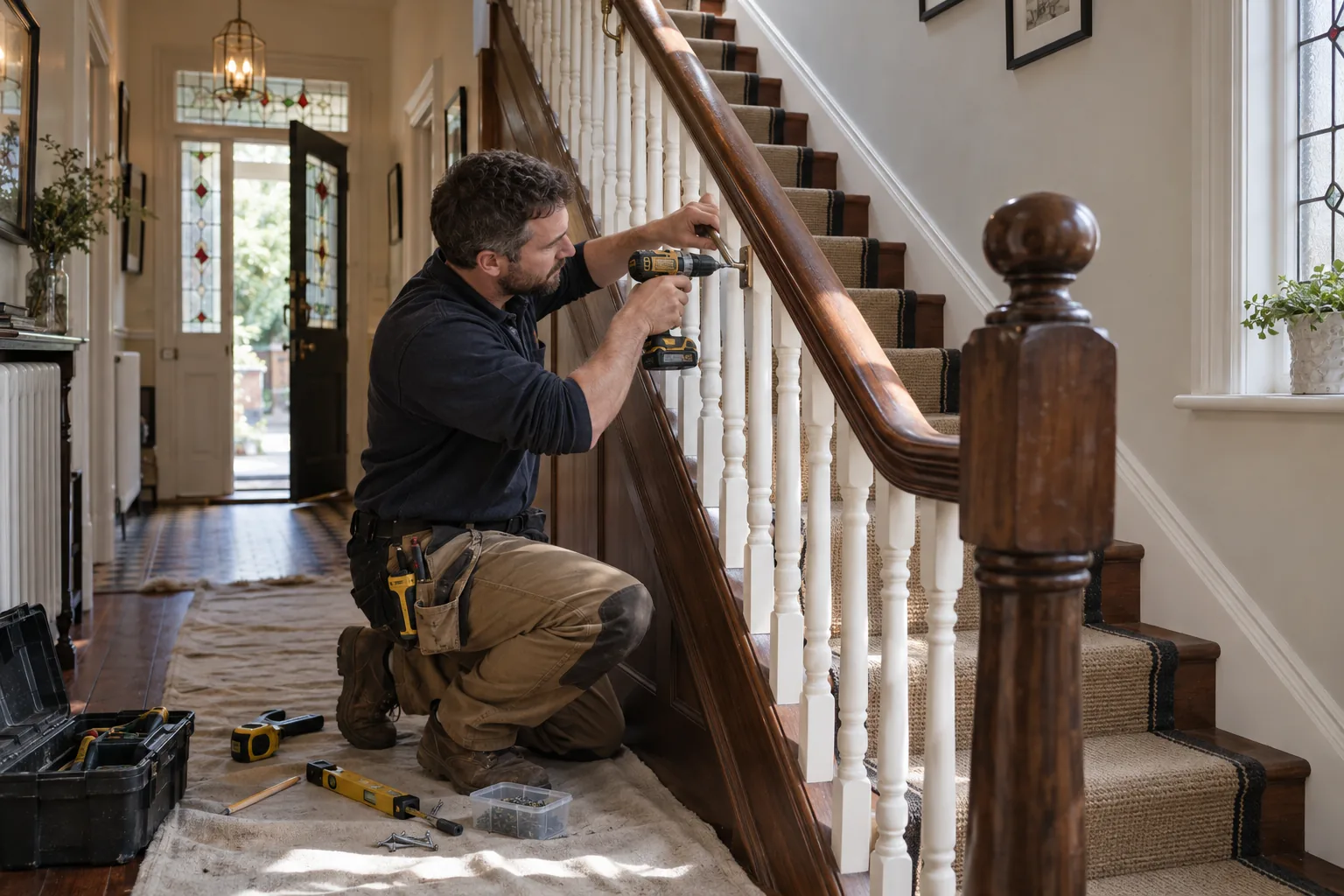
Test each bracket individually without applying unsafe force. Photograph cracks or crushed plaster around fixings; a larger screw is not a remedy for an unsound wall.
INTERWAR HOMES · SAFE DAILY MOVEMENT
Many local residential streets reflect interwar and later suburban growth. In these homes, a loose handrail, rubbing door or poorly placed storage can make the everyday route less safe. Bob’s builds the visit around circulation, dependable support and a room-by-room restart check.
SUBURBAN STREETS BESIDE OLDER FABRIC
Redbridge’s character study records semi-detached housing drawing on interwar models, pockets of modest estate development and a meeting point with rural land, farmsteads and the church at Aldborough Hatch. Most household lists will concern the twentieth-century home: hall doors, stair rails, cupboards and utility storage. Historic barns, older masonry and locally important structures are a distinct conservation question, not an extension of that ordinary list.
Sketch the main route through the home and mark anything that catches, narrows or feels insecure. Include children, older residents and mobility equipment in the clearance decision. A repair should restore confident use without moving the problem elsewhere—for example, a newly aligned door must still clear the floor and latch without forcing the frame.

THE HALLWAY AS A SAFETY ZONE
Measure the clear route with cupboard doors and the front door open. A shoe unit, coat rail or parcel shelf can solve clutter yet create a shoulder-height projection or pinch point. Mark the proposed outline on the wall and walk the route carrying shopping, a laundry basket or mobility aid. Keep meters, alarms and consumer equipment accessible.
Stairs need the same practical test. Handrails should be continuous where intended, brackets secure and carpet edges stable. Lighting concerns and structural stair movement do not belong inside a simple fixing task. Photograph the entire flight so a loose bracket is understood as part of the route, not an isolated screw.
A CIRCULATION-LED JOB LIST
Frequent contact exposes small failures early. Record the movement, support and clearance rather than asking for a general tightening visit.
Test each bracket individually without applying unsafe force. Photograph cracks or crushed plaster around fixings; a larger screw is not a remedy for an unsound wall.
Show hinge gaps, latch alignment, floor clearance and nearby stops. A door that swings unexpectedly may have frame, hinge or floor-level causes that need different treatment.
State the loaded use and proposed height. Keep projections away from head and shoulder routes and preserve access to electrical or heating controls.
Record catches, seals, floor changes and any water marks. Do not hide moisture ingress or decayed timber beneath a new trim intended only to improve appearance.
PUBLISHED-RATE GUIDE
Select a task group, item count and likely time. The calculator applies Bob’s published weekday rates and excludes materials, parking, disposal, access equipment and specialist investigation.
WALK THE ROUTE
Open the door fully and check thresholds, stops and the first clear standing area.
Identify projections, loose fittings and cupboard doors crossing the route.
Check rail continuity, individual brackets, carpet edges and landing clearance.
Operate repaired doors and storage with representative everyday use before handover.
NEARBY COVERAGE
Prepared household repair visits in Barkingside.
Property maintenance toward Gants Hill.
Browse Bob’s wider East London coverage.
ALDBOROUGH HATCH MOVEMENT FAQ
Include the complete flight, every bracket, the wall around each fixing and close views of cracking or movement. This shows whether one point or the whole rail is affected.
Sometimes, but alteration depends on its construction and finish. First test whether relocation or a different freestanding unit would preserve more usable circulation.
Hinge position, frame alignment or floor movement may contribute. The complete door and frame should be inspected before adding catches or trimming edges.
No. Required meters, consumer equipment, valves and inspection points must remain safely accessible according to their operating requirements.
Choose a realistic working duration and describe the route between tasks. Setup, protection and moving tools safely are part of the practical scope.
Original masonry, timber or locally listed fabric may need specialist conservation advice. Keep that work distinct from ordinary maintenance in a later house.
DEFINE THE ALDBOROUGH HATCH JOB
Send wide and close photographs, load information, access details and any history of damp or movement. Bob’s can then identify a sensible handyman scope.
RESPECT THE CONDITION
A shelf, rail or gate fitting should not proceed when the receiving material is loose, saturated or incapable of carrying the planned load.
Record which surfaces are external, sheltered or in persistent shade so timber treatment and curing expectations remain realistic.
Avoid grinding, aggressive filling or wholesale replacement simply to make an old element look uniform. Specialist advice can preserve sound historic material.