
Cupboard hinges and mounting plates
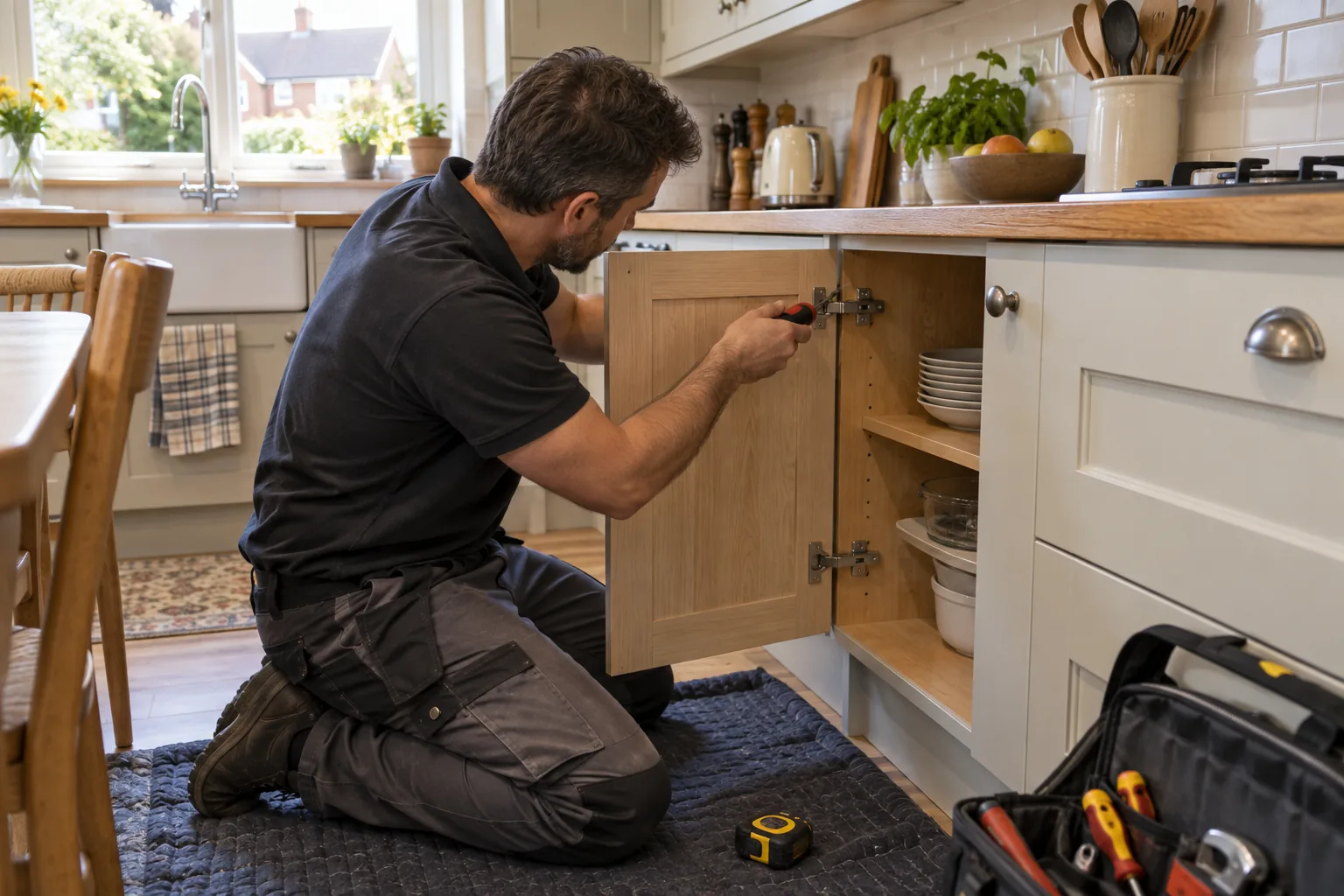
Record cup diameter, screw spacing, overlay and opening angle. A hinge that looks identical can place the door several millimetres out, while damaged board may need repair before any new plate is fitted.
PARTS, SIZES AND PREVIOUS ALTERATIONS
Homes built and altered at different times can contain several generations of hinges, handles, cabinets and sanitary fittings. Bob’s helps identify the existing component and its fixing pattern before a replacement is ordered, reducing improvised adaptations and unused near-matches.
BUILD A COMPONENT RECORD
A product name rarely identifies the exact part. Photograph markings, use a ruler in the same plane and note which way the component opens or turns.
Record cup diameter, screw spacing, overlay and opening angle. A hinge that looks identical can place the door several millimetres out, while damaged board may need repair before any new plate is fitted.
Measure spindle size, backset, faceplate and door thickness. State whether the handle is sprung and whether the latch binds only when the door is fully closed.
Photograph both sides and any stamped code. Check the drawer box remains square; replacing a runner will not cure a distorted cabinet or loose joint.
Identify material, thickness, clips and access purpose. A cover should remain removable where valves, traps or services need inspection, rather than being sealed permanently for appearance.
SEVERAL BUILDING PERIODS, SEVERAL PART SYSTEMS
Croydon’s character appraisal distinguishes historic Addington Village from the substantial twentieth-century housing of New Addington and Fieldway, including compact houses, public estates and blocks of flats. Those settings often contain later kitchens, replaced internal doors and successive layers of landlord or owner maintenance. The present fitting may not correspond to the age of the shell.
Treat every replacement as a compatibility exercise. A modern hinge fixed into an older door, or a new panel closing an established service void, must suit both component and surrounding material. In the village conservation area, visible exterior hardware and original fabric also deserve an address-specific permission check. Inside managed or rented homes, confirm who owns built-in units and who can approve alteration before drilling a new pattern.
LABOUR ESTIMATE
Use the calculator to compare the expected working time with Bob’s published weekday rates. It excludes products, waste removal, parking, unusual carrying routes and work needing a dedicated trade.
MAKE A PARTS TRAY FOR EACH ROOM
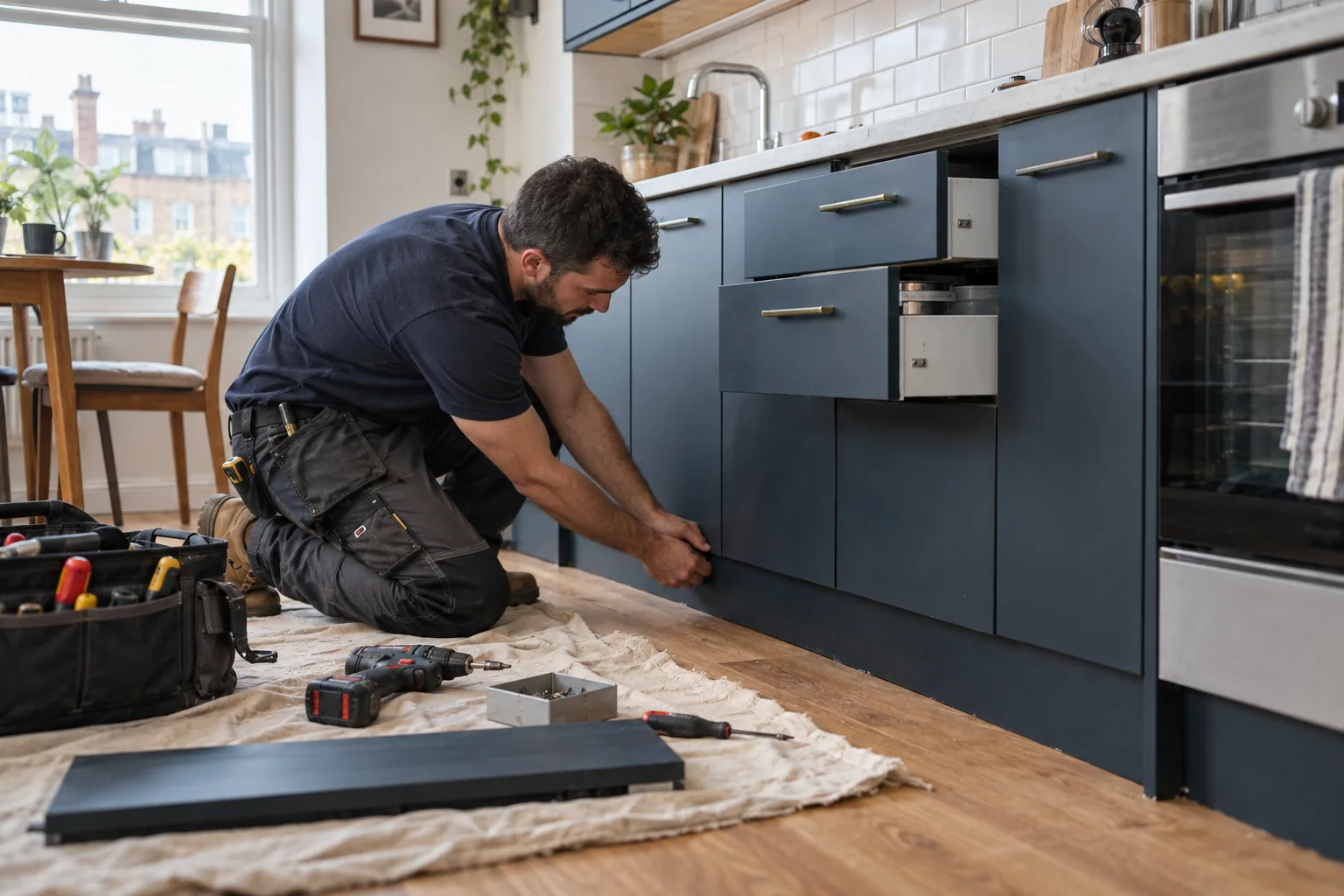
Use separate labelled containers for the kitchen, bathroom and each door. Put screws, plates, spacers and broken fragments together; even a failed piece can reveal its dimensions and how it was loaded. Photograph the assembly before dismantling, including washers or packers that may look disposable.
Do not throw away a proprietary fitting until the replacement has been installed and tested through its complete movement. If no compatible item is available, the evidence supports an informed choice between a repair plate, a change to the paired components or renewal of the complete fitting. That decision is better than drilling another pattern beside several abandoned holes.
IDENTIFY BEFORE BUYING
Show the complete moving part, its neighbour and every fixing position.
Record centres, depth, thickness, handedness and any stamped reference.
Assess whether existing holes and surrounding board or timber remain sound.
Operate the new part fully and retain the old evidence until the result is accepted.
NEARBY COVERAGE
Prepared property-maintenance visits for Forestdale.
Plan compatible repairs in South Croydon homes.
See the broader South London service area.
ADDINGTON COMPONENT FAQ
One range can contain different overlays, opening angles and mounting plates. Dimensions and photographs of both hinge halves are needed.
Not automatically. Crumbled board may no longer hold reliably; the substrate needs a suitable repair strategy before the hinge is adjusted.
Some latches, stays and fittings are made for a particular opening direction. Photograph the item in place and state which edge is hinged.
Keep it. Shape, thickness, markings and fixing pattern can identify a replacement even when the part itself cannot be reused.
Use the calculator for the likely inspection and fitting time, but describe the uncertainty. Sourcing, fabrication or a second visit may need separate agreement.
No. Traps, valves and other service points that require inspection should retain a removable, appropriately finished access method.
MAP EVERY REMOVABLE COVER
Show the accessible service point, the complete cover and its fasteners without operating plumbing or electrical equipment. Bob’s can assess ordinary refitting that leaves the next inspection straightforward.
KEEP SERVICE COVERS HONEST
Keep the correct clips or screws with the panel and avoid decorative caps that conceal the release method.
Furniture, plinths and stored products must not turn a removable cover into a dismantling exercise.
Label only a verified service or inspection purpose; uncertain voids stay recorded as unconfirmed rather than guessed.