
Live in the rooms briefly, then fix the right things

A Practical Move-In Settling List for Barnes

Moving day reveals access and furniture issues, but it does not always reveal the best permanent positions. A staged Barnes handyman list lets urgent safety work happen first and measured wall fittings follow after the rooms have been used.

  • Unsafe and unusable items prioritised
  • Permanent positions tested before drilling
  • Packaging and product faults recorded early
  • Second-stage improvements based on real room use
Labelled furniture cartons organised by room in a London home
Barnes property focus
15+ years of experience
London and M25 coverage
One accountable team
Living room wall outlines being tested before permanent hanging

BARNES PROPERTY NOTES

Test furniture and pictures with the room in use

Tape furniture footprints and picture outlines, then use the room for several days. Observe where doors collide, daylight reflects, sockets disappear and walking routes narrow. A sofa may shift once the best reading light is found; a desk can need a different wall after video calls reveal glare; a mirror position changes when the real getting-ready route becomes clear. Keep heavier frames safely stored until their location and wall support are agreed. Barnes includes cottages and mansion flats, and the same product can meet very different background and access conditions. A lived-in test produces measurements grounded in behaviour, not the estate-agent photograph or an empty-floor plan.

PRACTICAL CONSIDERATIONS

Use the first forty-eight hours to identify blockers and Audit products before discarding the packaging

01

Use the first forty-eight hours to identify blockers

Prioritise doors that will not secure, unstable furniture, exposed sharp edges and essential fittings that prevent a room being used. Photograph damage to delivered cartons before assembly and follow the retailer’s reporting process. Confirm that beds, wardrobes and appliances have complete parts and can reach their rooms. Avoid filling walls with permanent hooks while boxes still determine the routes. Create three lists: must work now, needs measuring after unpacking, and optional once the household settles. This distinction protects urgent time and reduces hurried positions that are moved a week later. Note access, parking and any lease or landlord requirements while documents are easy to find. A concise first-stage booking should leave sleeping, washing, cooking and security functions reliable without pretending the entire home must be finished immediately.

02

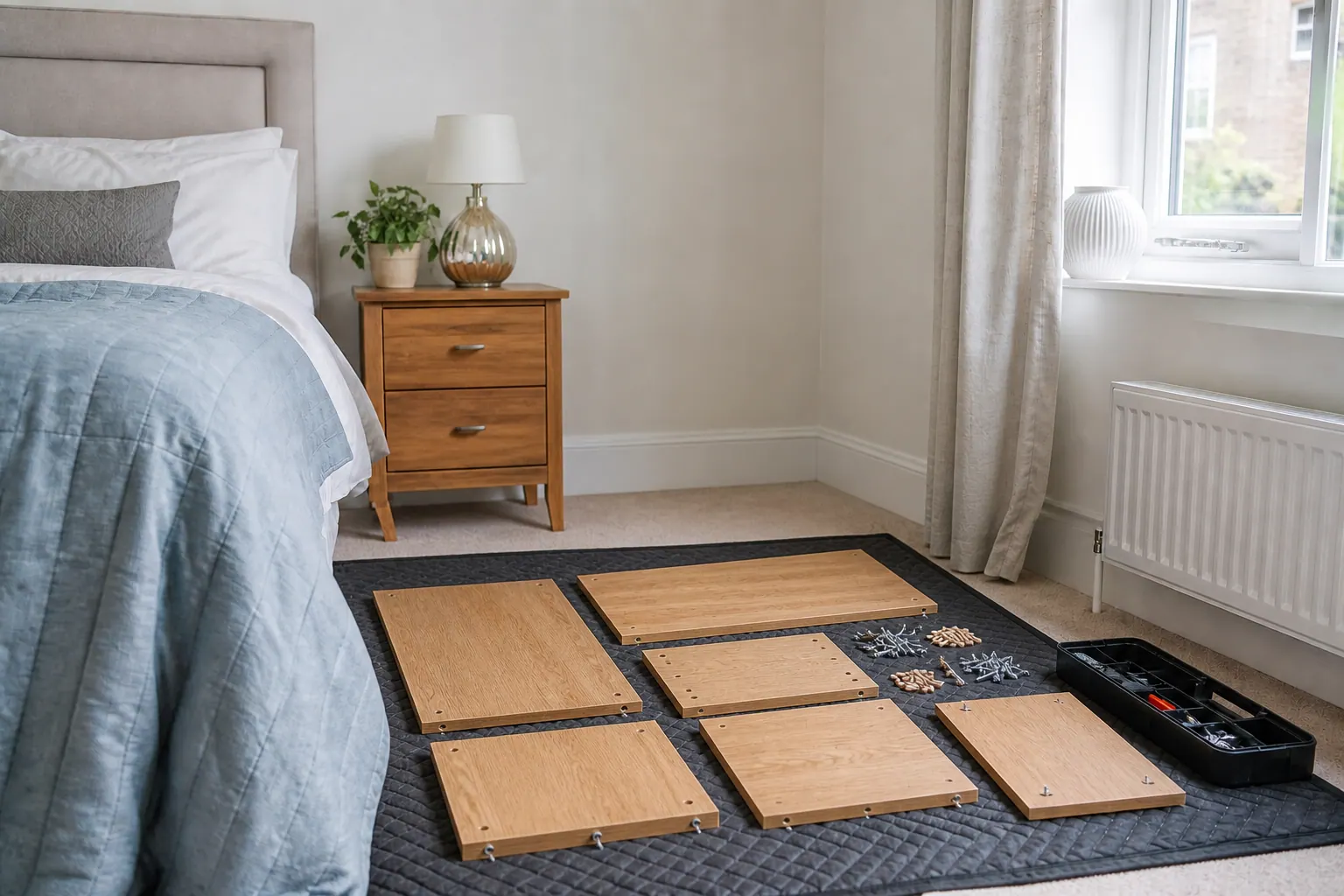
Audit products before discarding the packaging

Match carton numbers to the order, photograph labels and count hardware packs against the instructions. Keep protective material until surfaces are inspected in daylight. Do not assemble a damaged item merely to discover whether the defect remains visible; doing so can affect the retailer’s process. For furniture, record the final footprint and required restraint. For shelves or television brackets, retain templates and product fixings even if alternative wall anchors may be needed. Label spare pieces with the exact item rather than collecting every screw in one jar. A product audit makes the assembly visit more productive and leaves evidence if a replacement panel or missing component must be requested.

03

Pause permanent work until ownership and significance are clear

A move-in list may include walls, entrance doors, shared windows and exterior details that the occupier does not control. Check the tenancy, lease and building rules before drilling or changing hardware. Barnes contains several conservation areas and varied historic fabric, but designation must be checked by address rather than assumed across the district. Original joinery, tiled paths and decorative plaster deserve more than an automatic modern fixing. In a managed block, communal doors and corridors follow the building route. If approval is delayed, proceed with assembly or freestanding organisation that does not depend on the disputed surface. This keeps the move progressing without creating an unauthorised alteration that must later be reversed.

PLANNING THE WORK

Split move-in work into usable-now and settled-later stages

Stage one assembles essential complete products, corrects defined safety issues and establishes basic window privacy or storage where positions are certain. Keep a photographic record and a list of measurements still needed. After normal use, stage two handles gallery walls, televisions, extra shelving and minor repairs revealed by the household routine. Before each visit, clear only the relevant work zones and group products by room. At handover, operate drawers and doors, verify restraints, and keep manuals and leftover components together. This two-stage sequence avoids blocking the whole home while also preventing a rush of holes and purchases in the first days. The second booking is based on evidence from living there, so it usually contains fewer changes with more confidence.

Discuss your property requirementsCall 020 3137 9380

PLANNING THE WORK

Book each stage around prepared products and priorities

A complete carton audit and room list show whether essential assembly needs a short visit, half day or a separate later fitting session.

Discuss your property requirementsCall 020 3137 9380

PLANNING THE WORK

Use specific services for the settled list

Furniture assembly handles complete products with instructions and final footprints. Picture and mirror hanging is appropriate once the room composition is known. Television mounting needs bracket, wall and viewing information. Door repair covers defined movement or hardware faults in ordinary private doors, while locksmith work addresses security. Odd jobs can combine smaller independent tasks that survived the observation period. Appliance installation should be booked only when the product, opening and existing services are suitable. Routing the second-stage list by its dominant tasks provides better preparation than sending one undifferentiated move-in message.

Discuss your property requirementsCall 020 3137 9380

PRICING

Pricing based on the agreed Barnes job scope

The quotation reflects the task, access, expected time and materials. Photographs and measurements help establish what can be priced before the visit and what first needs inspection.

Handyman labourFrom the published rate
MaterialsAgreed for the job
Additional workApproved before it starts

Parking, congestion and unusual access requirements are discussed where they affect the quotation.

NEARBY COVERAGE

Handyman areas near Barnes

Kew

See the dedicated property-maintenance page for Kew.

View Kew →

Putney

See the dedicated property-maintenance page for Putney.

View Putney →

BARNES HANDYMAN FAQ

Questions about planning handyman work in Barnes

Which Barnes move-in jobs should happen first?

Prioritise security, unstable furniture, sharp hazards and fittings required for sleeping, washing or cooking.

Should pictures be hung on moving day?

Usually it is useful to test furniture and sightlines first, especially for heavier items or grouped arrangements.

Can damaged flat-pack furniture still be assembled?

Photograph damage and check the retailer process before assembly, which may affect a return or replacement claim.

Can one visit assemble furniture in several rooms?

Yes, if products are complete, footprints are clear and the priority order is agreed.

Do I need permission for wall fixings in a Barnes flat?

Check the tenancy, lease and building rules. Common walls or protected fabric may need additional approval.

What should be kept after assembly?

Retain instructions, spare parts, wall caps, model information and any warranty or retailer evidence with the property.

PLAN THE VISIT

Turn the Barnes move into two sensible lists

Send essential products and safety blockers first, then mark the wall fittings that need a few days of real room use. We can scope each stage without rushing permanent decisions.

Call 020 3137 9380Get a quote