DE BEAUVOIR TOWN · RETAIN WHAT WORKS

Considered Handyman Work in De Beauvoir Town

New furniture and everyday repairs should fit the room without sacrificing useful original detail. Bob’s can review household joinery, mounting and finishing tasks with the existing skirting, shutters, doorways and furniture in view. Start with the result you need, then decide what genuinely has to change.

  • Existing details recorded before alterations
  • Furniture clearance checked at opening points
  • Repair options considered before replacement
  • Permission questions separated from fitting decisions
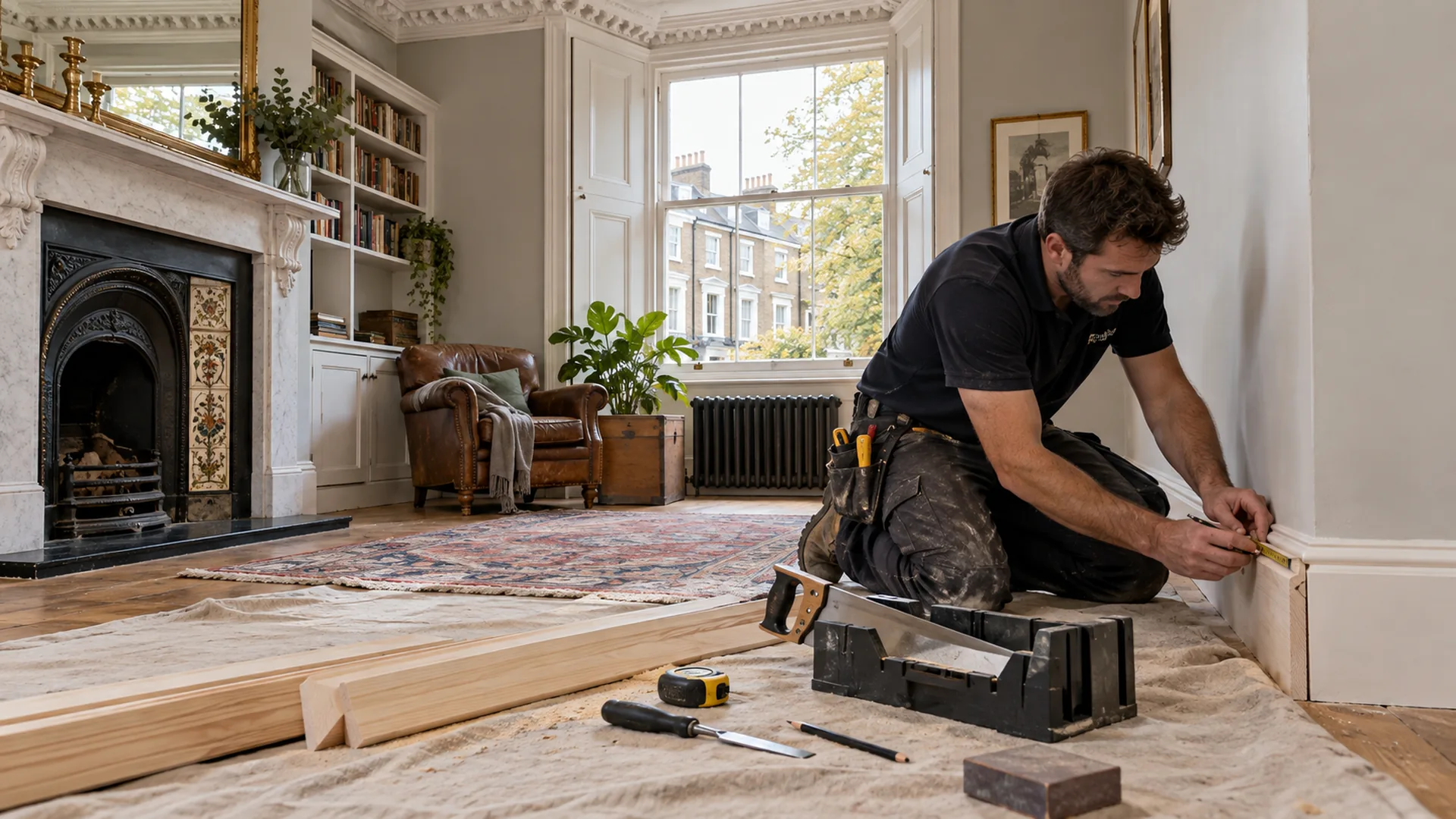
Joiner measuring timber skirting beside an interior wall

CHARACTER IS SPECIFIC TO THE BUILDING

Retained door furniture deserves a component-by-component decision

De Beauvoir’s doorcases and original windows are among the features identified in Hackney Council’s conservation guidance. The council describes contrasting early housing groups around the square and further south. For a proposed external change, its Article 4 property information is important: the direction applies to specified properties rather than every address in the conservation area.

Inside, a worn latch or handle can sometimes be considered separately from the timber around it. Explain whether the handle turns without engaging, the latch fails to meet its keep, or the whole fixing moves. These observations lead to different checks. A replacement selected only for its colour can have an incompatible spindle, fixing pattern or projection, leaving new holes without solving the original fault.

Keep detached door furniture, labels and any matching spare parts together. Photograph the face and visible fittings without forcing or dismantling an unfamiliar mechanism. If a matching item survives on another ordinary internal door, include it as a reference. The brief can then distinguish a working repair, a compatible replacement and a specialist restoration request. Protective or fire-rated doors belong on a separate assessment route, regardless of how traditional their hardware looks.

Discuss your property requirementsCall 020 3137 9380
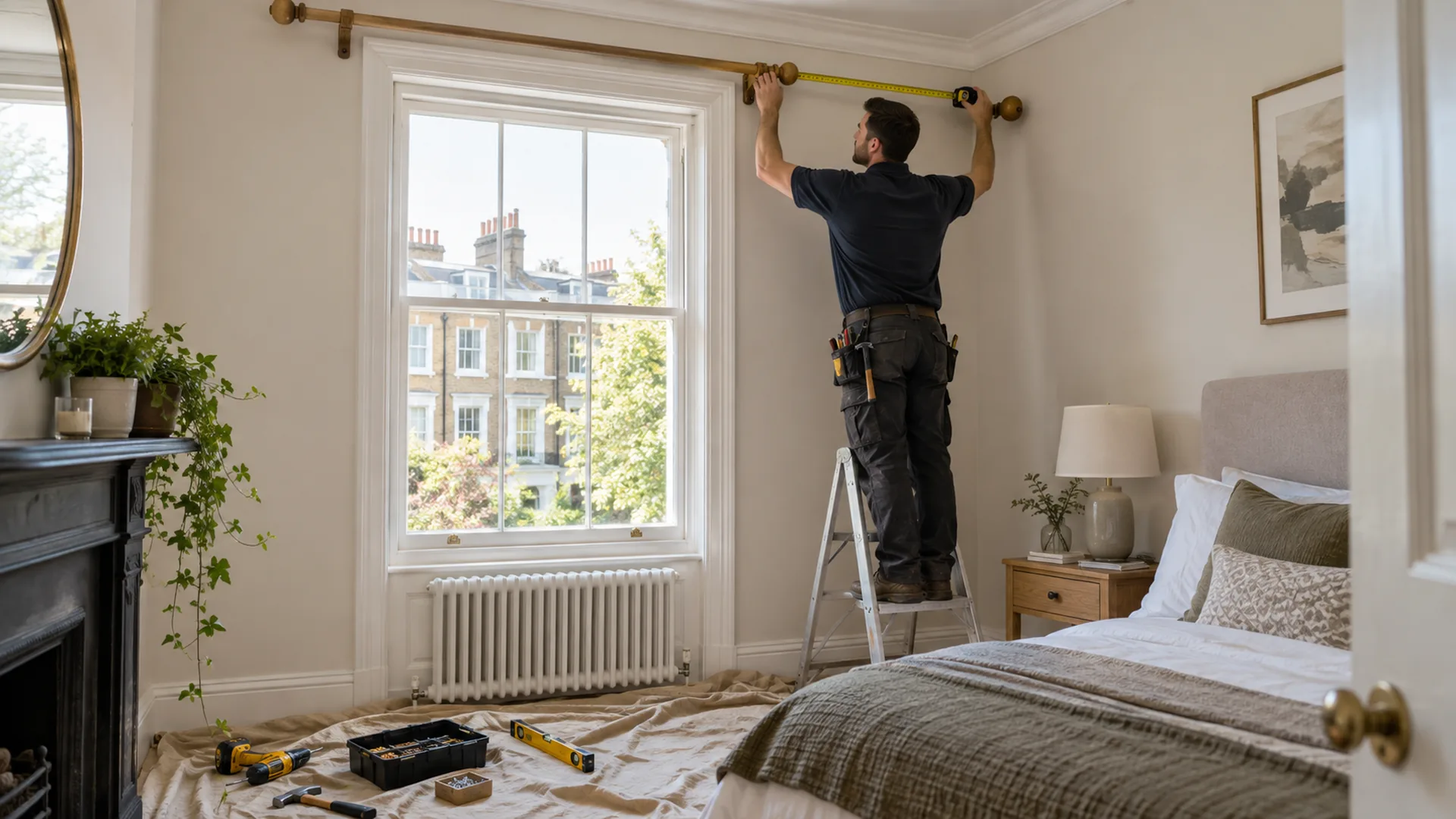
Professional checking the position of a curtain pole above a domestic window

DO NOT PAINT OVER THE OPERATING PROBLEM

Let shutters and catches prove their movement before finishing

Where internal shutters remain in use, note which leaf binds and at what point. Thick paint at a meeting edge, loose hardware and movement in the surrounding timber are different conditions. Do not force a closed shutter or remove material just to make it move. Describe its ordinary behaviour and any recent decorating so the proposed repair can be reviewed.

A curtain-pole installation in the same window needs to account for that movement. Show the shutters open, folded and closed where they can be operated safely. Record where curtains will gather and whether their brackets would obstruct a catch. The aim is not simply to fit both products within the opening, but to retain a usable sequence: open the curtains, release the shutters and reach the window without conflict.

If painting is included, agree which moving parts must remain functional and what is being retained. Hardware should not become bonded in place by the finish, and joint lines should not disappear beneath an indiscriminate coating. Keep the product details and allow the appropriate drying time before ordinary contact resumes. Where a feature is protected or restoration requires specialist knowledge, resolve that route before authorising intervention.

HOME MAINTENANCE PLANNER & HANDYMAN JOB CHECKER

Check the work before changing a retained detail

Select your property type and the fittings or repairs under consideration. The checker prepares an on-screen list and service suggestions, flagging work that may need a specialist. Use it alongside the room measurements and permission checks; it neither approves alterations nor collects personal information.

1Property type
2Area of property
3What needs attention
4Urgency

DECISIONS BEFORE DISTURBANCE

Agree what stays before deciding what comes off

01

Mark the retained details

List mouldings, handles, shutters and other features that are not part of the work. Include close images where their condition matters.

02

Resolve the fit

Compare product measurements with the room in use. Confirm the restraint method and clearance requirements before assembly starts.

03

Approve the repair boundary

Make clear which part can be removed, repaired or redecorated. Stop for a revised decision if hidden material is unsound.

04

Keep a useful record

Retain product references and finish details. Photograph the completed arrangement with doors and drawers open as well as closed.

QUESTIONS ABOUT FIT AND FINISH

Before altering a De Beauvoir interior

Can a freestanding cupboard sit in front of deep skirting?

Sometimes, but the gap, stability and restraint must be dealt with properly. Send the cupboard model and the skirting projection. Do not assume that a gap can simply be filled or that cutting the skirting is the only answer.

Do I need to know whether an internal handle is original?

Tell Bob’s what you know and show the handle, its fixing pattern and the door. A retained item may be repairable or need a suitable specialist. Do not discard it before the replacement approach is agreed.

What information helps match an old internal latch?

Show the visible faceplate, the handle arrangement and any retained markings. If you have a spare or a matching working item, include it as a reference. Avoid removing or forcing unfamiliar parts merely to obtain dimensions; identification may need inspection.

Will a conservation-area address prevent ordinary furniture assembly?

Furniture assembly itself is a different question from altering protected building fabric. Any associated drilling or alteration still needs consideration of the property, permissions and the specific feature affected. Clarify those elements instead of treating the whole task as one permission question.

Why might a small paint repair show after drying?

Colour, sheen, age of the surrounding coating and light direction can all expose a patch. Provide the paint reference where possible. Agree whether the finish stops at the damage or at a natural boundary such as a whole wall.

Should I buy a shelf before measuring the window furniture?

Measure first. Show shutters or curtains fully open and include any handles or radiators. A shelf that fits the bare wall may obstruct the working window arrangement or prevent later maintenance access.

ADJOINING LOCAL GUIDES

Handyman areas near De Beauvoir Town

Dalston and Hoxton have their own local pages. Select the location of the property, especially when a letting description uses a wider neighbourhood name.

MAKE THE EXISTING ROOM PART OF THE BRIEF

Tell Bob’s which details you want to keep

Include the new item, the retained features and enough measurements to explain the fit. A clear De Beauvoir Town request can protect the room’s character while making its everyday fittings more useful.

Call 020 3137 9380Get a quote