

Record the symptom before changing the hardware

Internal Door Checks and Adjustments in Southgate

A door that catches only in damp weather needs a different response from a loose handle or a latch that has never met its keep. Southgate households can avoid repeated adjustments by giving every internal door a simple condition record first.

  • Each door numbered and tested in both directions
  • Hinge, latch and frame symptoms kept separate
  • Fire and security functions identified before work
  • One corrected door checked before the method is repeated
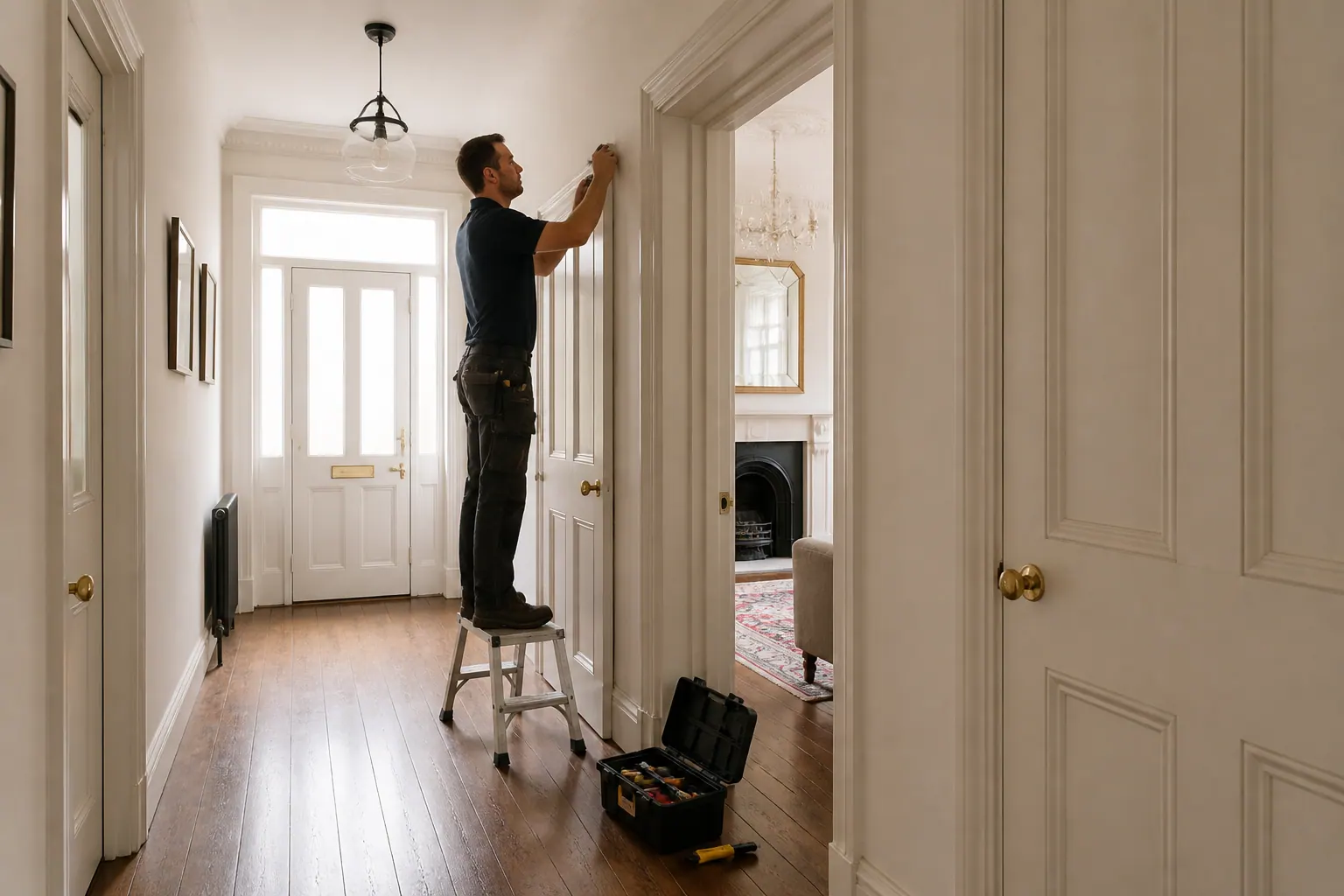
Internal door clearances being recorded beside numbered hardware
Southgate property focus
15+ years of experience
London and M25 coverage
One accountable team

PROPERTY DECISIONS

Create a door schedule rather than a list of vague faults and Read the clearance pattern before reaching for a plane

01

Create a door schedule rather than a list of vague faults

Number the doors on a small floor plan and record room, opening direction, material, hardware and the precise symptom. “Sticks” is not enough: note whether the top corner rubs, the latch misses sideways, the leaf springs open, the handle droops or the frame moves when the door closes. Test with windows in their normal position and note recent decoration, flooring work or leaks. Photograph hinge gaps, the latch edge and the clearance above the floor with the door almost closed. A schedule prevents a Southgate visit becoming a sequence of unrelated guesses. It also reveals patterns. Several doors binding on one level may justify investigation of moisture or movement, while one loose lever may be a contained hardware problem. Record doors that protect stairs, kitchens, garages or sleeping accommodation separately because their role may change what can safely be altered.
02

Read the clearance pattern before reaching for a plane

Close the door slowly and watch all four margins. An even hinge gap with contact at the latch corner can point towards hinge position or loose fixings; a swollen edge shows a different pattern. Check whether paint bridges the frame, a seal has folded, carpet now rises under the swing or a coat hook strikes the wall. Tightening an existing screw may restore alignment, but an enlarged hole or split timber needs a suitable repair rather than a larger screw driven blindly. Removing timber is irreversible and can expose an unfinished edge, reduce clearances too far or mask movement that should be investigated. Do not trim a door while active damp, a distorted frame or unexplained structural change remains unresolved. The useful diagnosis is where contact starts and what changes as the leaf travels.

03

Pause when a door has fire, security or controlled-access duties

A door with a closer, smoke or intumescent seals, certification markings, wired access hardware or a route into an attached garage is not an ordinary decorative leaf. Do not remove seals, wedge a closer open, drill unapproved holes or substitute hardware simply to make operation lighter. Entrance doors and communal doors may also be governed by leases, management rules and security systems. A handyman can record symptoms and undertake suitable authorised minor work, but fire-door inspection, controlled access, major frame repair and certification belong with the relevant competent specialist. Southgate contains varied building ages and ownership arrangements, so the exact door and address matter more than a general area label. Preserving its function is the first requirement; appearance comes after that.

SCOPE AND ACCESS

Correct one representative door, then test it through a normal day

Choose a door whose issue and function are understood. Protect the floor, remove loose items from the route and verify the existing fixings. Complete the smallest justified correction, then operate the door repeatedly from both sides. Check latch engagement without slamming, handle return, floor clearance, wall contact and the ability to open fully. Revisit after the room has returned to normal temperature and use. Record what changed, the hardware used and anything still needing observation. Only then apply the same method to another genuinely comparable door. A room-by-room handover is clearer than claiming every door has been “fixed” after one quick circuit.

Discuss your property requirementsCall 020 3137 9380
Handle, latch and hinge measurements arranged on a door schedule

SOUTHGATE PROPERTY NOTES

Match handles, hinges and stops to how the room is actually used

A replacement lever must operate the existing latch correctly, clear the frame and remain comfortable for the people using it. Record spindle size, backset, fixing centres and door thickness before ordering. Hinges need compatible dimensions and an appropriate duty; changing one hinge type can shift the whole leaf. Position a stop where it receives the solid part of the door rather than a fragile edge, and confirm it does not create a floor trip or obstruct cleaning. In a busy family route, a projecting hook or low stop may be worse than the mark it is intended to prevent. Keep matching screws and components with each numbered door. Where appearance matters, test one complete set in the least prominent suitable location before ordering hardware for several rooms.

FINISHING AND HANDOVER

Price the door list after the faults are separated and Choose the service according to the door’s actual duty

01

Price the door list after the faults are separated

A numbered schedule, clear photographs and hardware measurements distinguish a compact adjustment visit from a multi-room job involving parts, preparation and specialist referrals.

02

Choose the service according to the door’s actual duty

Door repair services suit defined ordinary alignment, latch and furniture issues. Carpenters can assess substantial frame, lining or timber repairs. Home safety and security covers suitable approved security fittings, while electricians handle powered access and electrical faults. Painters and decorators can finish a sound repaired surface after movement or damp causes are addressed. A fire-rated, powered, specialist glazed or communal system may need its authorised contractor. The condition schedule makes that boundary visible before incompatible parts are purchased.

PRICING

Pricing based on the agreed Southgate job scope

The quotation reflects the task, access, expected time and materials. Photographs and measurements help establish what can be priced before the visit and what first needs inspection.

Handyman labourFrom the published rate
MaterialsAgreed for the job
Additional workApproved before it starts

Parking, congestion and unusual access requirements are discussed where they affect the quotation.

NEARBY COVERAGE

Handyman areas near Southgate

SOUTHGATE HANDYMAN FAQ

Questions about planning handyman work in Southgate

Why does an internal door in Southgate stick only in wet weather?

Moisture and seasonal movement may be involved, but clearances, paint, hinges and any active damp should be checked before timber is removed.

Can a loose door handle simply be tightened?

Sometimes, but first check the fixing system, spindle, latch operation and whether the door material or screw holes are damaged.

Should a door be planed if it rubs the carpet?

Not automatically. Confirm the floor finish, hinge alignment, required clearance and the door’s function before making an irreversible cut.

Can a closer be removed because a door feels heavy?

Do not remove safety hardware casually. Identify the door’s function and arrange the correct assessment or adjustment.

How do I order matching handles for several rooms?

Record door thickness, spindle, backset, fixing centres, latch type and finish, then test one compatible set before a bulk order.

Does conservation status prevent an internal handle change?

Not generally by area name alone, but listed fabric, original features, tenure and communal-door rules need address-specific checks.

PLAN THE VISIT

Build the Southgate door schedule before ordering hardware

Send a floor-plan list plus hinge, latch and clearance photographs for each problem door. We can separate minor adjustments, required parts and doors needing specialist review.

Call 020 3137 9380Get a quote