
When an accessory needs attention
Cracked faceplates, looseness, heat marks, intermittent operation, buzzing or a switch that no longer works should not be ignored.
ELECTRICAL FITTINGS · SAFE, DEFINED SCOPE
Damaged, loose or outdated accessories deserve proper assessment. The circuit, back box, location and proposed fitting all affect whether a straightforward replacement is appropriate.
WHAT WE CAN HELP WITH
The scope is reviewed around the property, existing condition and the result you need.
Cracked faceplates, looseness, heat marks, intermittent operation, buzzing or a switch that no longer works should not be ignored.
Changing a suitable accessory in an existing position is different from adding a new point, moving wiring or altering a circuit.
Plate dimensions, back-box depth, terminal arrangement, load and location all influence compatibility.
SOCKETS SWITCHES REPLACEMENT AND INSTALLATION LONDON
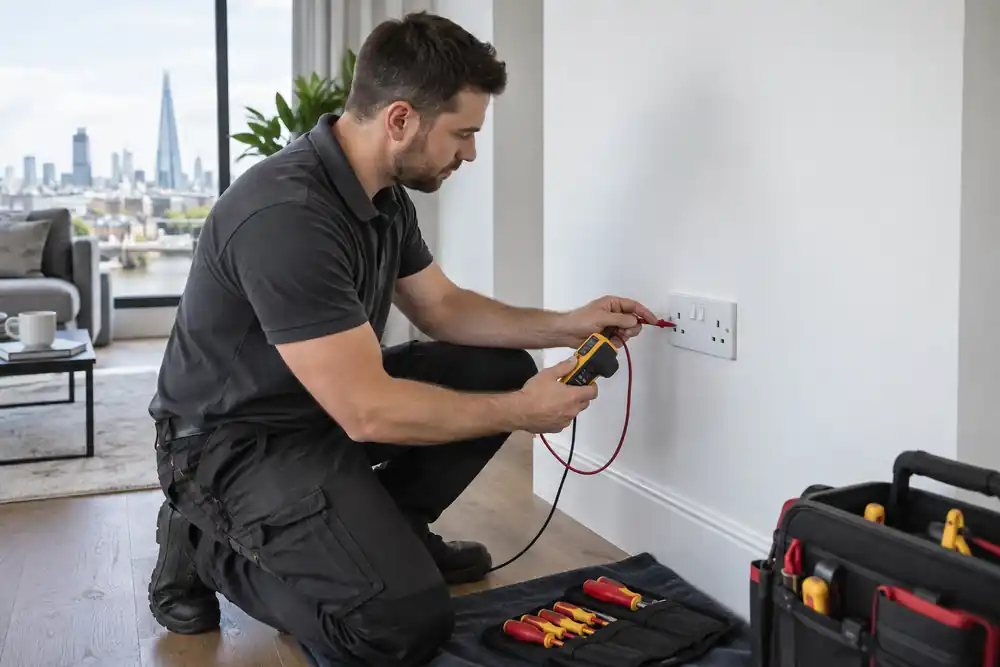
Cracked faceplates, looseness, heat marks, intermittent operation, buzzing or a switch that no longer works should not be ignored. Stop using an accessory if it appears damaged or hot, and seek appropriate electrical advice. A visual symptom does not prove the fault is limited to the faceplate; wiring, terminals, back boxes or the circuit may need investigation. Give an accurate description and photographs, but do not remove covers or touch exposed parts yourself.
Changing a suitable accessory in an existing position is different from adding a new point, moving wiring or altering a circuit. New locations may require cable routes, wall opening, circuit assessment and testing. Kitchens, bathrooms and outdoor areas have additional considerations. The requested scope must therefore distinguish like-for-like replacement, changed accessory type and genuinely new installation. Work that falls within regulated electrical scope must be completed and documented by an appropriately qualified electrician.
Plate dimensions, back-box depth, terminal arrangement, load and location all influence compatibility. Smart controls, dimmers, USB outlets and decorative metal plates are not universal substitutes. Dimmers must suit the lamps and drivers; metal accessories require correct earthing arrangements; shallow boxes may not accommodate bulky mechanisms safely. Share the product specification before purchase where possible. Appearance matters, but it comes after electrical suitability.
CAREFUL PROPERTY WORK
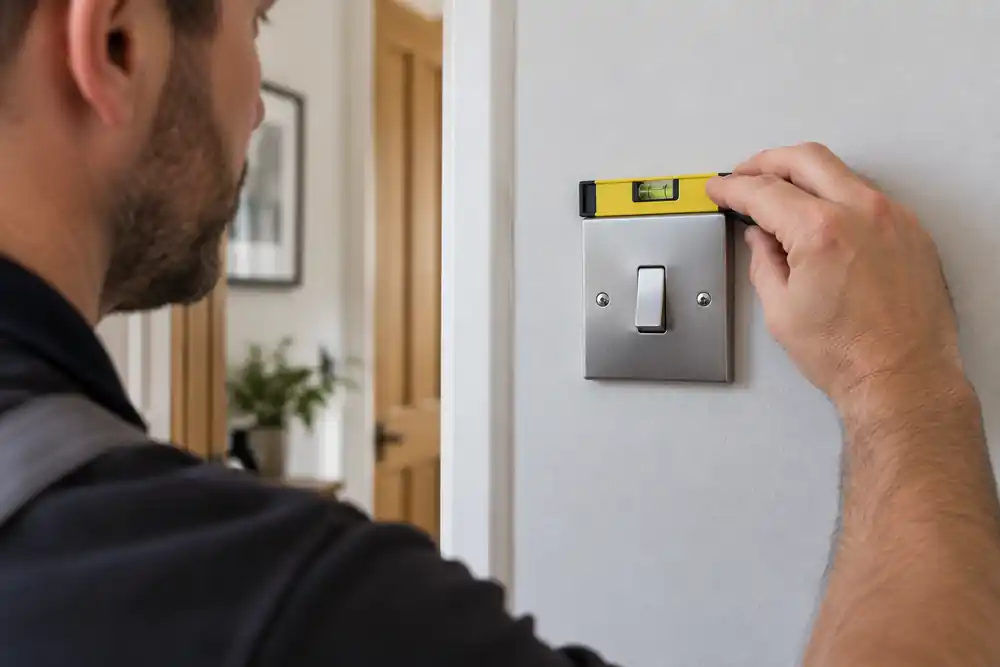
Power isolation and safe working procedures are essential. Once the fitting is installed, operation and relevant electrical checks should be completed according to the scope and applicable requirements. Decorative making good around an existing box can be discussed, but damaged walls or unsuitable boxes may change what is needed. Keep any documentation provided. If the request includes several lighting points, a new consumer-unit circuit or fault finding beyond an accessory, arrange an electrical assessment rather than splitting it into casual handyman tasks.
Painting or wallpapering often exposes loose plates, damaged edges or boxes that sit at the wrong depth. Coordinate the sequence so accessories are handled safely and finished edges are neat. Paint should not bridge plates to the wall or enter mechanisms. Any removal and reconnection remains electrical work and must be kept within the appropriate scope.
List every affected point and mark which are faulty, cosmetic replacements or proposed new locations. Include photographs, room use, accessory specifications and any history of tripping or heat. Note whether the property has recently been altered. This gives the electrician a clearer starting point while recognising that circuit condition must still be established through proper inspection and testing.
A CLEAR PROCESS
Send the London postcode, photographs, measurements and the result you want.
The requirements, access, materials and appropriate trade are reviewed before work begins.
The planned work is carried out carefully, with any material change explained clearly.
SOCKETS SWITCHES REPLACEMENT AND INSTALLATION FAQ
Useful answers for planning the work.
Sometimes, but the condition of terminals, wiring, back box and circuit must be assessed. Heat marks, buzzing or repeated failure need proper investigation.
That is a new electrical installation rather than a like-for-like accessory change. Cable routes, circuit capacity, testing and applicable requirements must be assessed by the appropriate professional.
No. The dimmer, lamp and driver need compatible load characteristics. Provide exact product details rather than choosing by appearance alone.
Suitability depends on earthing, back-box depth, environment and the electrical installation. They require professional assessment before fitting.
Stop using it, keep people away and seek prompt help from a qualified electrician. Do not remove the cover or continue testing appliances in it.
YOUR NEXT STEP
Send photographs, location details and the proposed fitting for an appropriate electrical assessment.