
Start with the source of the problem
Water can travel along pipework, cabinets and floors before it becomes visible.
PLUMBING MAINTENANCE · LEAKS & FITTINGS
A plumbing fault needs its source identified, not simply its visible symptom covered. Bob's Handyman assesses accessible pipework and fittings, explains the practical options and keeps the work within the appropriate professional scope.
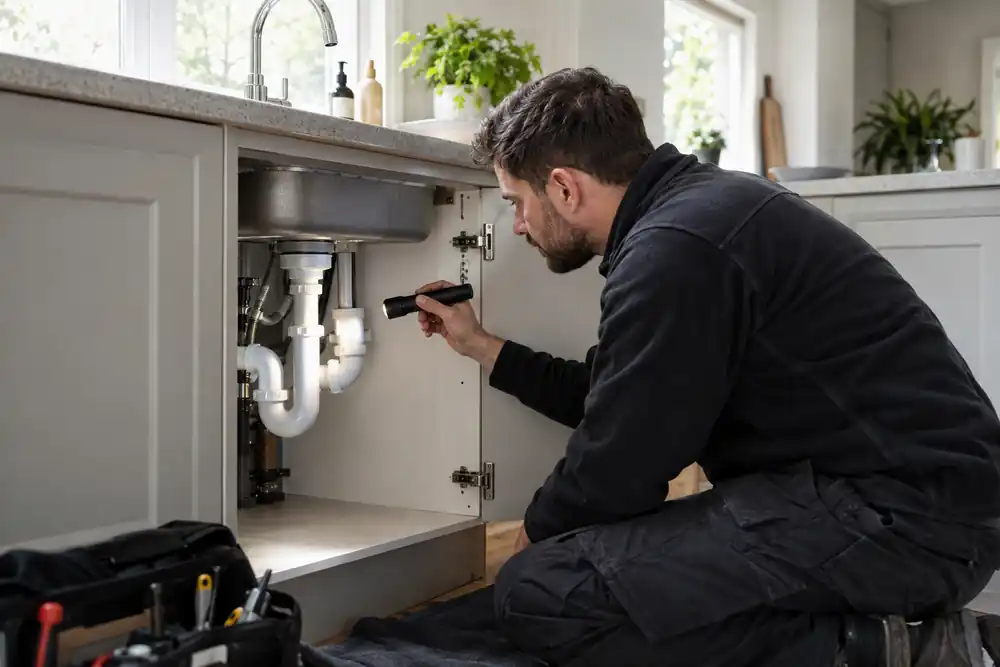
WHAT WE CAN HELP WITH
The scope is reviewed around the property, existing condition and the result you need.
Water can travel along pipework, cabinets and floors before it becomes visible.
Depending on assessment, work may include replacing worn tap components, renewing accessible traps or waste connections, dealing with leaking connectors, resealing around suitable sanitary fittings or installing compatible taps and fixtures.
Gas appliances, gas pipework and work requiring Gas Safe registration must only be handled by an appropriately registered engineer.
PLUMBING LONDON
Water can travel along pipework, cabinets and floors before it becomes visible. A damp patch beneath a sink might come from a waste joint, supply connector, tap body, appliance hose or seal. Useful enquiry photographs show the whole fitting as well as the wet area. Note when the leak appears, whether it changes during use and where the local or main stop valve is located. If water is escaping actively, isolate the supply where it is safe to do so and protect the area; do not wait for cosmetic damage to spread.
Depending on assessment, work may include replacing worn tap components, renewing accessible traps or waste connections, dealing with leaking connectors, resealing around suitable sanitary fittings or installing compatible taps and fixtures. Existing isolation valves, pipe condition, dimensions and access can affect the scope. Client-supplied fittings should be checked for compatibility with the current connections and available space. Hidden pipework, extensive rerouting and failures behind finished surfaces may require investigation or a broader repair plan.
Gas appliances, gas pipework and work requiring Gas Safe registration must only be handled by an appropriately registered engineer. Boiler faults, unvented hot-water systems, major drainage work and some complex installations may also need a dedicated specialist. Electrical elements near water add another trade boundary. The service should never imply that every “plumbing” issue can be treated as general maintenance. Accurate descriptions and photographs help route the job correctly before attendance.
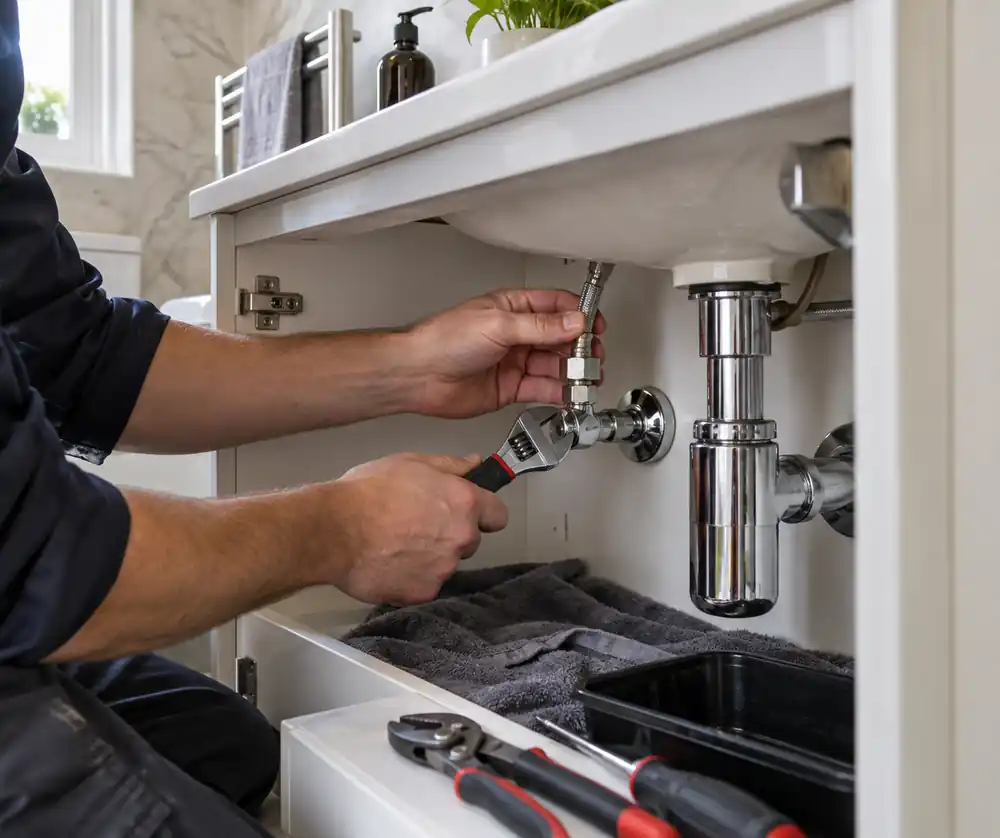
CAREFUL PROPERTY WORK
Before dismantling a fitting, the relevant supply should be identified and access protected. After the repair or replacement, connections are checked under normal operating conditions, and the surrounding cabinet or surface is inspected for continuing moisture. Sealants need suitable preparation and curing time; they should not be used to hide a failed joint. Where a leak has affected plaster, joinery or flooring, allow the area to dry and assess the damage before decorating. The water-damage service covers the coordinated reinstatement that may follow.
A fitting may look accessible from above while its backnut, valves or waste sit behind a fixed cabinet. Panels should not be cut or removed without agreement, and brittle older fittings can introduce additional work. Send wide photographs showing the cabinet and surrounding finish, not only a close-up of the drip. This helps distinguish a serviceable connection from work that needs joinery or planned opening-up.
Hoses and connectors should sit without twisting, crushing or continuous strain. Cabinets benefit from occasional visual checks, particularly after a fitting or appliance is moved. Know where the stop valve is and keep it operable. Unusual pressure changes, recurring seal failure or corrosion deserve further investigation rather than repeated patching.
A CLEAR PROCESS
Send the London postcode, photographs, measurements and the result you want.
The requirements, access, materials and appropriate trade are reviewed before work begins.
The planned work is carried out carefully, with any material change explained clearly.
PLUMBING FAQ
Useful answers for planning the work.
If safe, turn off the relevant isolation valve or main stopcock, contain the water and move vulnerable items. For severe or unsafe situations use the appropriate emergency service, then provide clear details when enquiring.
Potentially, if it is compatible with the basin or sink, holes, connections, pressure arrangement and available access. Send the product details and photographs first.
Gas work must be completed by a Gas Safe registered engineer. Describe the appliance or system so the enquiry can be routed appropriately; do not remove covers or attempt a repair yourself.
Sealant only addresses suitable surface junctions. A failed pipe joint, waste fitting, tap body or movement beneath the fixture must be repaired at its source.
Show the full fixture, the leak location, pipework and valves inside the cabinet, nearby damage and any labels or supplied replacement parts.
YOUR NEXT STEP
Describe the fault, when it occurs and where the water can be isolated.