
Help with locks, latches and door hardware
This service is for practical problems such as a stiff lock, a latch that no longer catches, worn handles, loose escutcheons or a lock that needs replacing as part of improving a door.
LOCKS, LATCHES & DOOR SECURITY
A lock problem can affect access, privacy and the everyday use of a property. Bob's Handyman assesses the door, frame and existing hardware before recommending the appropriate repair or replacement.
WHAT WE CAN HELP WITH
The scope is reviewed around the property, existing condition and the result you need.
This service is for practical problems such as a stiff lock, a latch that no longer catches, worn handles, loose escutcheons or a lock that needs replacing as part of improving a door.
Locks and cylinders are not interchangeable simply because they look similar.
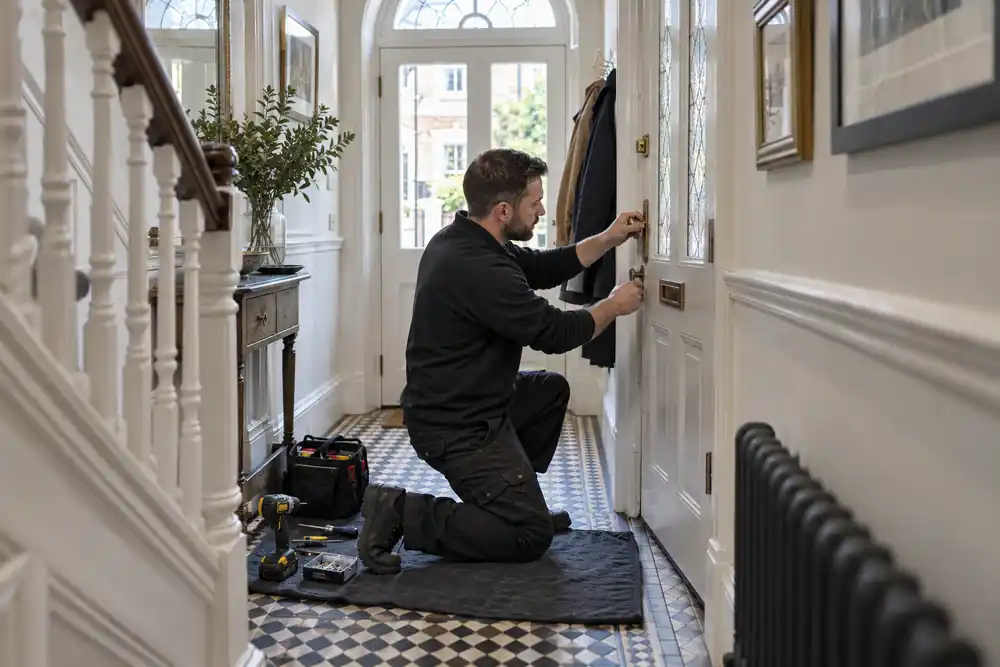
Before drilling or removing hardware, the operative checks the door movement and records the current arrangement.
LOCKSMITH LONDON
This service is for practical problems such as a stiff lock, a latch that no longer catches, worn handles, loose escutcheons or a lock that needs replacing as part of improving a door. The first step is to understand whether the fault sits in the lock case, cylinder, keeps, hinges, frame alignment or surrounding door furniture. Treating only the visible symptom can leave the underlying problem unresolved. We therefore look at how the complete door closes and operates before setting out the work. Where access is urgent or there is an immediate security concern, explain that when enquiring so the team can confirm whether the request is within scope and what options are available.
Locks and cylinders are not interchangeable simply because they look similar. Door material, existing cut-outs, backset, fixing positions, handle set and the way the door meets the frame all influence what can be fitted neatly. Photographs of both sides of the door, the edge and the existing lock are useful when preparing the visit. If replacement parts are required, measurements and compatibility should be checked rather than guessed. The aim is a tidy fit with smooth operation, not a forced substitute that weakens the door or leaves exposed gaps.
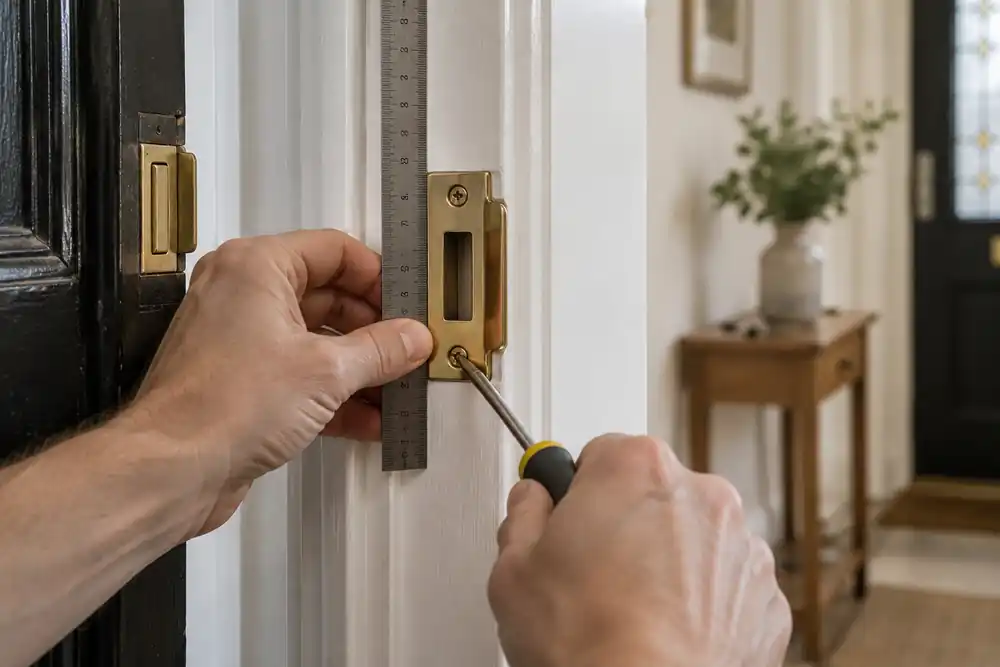
Before drilling or removing hardware, the operative checks the door movement and records the current arrangement. The replacement is positioned, secured and tested repeatedly with the door open and closed. Keeps may need measured adjustment if the door has moved with age or seasonal conditions. The finished lock should engage without excessive force and the handles or thumbturn should return properly. Keys, supplied components and any maintenance guidance are handed over at completion. Electrical access control, alarms and specialist high-security systems may require a dedicated security contractor and should be described accurately at quotation stage.
CAREFUL PROPERTY WORK
A lock can appear faulty when loose hinges, swelling, movement in the frame or damaged timber prevents alignment. Correcting those contributing issues can be more useful than repeatedly changing a latch. Related door repairs can be discussed as part of the same enquiry, while structural damage, fire-door certification questions and complex communal-entry systems need the relevant specialist input. Sharing clear photographs and noting whether the door is timber, uPVC, composite or metal helps establish the right next step.
Include whether the problem affects entry, exit or only locking; whether the key turns; whether the handle moves; and when the fault began. Photographs taken square-on help show the handles, cylinder and door edge. If the door is part of a managed block, confirm who controls the specification and whether matching hardware is required. This detail separates a mechanical lock issue from movement in the door or frame and reduces the risk of arriving with an unsuitable part.
Do not force a key or handle that becomes stiff. Keep the door and frame under observation, especially after seasonal weather changes, and follow the lock manufacturer's maintenance guidance rather than applying an unsuitable lubricant. Retain product and key information. If the door begins to drag, address the alignment before the extra load damages the latch or cylinder.
A CLEAR PROCESS
Send the London postcode, photographs, measurements and the result you want.
The requirements, access, materials and appropriate trade are reviewed before work begins.
The planned work is carried out carefully, with any material change explained clearly.
LOCKSMITH FAQ
Useful answers for planning the work.
Often, yes. It depends on the condition of the door and frame and whether a compatible lock or cylinder is available. The existing cut-out and alignment must be assessed first.
That usually points to alignment between the latch and keep, sometimes caused by hinge movement, seasonal swelling or frame movement. The door should be checked before parts are replaced.
You can, but the dimensions and compatibility need to be correct. Send photographs and any product details before the appointment, or ask for the required specification to be confirmed.
Describe the system when enquiring. Electronic access control, alarm-linked hardware and managed communal entrances may need a specialist contractor or authorisation from the building manager.
Include the door material, the problem, whether access is currently possible, and clear photographs of both faces, the edge, frame and existing hardware.
YOUR NEXT STEP
Discuss the lock or door problem and send photographs for an informed quotation.