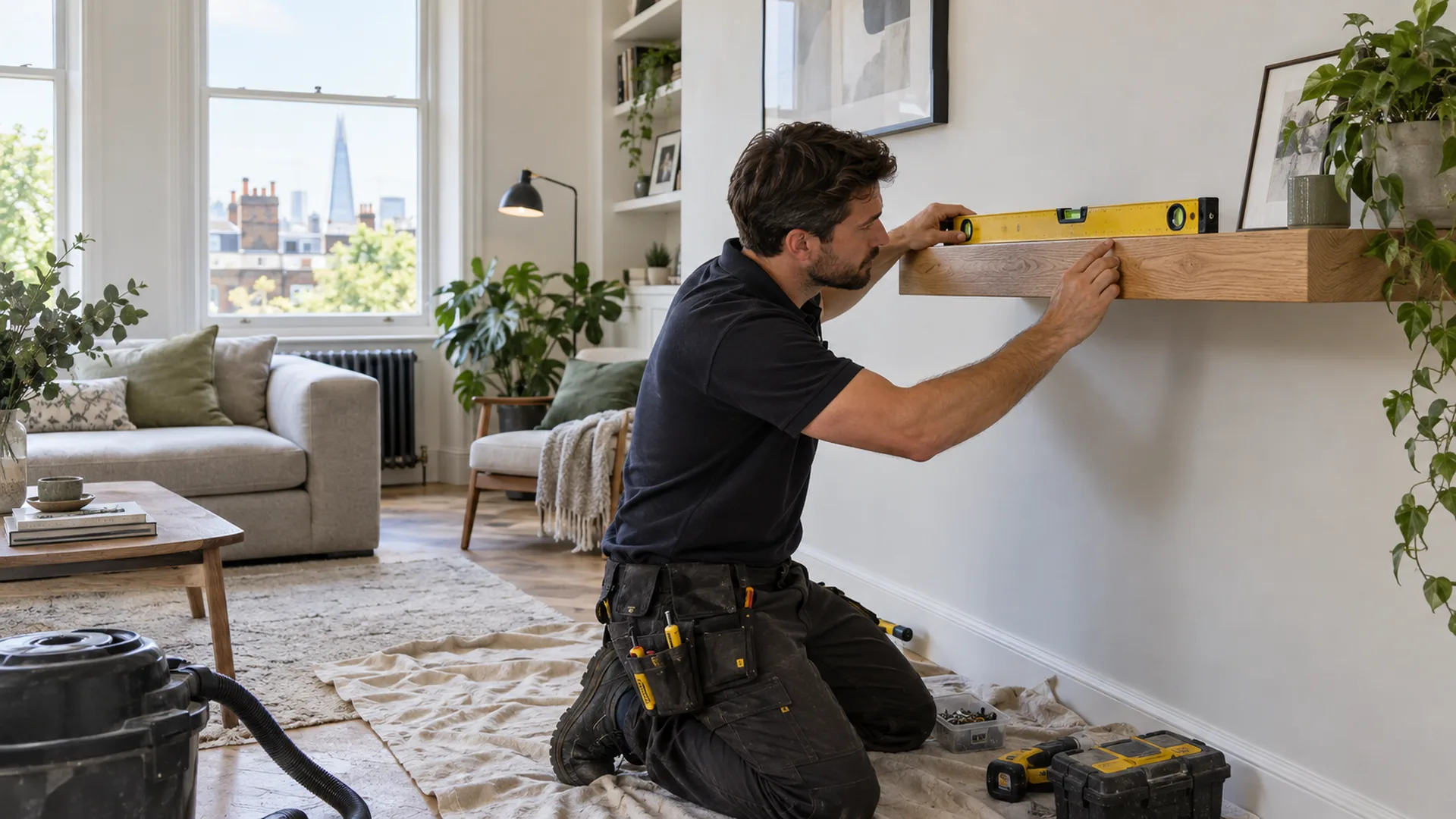
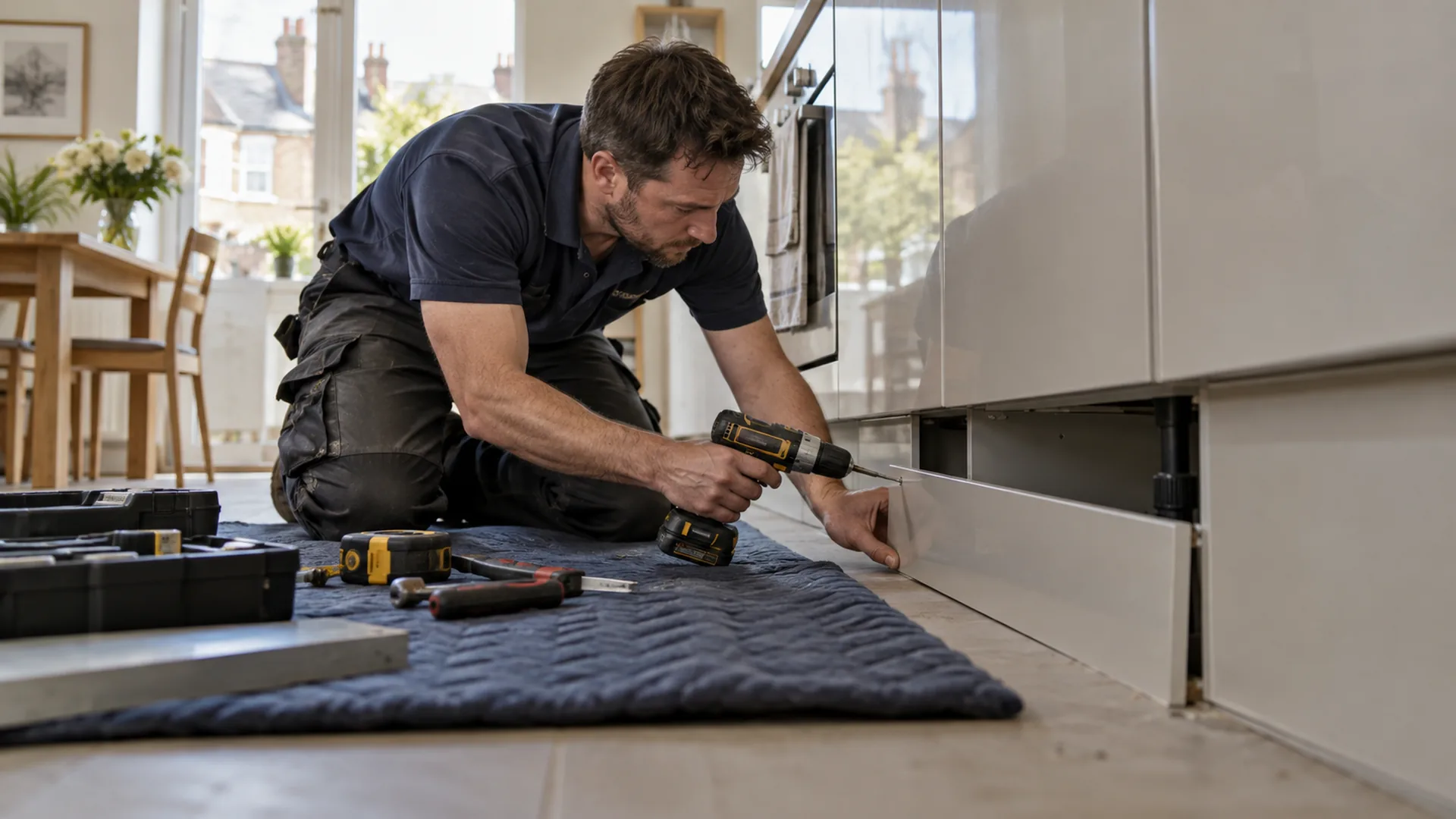
The useful description includes the fitting and the space from which it would be worked on. A curtain bracket above a deep cabinet, for example, has a different access question from the same bracket above clear floor. Explain the arrangement without moving heavy furniture or attempting a climb for the photograph.
State whether the obstacle is movable, fixed or uncertain. A lightweight household possession may be prepared differently from a built-in unit or a large item requiring separate handling. Agree who is responsible for clearance rather than assuming the worker can move everything on arrival.
Do not offer household furniture as access equipment. The suitable method depends on the actual height, floor, task and surrounding hazards. If the location cannot be assessed adequately from the information supplied, further review may be needed before confirming the work. That is a scope question, not a reason to force the job into a normal-looking time slot.
Enclosed fittings present another issue. A photograph through a narrow cupboard opening may not reveal the fixing or the condition behind it. Describe what you can observe and explain any removable contents. Do not remove a structural panel or disconnect equipment to improve visibility.
After access has been agreed, the repair itself still needs a sound method and suitable components. Reaching the item is not the same as establishing that it can be repaired. Keep those two decisions separate, and retain any limitations or further requirements identified during the review.