Identify the fitting
Number the locker, hook rail or furniture item on the job list. Describe the fault without including employees’ private information.
ELMERS END · MAINTAIN THE SPACE STAFF ACTUALLY USE
Bob’s can review small repairs to the ordinary staff facilities in Elmers End business premises: locker catches, coat hooks, cupboards and break-room furniture. Provide one clear list for the premises manager to approve. Machinery, regulated systems and specialist installations remain outside that ordinary handyman scope.
THE WELFARE ROOM IS ITS OWN WORK AREA
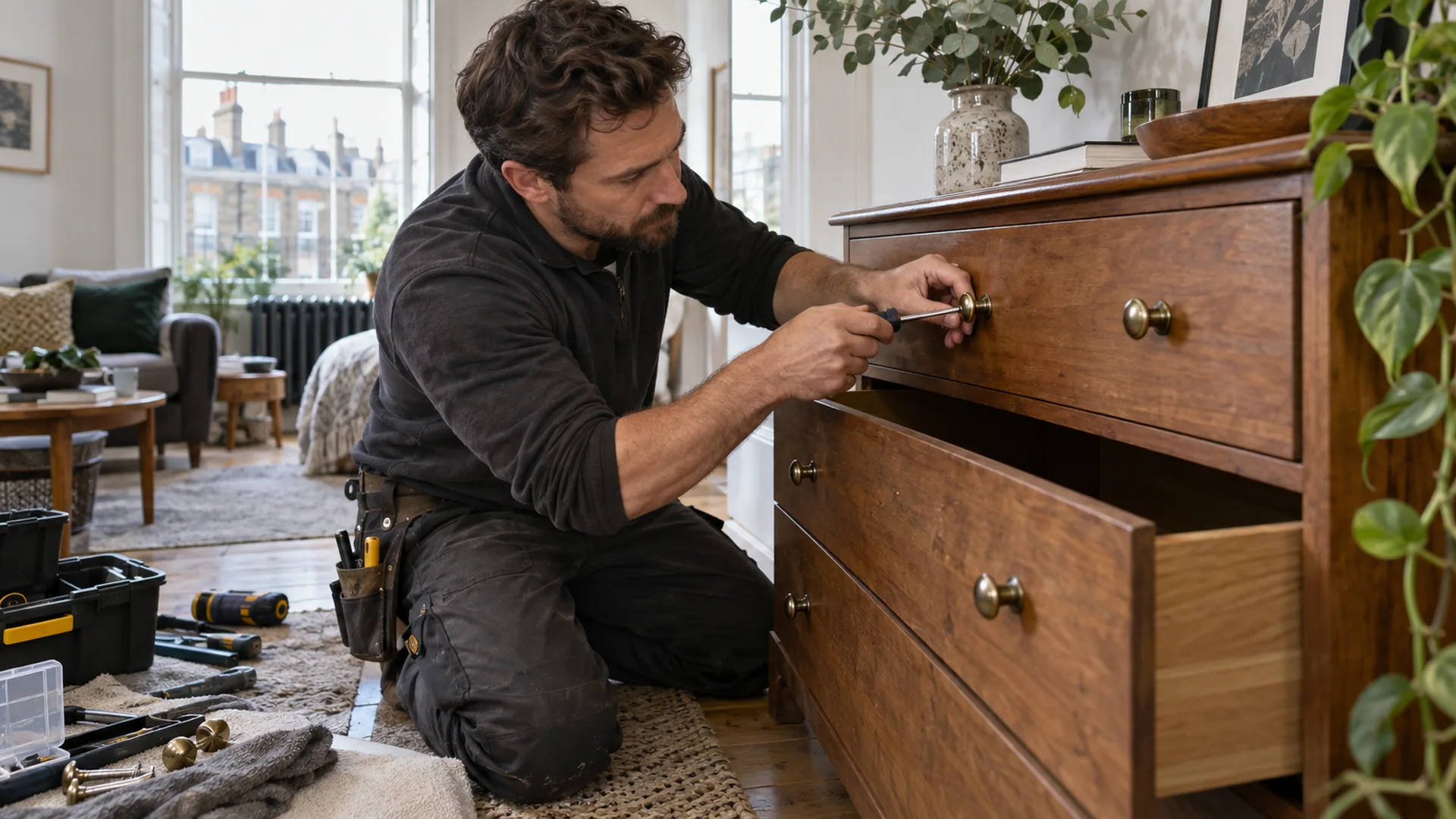
Bromley’s Employment Land and Space Study identifies light industrial units and trade-counter occupiers within the Elmers End employment area. For a small business, a handyman enquiry may concern the staff room or office inside those premises rather than the operational equipment. Mark that distinction clearly: a loose coat rail is not the same instruction as work on racking, a machine guard or an industrial installation.
List the ordinary fittings people use before and after their shift. A locker that will not close can leave personal belongings on the floor. A damaged table edge may make an otherwise useful break area unpleasant to use. Give each item a location and a description of the fault so the person attending is not asked to search the premises for several unnamed repairs.
The business should identify any site conditions relevant to the work, including access, hygiene arrangements and areas that must not be entered. Bob’s needs these details before agreeing an appointment. The scale of the fitting does not cancel the premises’ procedures, and a household-style cabinet should not be assumed suitable for contaminated, wet or specialist-use areas.
A staff-area visit can also include several different practical needs: assembling a replacement table, securing an ordinary noticeboard or reviewing damage to a non-specialist cupboard. State the expected use and whether each item is being repaired or replaced. Work on an ordinary fitting must still fit the workplace’s procedures, but a useful enquiry need not become a request for maintenance of the industrial equipment itself.
MAKE THE REQUEST EASY TO LOCATE
Number the locker, hook rail or furniture item on the job list. Describe the fault without including employees’ private information.
Establish that the business can authorise work on it. Leased or supplier-maintained items may have a separate repair route.
Arrange for personal belongings to be removed by their owners. Keep work equipment and sensitive records outside the repair area.
Record the completed repair or the reason it remains open. Return the room with no unexplained loose parts or unlabelled rejected items.
DO NOT TURN A REPAIR VISIT INTO A CLEAR-OUT
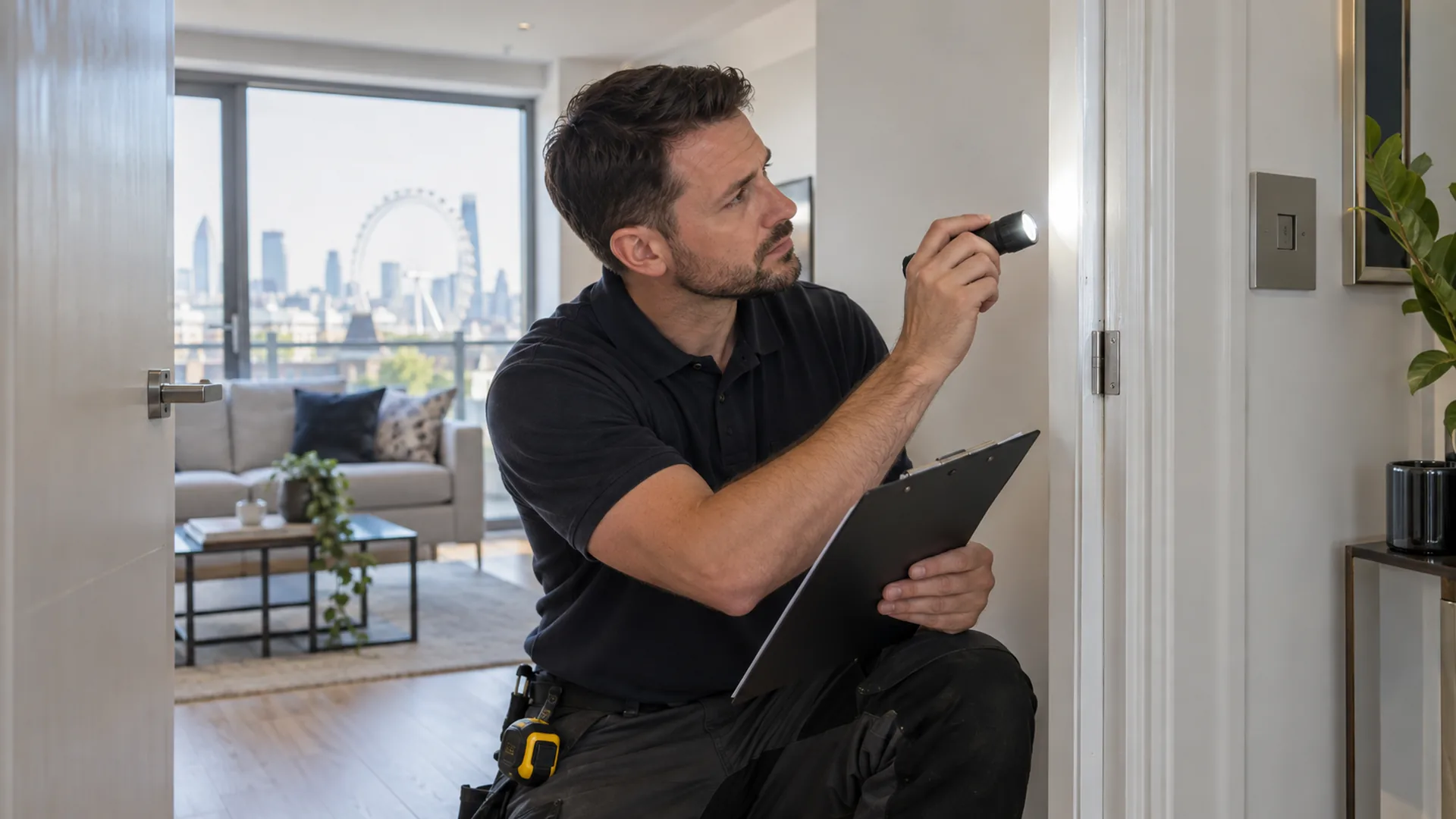
A locker may contain private possessions that the person doing the repair should not handle. Arrange a clear-out with the user or responsible manager in advance, and label the item that is available for work. If the locker cannot be emptied, tell Bob’s rather than expecting the attendee to decide what can be moved.
The same principle applies to staff-room cupboards. Separate personal food, cleaning products and business materials according to the premises’ arrangements. A minor fitting appointment is not a review of the business’s storage compliance. If the proposed change affects specialist containment or regulated facilities, obtain the relevant advice before placing it on the handyman list.
At handover, the nominated contact should check normal operation of the repaired item and know where any remaining parts belong. A removed broken catch should not be left in a drawer to be mistaken for a spare. Record supplier references for parts that may need future replacement and identify any items deliberately left out of use. This keeps a collection of small repairs from becoming another unclear maintenance request next month.
HOME MAINTENANCE PLANNER & HANDYMAN JOB CHECKER
Choose the commercial-property option and relevant concerns to organise the enquiry. The checker provides general service suggestions, not an assessment of workplace systems or compliance. It collects no personal details; avoid putting staff information into the separate repair brief unnecessarily.
ELMERS END PREMISES QUESTIONS
Arrange for the contents to be removed by the user or an authorised person where needed. Tell Bob’s if that cannot happen. Access to private possessions should not be assumed as part of the repair.
Not without confirming that the product, fixings and surface suit the intended load and environment. Describe the actual equipment. A hook supplied for clothing should not be treated as an industrial storage solution.
Machinery, guards and operational systems are outside an ordinary interior-fitting request. Identify them as separate specialist work. Do not include them under a general instruction to fix everything in the staff area.
Name a responsible person who understands the business’s authority and limits. If that person cannot be contacted, the extra task may need to remain open rather than being decided by whichever employee is nearby.
Identify the models and affected parts first. Similar doors can use different components, and supplier arrangements may apply. A confirmed specification is more useful than a box of approximate replacements.
Give the actual availability and site arrangements with the enquiry. The proposed scope must include preparation and reinstatement, not just the moment the fitting is attached. Timing is agreed after the work is reviewed.
ADJOINING SERVICE AREAS
A home or premises nearer Beckenham or Penge can be discussed using its own area guide.
For property-maintenance enquiries around Beckenham.
For a fitting or repair request in Crystal Palace.
ONE ITEM LIST, ONE AUTHORISED CONTACT
Send numbered items, product information and the conditions under which the room can be worked in. Bob’s can then review the ordinary fittings separately from the premises’ specialist equipment.