
Name the essential use
Say when the room must be available again and what it is used for. Returning a desk to service is different from completing a decorative finish.
DENMARK HILL · REPAIRS WITHOUT LOSING THE WHOLE ROOM
Small repairs are easier to arrange when the room’s everyday use is part of the plan. Tell Bob’s where you need to work, sleep or pass through while fittings are adjusted and surfaces made good. A defined work area and realistic finishing sequence matter more than a long, unprioritised snag list.
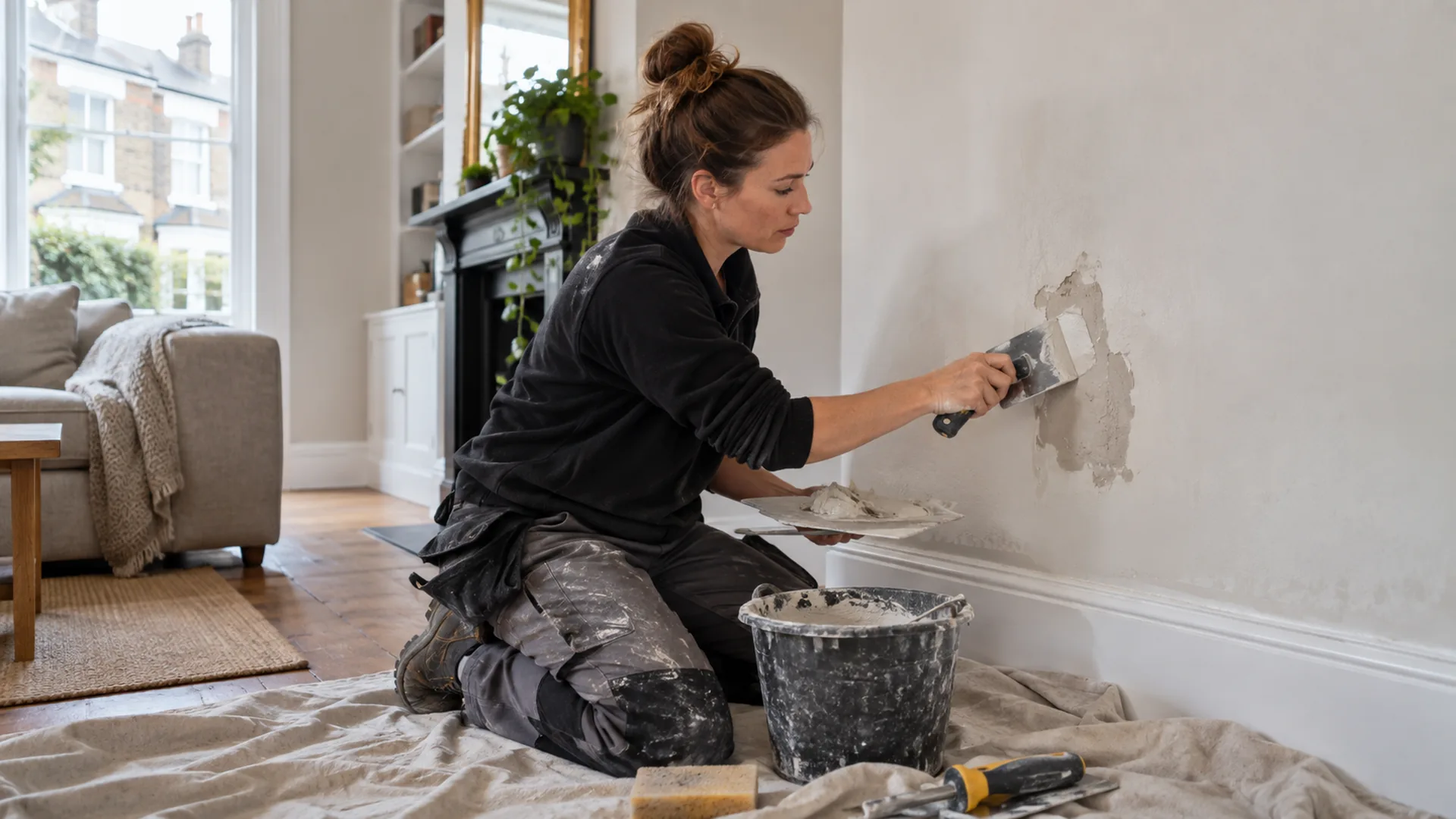
A ROOM CAN HAVE MORE THAN ONE DEADLINE
Say when the room must be available again and what it is used for. Returning a desk to service is different from completing a decorative finish.
Identify drilling, preparation and removal separately. Clear nearby possessions and agree suitable protection before these operations start.
Some repairs involve drying or curing. Do not plan to hang an item or press furniture against a surface before the chosen materials allow it.
At the end of each stage, establish what can be used, what must remain undisturbed and whether another appointment is needed.
DIFFERENT BUILDING FABRICS, DIFFERENT PREPARATION
Parts of Denmark Hill fall within the Camberwell Grove conservation area described by Southwark Council, whose account includes homes of several historic periods. In a room retaining mouldings, a picture rail or a distinct chimney breast, those divisions can help explain the intended decorating boundary. State which surface is being repaired and which adjoining detail is to remain untouched.
After removing a bracket or changing furniture, a small exposed patch can reveal a different paint colour, texture or sheen. Take a view under the light in which the room is normally used. Specify the intended outcome: holes made sound, or a larger surface refinished. Those are different outcomes, and the size of the original damage does not by itself determine the area needed for a visually consistent result.
Keep any reliable paint reference, but say how old it is and whether the wall has been recoated since. A tin stored in the property may belong to another room. If you are unsure, identify it as unconfirmed rather than allowing that guess to become the specification. A trial and an agreed finish boundary may be needed before committing to the whole surface. Active defects still require assessment, but ordinary impact damage and old fixing holes can be reviewed as a clearly bounded making-good task.
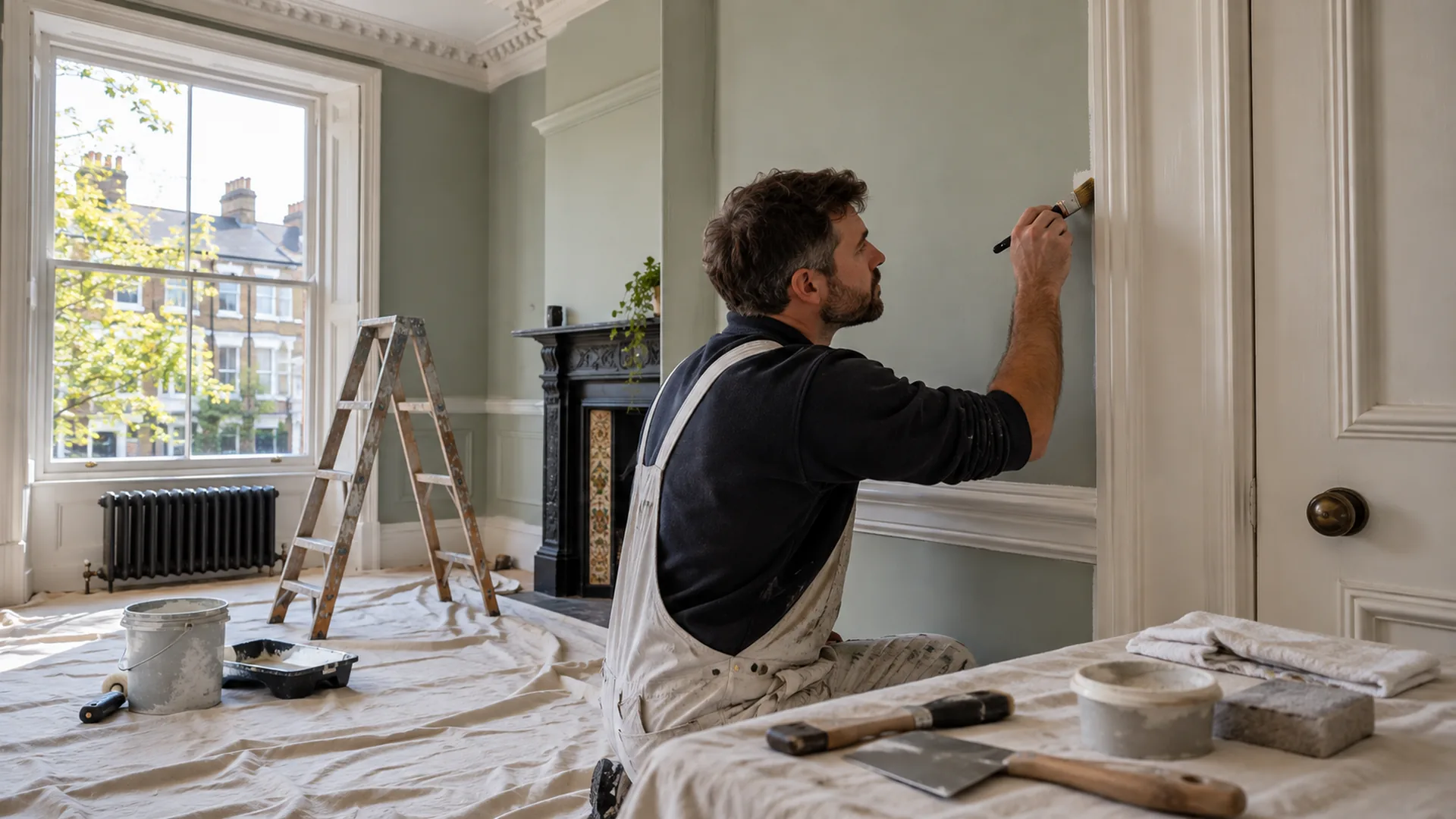
DO NOT RESET THE ROOM TOO EARLY
A newly finished area may need time before normal contact resumes. Discuss the particular materials and ventilation requirements rather than assuming that a surface which feels dry is ready for a shelf, adhesive product or tightly positioned furniture. Keep people and pets away from the work area as advised, without blocking the home’s escape routes.
Furniture relocation also deserves agreement. A crowded bedroom can leave nowhere to prepare a repair safely; moving a full wardrobe is not a minor favour to assume on arrival. Explain the large items, whether they can be emptied and where protected temporary storage is available. If the work cannot be contained sensibly, staging it across rooms may be preferable to exposing the whole home at once.
Use the final review to distinguish completed work from observations. A repaired impact mark may be complete, while a separate recurring crack remains referred for investigation. Photographs and a short written note prevent these from being confused later. Keep paint references, any relevant care advice and the list of deferred items together, particularly when the occupier and person arranging the work are different.
HOME MAINTENANCE PLANNER & HANDYMAN JOB CHECKER
Select the room and the faults you have noticed. The checker groups your choices and identifies jobs that may need a specialist before finishing begins. Its on-screen plan is a preparation aid, not an assessment of the wall, and it does not collect your details.
OCCUPIED-ROOM QUESTIONS
Explain the location of your desk and any calls or quiet periods before booking. Dust, noise and access may make the same room unsuitable temporarily. Agree a separate usable area rather than expecting every operation to be silent.
Settle the intended arrangement first where practical. It avoids finishing a position that will immediately be disturbed again. The new hanging method still needs its own wall and load assessment even if an old fixing is nearby.
Not automatically. Note when it returned and whether its length or width has changed. Repeated movement, moisture or other warning signs can require assessment beyond making good. Do not remove evidence of the problem solely to make the wall presentable.
A match cannot be assumed from the colour name alone. Existing paint can age, and sheen or texture differences may remain visible. Agree the finish area and expectations before work begins, particularly on walls receiving strong side light.
Make that deadline explicit. The proposed work must allow for protection, preparation, drying and safe reinstatement. Some finishes cannot be responsibly compressed into that window, so the scope or sequence may need to change.
Notify the responsible landlord or building manager and establish that the source has been dealt with. Keep the affected area documented. Making good should follow the appropriate investigation and drying assessment, not precede them.
LOCAL PAGE OPTIONS
The Camberwell and Herne Hill guides may be more relevant when the address lies beyond Denmark Hill.
Interior repairs and household fittings around Camberwell.
Property-care planning for a Herne Hill address.
DESCRIBE THE ROOM AS WELL AS THE DAMAGE
Send the affected surfaces, the cause if known and when the room needs to be usable. Include any items being rehung or moved. Bob’s can review the Denmark Hill work without assuming that every stage fits into the same visit.