
Photograph the plant display
Capture shelf levels, price holders, watering trays and the exact stock footprint before anything moves.
GLASS, WATER AND CUSTOMER ROUTES · CREWS HILL
Crews Hill is known for nurseries, garden centres and a rural-edge landscape as well as homes. Minor maintenance should keep public routes, irrigation, glazing and plant-handling areas outside the wrong work scope.
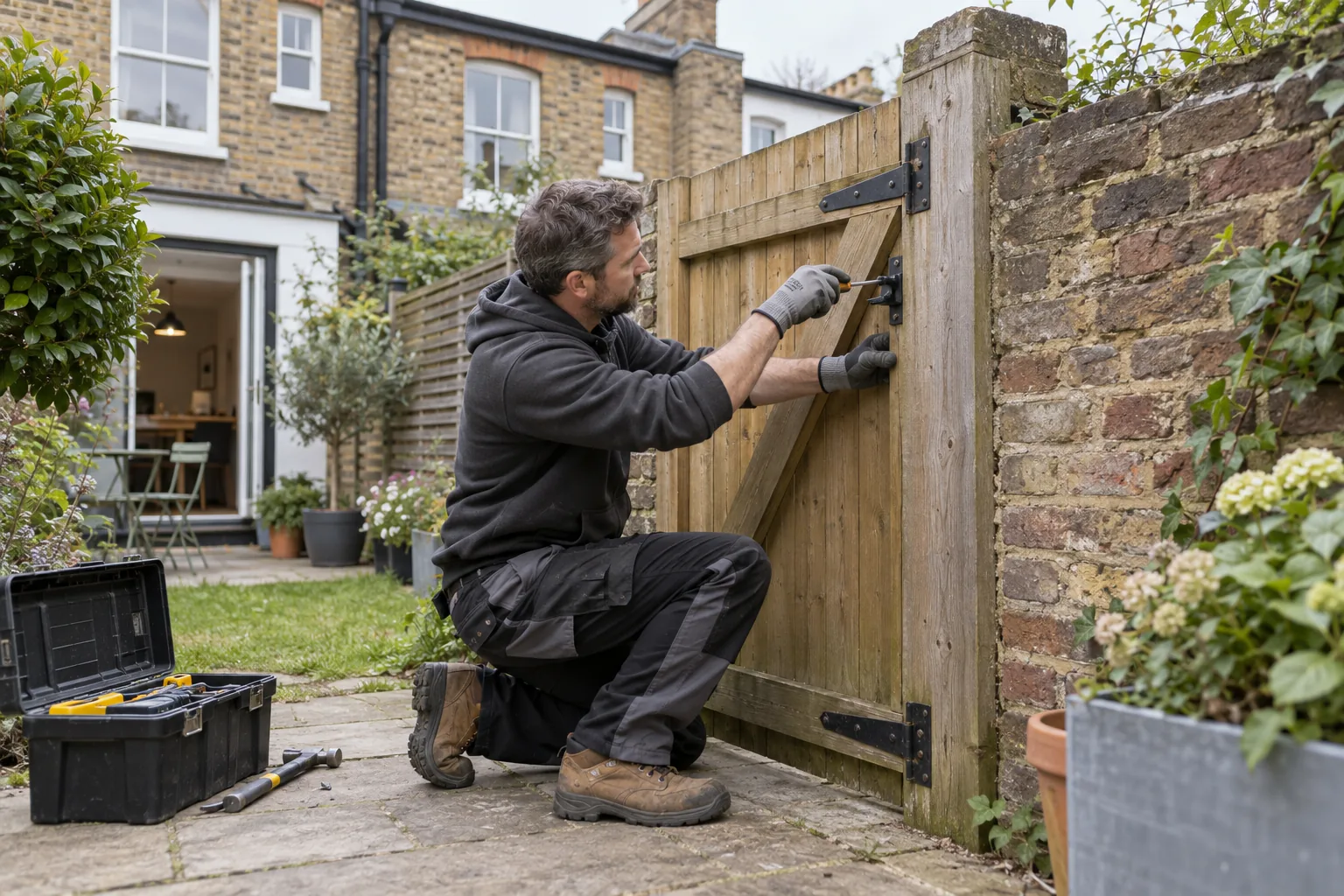
HORTICULTURE SHAPES THE WORKING LANDSCAPE
Enfield Council describes Crews Hill as having one of the country’s largest concentrations of specialist gardens, nurseries and aquatic centres. Its planning evidence traces a landscape of commercial nurseries, garden centres, modest post-war commercial buildings and rural-edge land. The emerging local-plan process also considers substantial future change, but individual property decisions still depend on current policy and consent.
A maintenance request should say whether the address is a home, customer-facing business, nursery, yard or mixed site. Draw the public entrance, staff area, vehicle movement and irrigation route. A loose office shelf or welfare-room cupboard may be ordinary handyman work. Greenhouse glazing, powered equipment, structural sheds, water systems and public-safety installations need their proper competent route.
A DISPLAY-BAY CHANGEOVER
Capture shelf levels, price holders, watering trays and the exact stock footprint before anything moves.
Number brackets, clips and sign holders in a lidded box so small proprietary parts cannot enter compost or gravel.
Check stability, sharp edges, cleanability and drainage clearance before a plant pot returns.
Place the agreed maximum pot sizes and keep foliage clear of customer sightlines and labels.
CHECK THE OUTDOOR BACKGROUND
Outdoor exposure and horticultural operations alter materials quickly. A sound indoor fixing detail cannot be transferred to a wet timber post, greenhouse frame or lightweight display without evidence.
Map hose spray, roof run-off and pooled water. Choose an appropriate durable system only after the background is known.
Soft, split or repeatedly wet wood cannot be rescued by a larger screw. Assess repair or replacement of the component.
Never drill or clamp an unknown greenhouse section. Confirm the proprietary system and use a suitable specialist where required.
Displays and signs in customer areas need stable edges, secure fixings and a recorded inspection routine.
A projecting shelf, open gate or material stack must not enter a reversing or loading envelope.
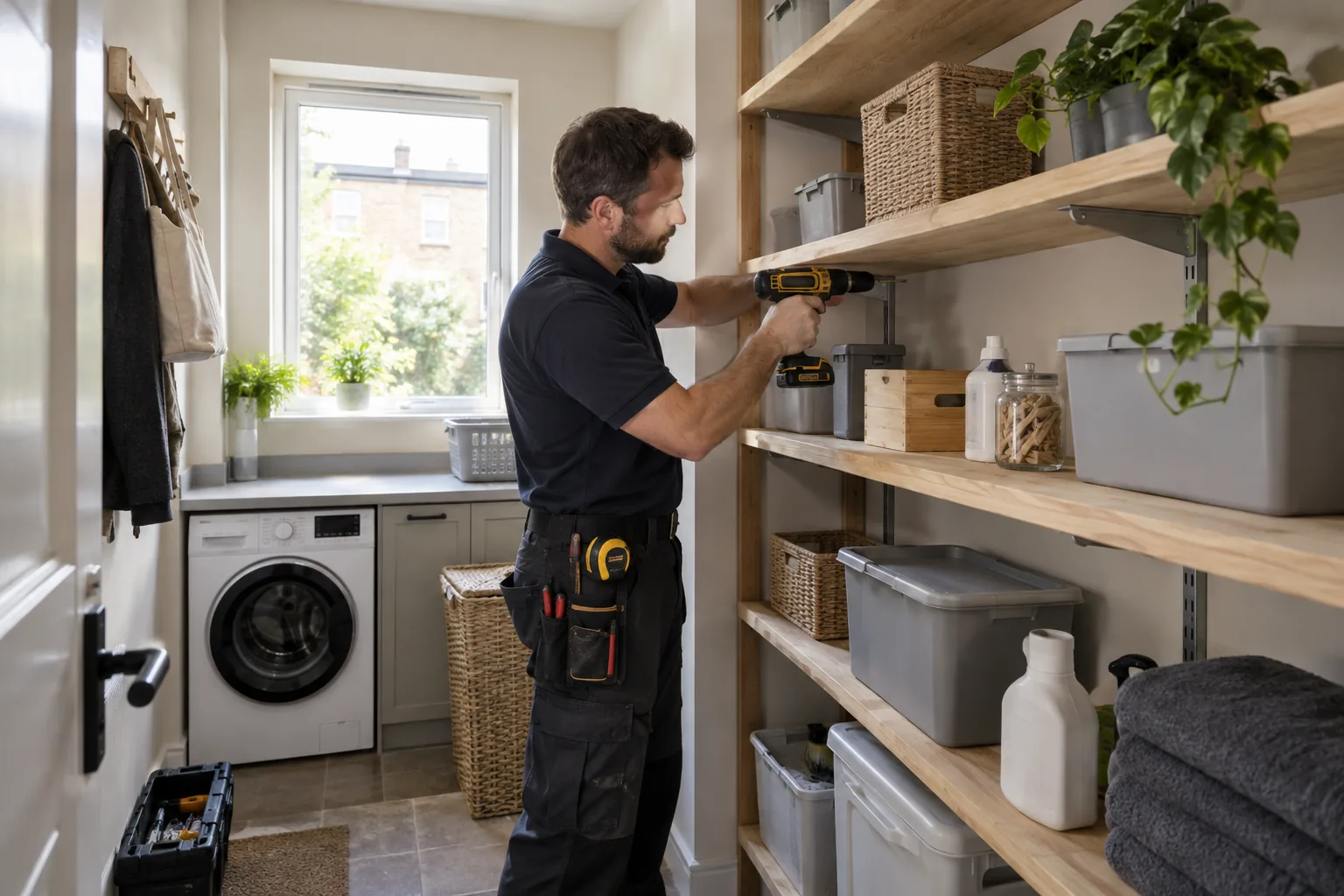
KEEP THE CLEAN ROOM CLEAN
Staff coats, first-aid supplies and paperwork need a dry position separate from soil, wet gloves and chemical storage. Photograph the complete welfare-room wall, including heaters, vents, sockets and cleaning access. State which lockers or shelves are personal, controlled or shared.
Use closed storage only where ventilation and cleaning remain suitable. Heavy boxes should occupy a safe lifting height, while frequently used documents need a clearly labelled shelf. Do not relocate first-aid or safety information without approval. The handover should show that the room can be cleaned and that no product blocks a heater or exit.
ESTIMATE THE CONTAINED TASK
Choose an ordinary task, quantity and duration. The estimate applies Bob’s published weekday labour rates; access control, materials, parking, glazing, irrigation, powered equipment and structural outdoor work are separate.
HAND BACK THE DISPLAY BAY
Place one representative pot on every level and perform the normal watering action. Observe whether a tray can be removed, drips reach labels or fixings, and foliage hides a price edge. The authorised contact then loads the remaining stock only to the written pot-size and weight limit. Photograph that first completed bay as the restocking reference.
Count clips, screws and tools before reopening. Proprietary spares belong in a labelled lidded box, not loose beneath a bench. Cracked glass, blocked drainage, unstable frames and decayed outdoor timber remain on separate defect records for the correct specialist response.
A real tray and pot reveal drips that an empty shelving inspection misses.
Pot diameter, wet weight and foliage spread guide the written loading note.
Clips and sign fittings remain identifiable outside soil and planted displays.
NEARBY COVERAGE
Rural-edge property maintenance east of Crews Hill.
Prepared household and commercial repairs across the borough.
Measured handyman work toward the urban edge.
CREWS HILL SITE QUESTIONS
Greenhouse glazing and frames can be fragile proprietary systems. Provide product details and use a suitable specialist where the fabric or safe method is uncertain.
Public access, vehicles, water, soil and fragile displays create site controls. The authorised contact should define the isolated work zone and trading window.
Only after the post is checked for decay, stability and suitable capacity. Sign size, wind exposure and planning requirements also matter.
No. It estimates ordinary handyman labour. Irrigation, pumps, powered systems and specialist horticultural equipment need separate assessment.
Show the whole wall, exits, heaters, vents, sockets, existing lockers and the items to be stored. Identify controlled first-aid or safety information.
Record the material, fixing, load, surrounding route and inspection need. The site contact then checks housekeeping and returns the zone to use.
NAME THE SITE TYPE FIRST
Send the site sketch, authorised contact, trading hours and photographs of public, water and vehicle routes. Bob’s can assess contained home, office or welfare tasks while keeping glazing, irrigation, machinery and structural work with the correct specialist.